Description
Yellow-Knobbed Curassow for Sale
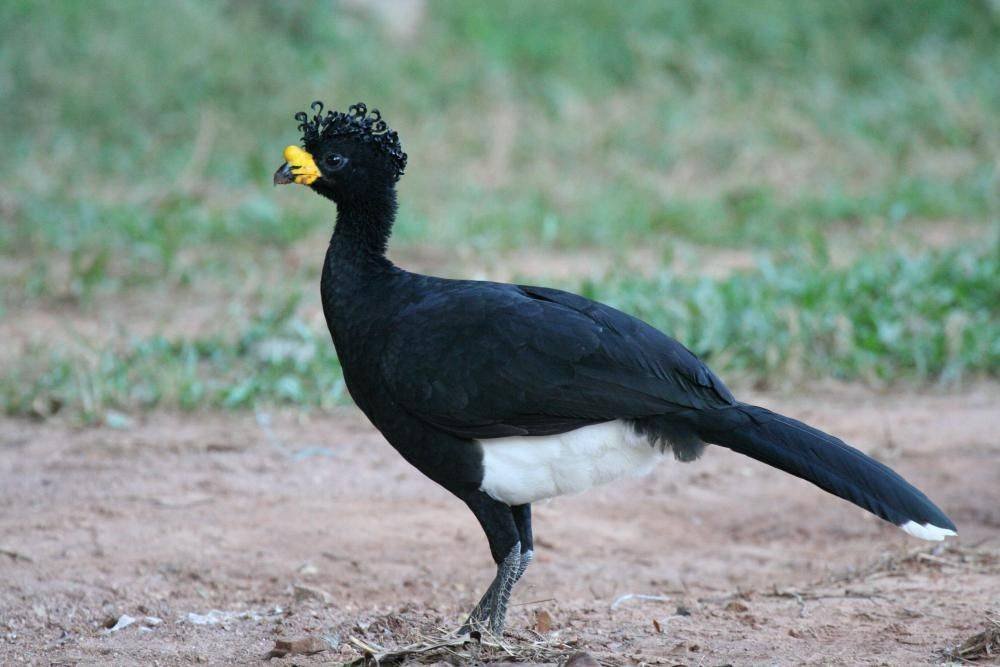
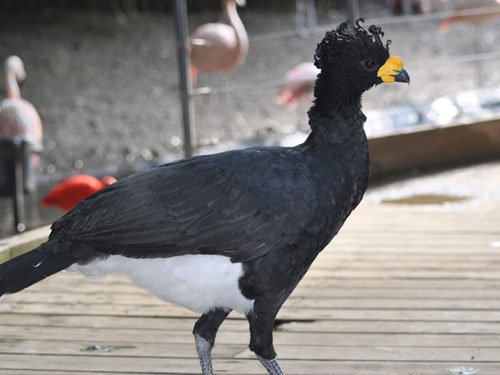
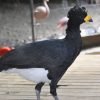
The Yellow-Knobbed Curassow is unmistakable once you know what to look for: a large, turkey-sized black-and-white bird with a curling crest and, on the male, a bright yellow knob at the base of the bill. It’s a bird built for the forest floor rather than a cage — a serious addition for aviculturists, not a casual companion pet.
At a Glance
- Native range: Colombia and Venezuela
- Habitat: Dry forest, gallery forest, and humid lowland forest
- Size: Roughly 33–36 inches long
- Conservation status: Near Threatened, with wild populations declining from habitat loss and hunting
Telling Males From Females
Males carry the signature yellow cere and knob along with mostly black plumage and a white lower belly. Females lack the yellow knob entirely, showing a dark bill and fine white barring across the breast instead.
Why Captive-Bred Stock Matters
Because wild populations are shrinking, captive-bred Yellow-Knobbed Curassows play a real role in preserving the species outside its native range. Buying captive-bred stock supports conservation-minded aviculture rather than pressure on wild flocks — a distinction worth asking about with any seller.
Housing and Diet
These are ground-dwelling forest birds, so they do best in a spacious, planted aviary rather than a standard indoor cage. In the wild they forage for fruit, seeds, and insects; a captive diet should mirror that with a varied mix of produce, protein, and a quality gamebird or curassow-specific feed.
You May Also Be Interested In
- Kenyan Crested Guineafowl
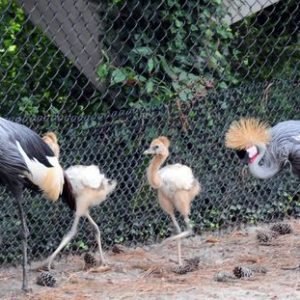
- West African Crowned Crane
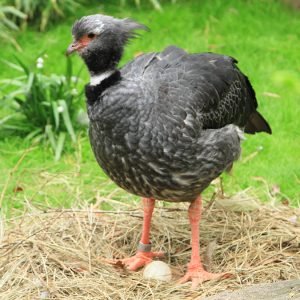
- Crested Screamer
- Indian Blue Peafowl
- See All Birds for Sale
Buyer Questions
🌳 Do they need an outdoor aviary?
Yes — as large, ground-foraging forest birds, they need far more space than a typical indoor bird cage provides.
🥚 Are they good breeding stock?
Yes, with proper aviary conditions; they typically lay small clutches and benefit from experienced gamebird-keeping practices.
🌍 Is buying one good for conservation?
Captive-bred individuals help take pressure off declining wild populations, so sourcing from a captive-bred line is the responsible choice.