Pionus Parrots
The quiet, easygoing middle child of the parrot world: smaller than an Amazon, calmer than a conure, and far more subtle than either.
The Pionus Spec Sheet
Four Pionus Myths, Settled
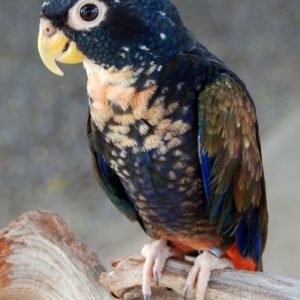
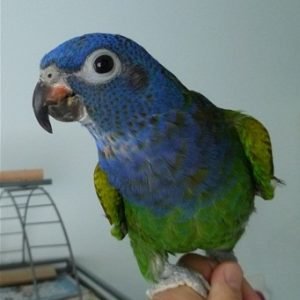
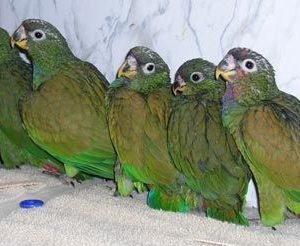
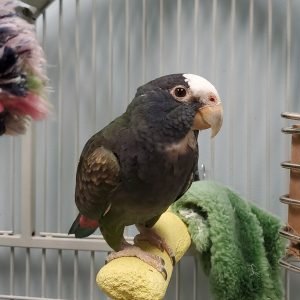
Meet the Pionus Species We Cover
The genus name isn’t a coincidence: Pionus parrots gain weight easily, and they can also develop vitamin A deficiency on a poor diet. In the wild, they eat mostly fruit, especially guavas. At home, mirror that variety with quality pellets, plenty of fresh produce, and daily activity. Browse our full bird collection to compare other medium-sized parrots.
Pionus FAQs
Are Pionus parrots good for beginners?
Often, yes. Their calm, easygoing nature and lower noise level suit many first-time owners, although their decades-long lifespan still demands real commitment.
Are Pionus parrots a good apartment bird?
They’re among the better medium-sized options. Compared with Amazons, conures, and macaws, a Pionus is noticeably quieter, which helps with close neighbors and shared walls.
Can Pionus parrots talk?
Many can mimic words and sounds, though they’re not as talkative as an African Grey. Some have clear voices, while others sound raspy, so listen closely for words you might be missing.
Why does my Pionus make a wheezing sound?
It’s usually a normal reaction to excitement or fear. If heavy, difficult breathing continues, see an avian vet promptly to rule out a respiratory problem.
How long do Pionus parrots live?
Most live 25 to 40 years with good care, and some live longer, so bringing one home is a genuine long-term commitment.
What should I feed a Pionus?
Offer a quality pellet base with plenty of fresh fruit and vegetables. Keep portions sensible, since this genus gains weight easily and needs a varied diet to avoid vitamin A problems.
Which Pionus species is the most popular?
The Blue-Headed Pionus is the most commonly kept, thanks to its striking blue head, followed closely by the Maximilian and White-Capped species.