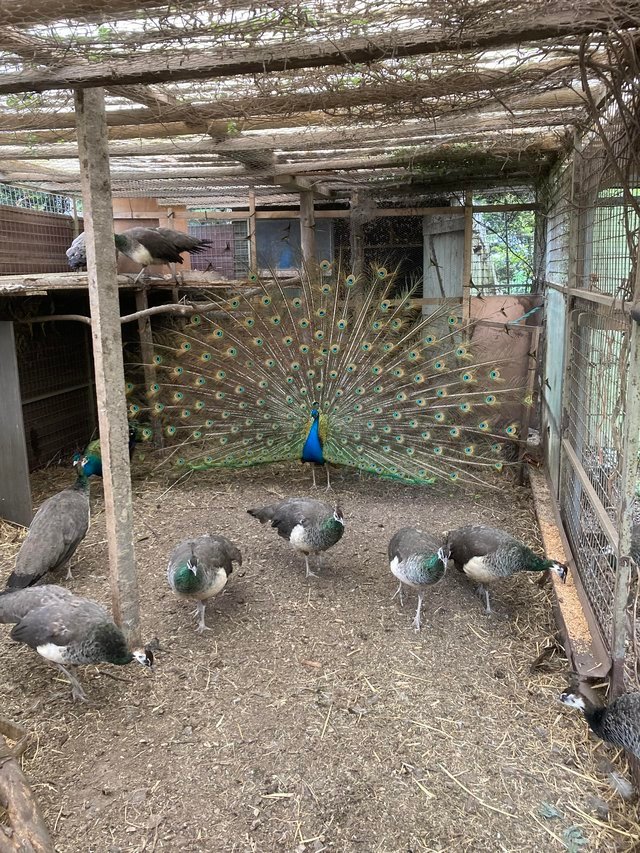

Description
Indian Blue Peafowl for Sale Online
India’s national bird, and the classic look behind every peafowl color variety.
🪶 ~200 Train Feathers
📊 Least Concern
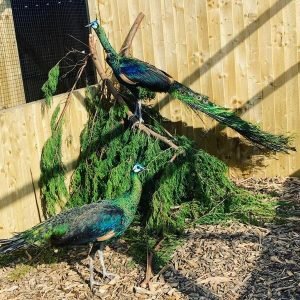
This is the bird that started it all. Every white, pied, or black-shoulder peafowl we offer traces back to this exact species, just carrying a different color mutation. The wild-type Indian Blue remains the standard against which every other variety gets compared, and it’s easy to see why once you watch a male in full display.
What everyone calls the peacock’s tail is actually about 200 enormously elongated upper tail covert feathers, each tipped with an iridescent eyespot. The bird’s real tail sits hidden underneath: short, brown, and made of roughly 20 plain feathers that simply act as a support strut, holding the train upright during display.
A Display You Can’t Fully Hear
During courtship, a male vibrates his train feathers fast enough to produce low-frequency sound down to about 4 Hz, well below the range of human hearing. Peahens, though, can hear and likely respond to these infrasound signals. In other words, every peacock display carries an entire acoustic layer that people watching simply can’t perceive.
Courtship and Breeding
A male raises and fans his train, then struts and turns to show it off from every angle, sometimes rattling the feathers for extra effect. Females gather around a displaying male, and research suggests the number of eyespots in view influences his success. Because peafowl don’t pair for life, one male often mates with several females across a season. Breeding timing shifts by region too, running January to March in southern India and July to September farther north.
Peacock, Peahen, Peafowl: What’s the Difference?
The male, and the only one with a train.
The female, duller in color and lacking a train entirely.
The species name, covering both sexes together.
A young bird, before its adult colors and train develop.
Explore Our Color Varieties
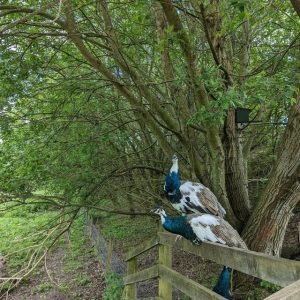
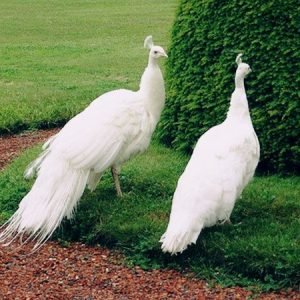
Beyond this classic wild-type bird, we also carry several documented color mutations. See the fully white White Peafowl, the patchwork Pied Peafowl, and the darker-winged Black-Shoulder Peafowl. If you’d rather have the related green species altogether, check out our Java Green Peafowl too.
Care and Housing
Give these birds open ground to roam and a secure, elevated roost for overnight safety from predators. A quality gamebird feed, supplemented with greens, grains, and occasional insects, keeps them healthy. Males need extra space once their train fully develops, which typically takes around four years, so plan your enclosure with that growth in mind from the start.
Buyer Questions
Is the peacock’s train actually its tail?
No. The train consists of elongated upper tail covert feathers. The true tail is short, brown, and hidden underneath, acting as a support strut.
When did India declare this its national bird?
India named the Indian Peafowl its national bird in 1963, recognizing its cultural significance and striking appearance.
How long does it take a train to fully develop?
A male’s train typically reaches full development around four years of age, growing progressively longer each year before that.
What’s the difference between a peacock and a peahen?
A peacock is the male, with an iridescent blue neck and a long train. A peahen is the female, duller in color and lacking a train entirely.
Can humans hear a peacock’s full courtship display?
Not entirely. Males produce infrasound down to about 4 Hz through their vibrating train, which falls below human hearing range.
Do Indian Blue Peafowl pair for life?
No. A single male typically mates with several females across a breeding season rather than forming a lifelong pair.
Do the color variety peafowl need different care?
No. White, Pied, and other color varieties share identical care needs with the standard Indian Blue Peafowl.