Ostrich
The world’s largest living bird, recognised for its impressive height, powerful legs, long neck, distinctive plumage, and remarkable running ability.
The Ostrich (Struthio camelus) is a remarkable flightless bird native to Africa. It is the largest living bird and has evolved powerful legs instead of flight. Ostriches are adapted to open landscapes, where their height gives them an excellent view of their surroundings. Their strong legs also allow them to run at high speeds when escaping danger. Today, ostriches are found in wild populations as well as managed and farming environments.
Tall & Powerful
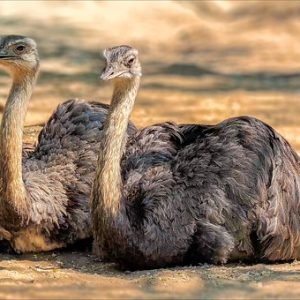
Ostriches have long necks, large eyes, powerful legs, and a distinctive body shape that makes them instantly recognisable.
Built for Running
Their powerful legs make ostriches exceptional runners and provide an important defence against predators.
Plants & More
Ostriches feed mainly on plant material such as grasses, leaves, flowers, and seeds, while also consuming insects and other small food items.
Tall, fast, and unmistakable, the Ostrich is one of the most extraordinary birds on Earth.
Basic Ostrich Care
Ostriches are not conventional companion birds and require substantial outdoor space. A suitable environment should provide secure fencing, room to walk and run, shade, shelter, clean water, and appropriate nutrition. Their enclosure must also account for their considerable height, strength, and powerful legs. A balanced diet can include suitable plant material, formulated feeds, and other foods appropriate for their age and management system. Because ostriches are large, active animals, responsible care requires proper facilities, experienced handling, and attention to local regulations.
Ostrich FAQs
What is an Ostrich?
An Ostrich is a large flightless bird scientifically known as Struthio camelus. It is native to Africa and is recognised as the largest living bird. Instead of flying, the Ostrich relies on its powerful legs for running and defence. Its long neck, large eyes, long legs, and distinctive plumage give it a unique appearance. Ostriches are specially adapted to life in open landscapes.
How fast can an Ostrich run?
Ostriches are exceptionally fast runners because their long, powerful legs are highly adapted for efficient movement. They can reach speeds of around 70 km/h in short bursts. Their running ability is an important survival adaptation because they live in open habitats where there may be limited places to hide. Their long stride also allows them to cover considerable distances efficiently.
What do Ostriches eat?
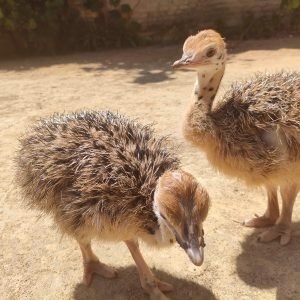
Ostriches mainly consume plant-based foods, including grasses, leaves, flowers, and seeds. They can also eat insects and other small food items when available. Their diet changes according to habitat and seasonal food availability. In managed environments, nutrition should be carefully balanced with suitable feeds and plant material. Fresh, clean water should also be available at all times.
How tall is an Ostrich?
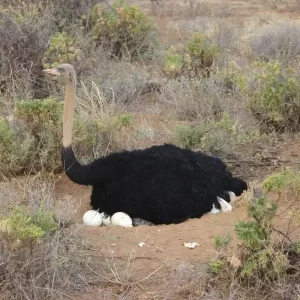
Ostriches are exceptionally tall birds, with adults commonly reaching around 2 to 2.7 metres in height. Males are generally larger than females and can develop striking black-and-white plumage, while females typically have more subdued brownish-grey feathers. Their height provides a broad view across open habitats and helps them detect potential threats from a distance.
Can Ostriches fly?
No. Ostriches are flightless birds. Their wings are not adapted for powered flight, while their bodies and legs are specialised for running. However, their wings still have important functions. Ostriches use them during courtship displays, communication, balance, and manoeuvring. Therefore, although they cannot fly, their wings remain useful parts of their natural behaviour.
Are Ostriches good pets?
Ostriches are not suitable as typical household pets. They are extremely large, powerful, active birds that require substantial outdoor space and specialised facilities. Their legs can deliver powerful kicks, particularly when the bird feels threatened. Consequently, safe handling requires appropriate experience and well-designed enclosures. Ostriches are better suited to professional, farming, zoological, or properly managed wildlife environments than ordinary homes.
What should I consider before buying an Ostrich?
Before acquiring an Ostrich, consider its adult size, enclosure requirements, diet, handling needs, and long-term management. You need secure fencing and enough land for natural movement and running. In addition, check local livestock and wildlife regulations before purchase. Most importantly, use a responsible source and make sure you have the facilities and experience required to manage such a powerful bird safely. Ostrich ownership is very different from keeping conventional pet birds.