Description
Blue-Headed Pionus Parrots for Sale
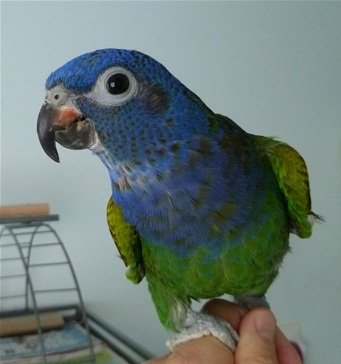
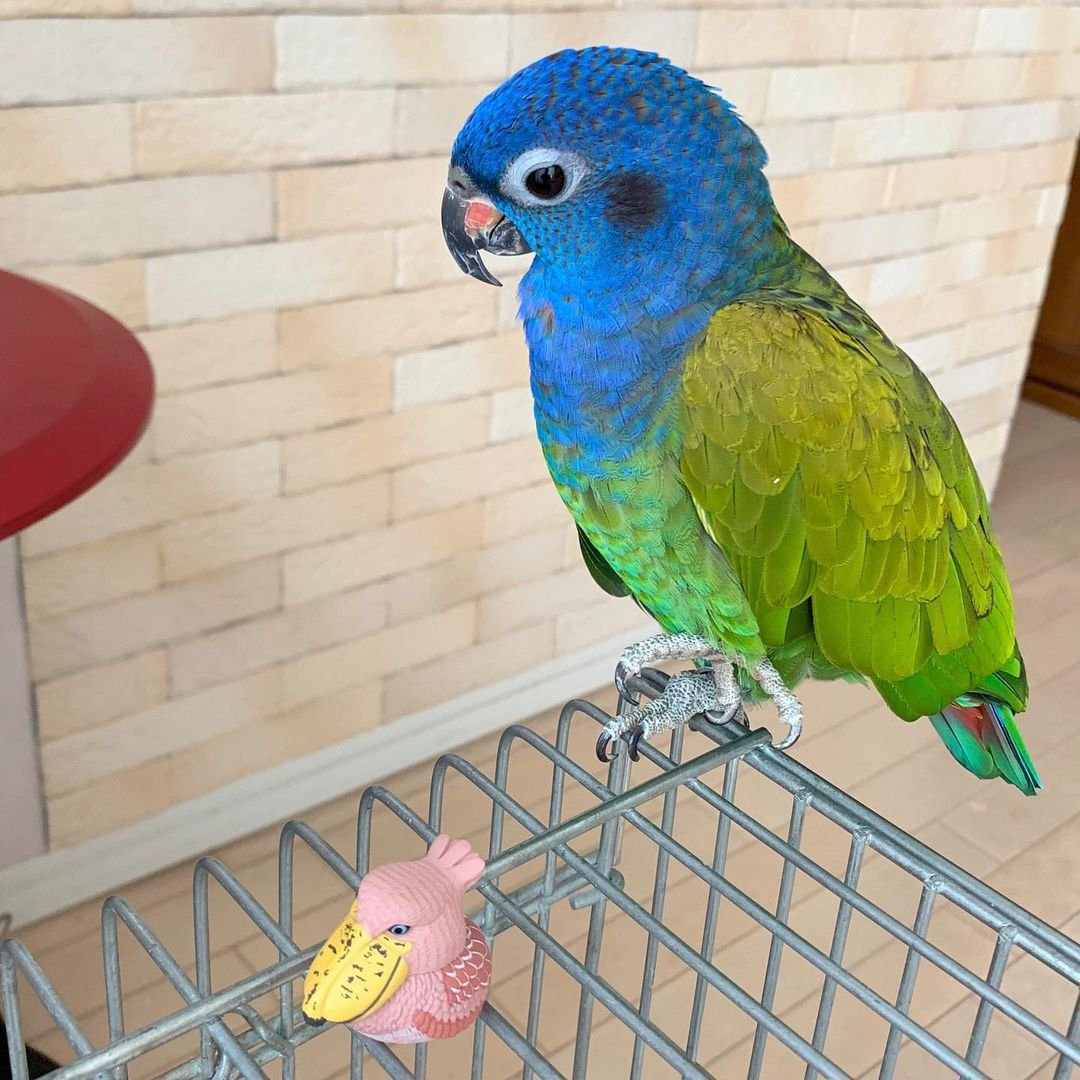
A striking Pionus parrot with a rich blue head, green body, red undertail feathers, and a compact square tail.
🌎 South America
📏 28 cm
🦜 Pionus menstruus
The Blue-Headed Pionus, scientifically known as Pionus menstruus, is a medium-sized South American parrot. Its mainly green body contrasts strongly with its blue head and neck, while red undertail feathers add another distinctive feature. It also has a short square tail and pale eye ring, giving it the classic Pionus profile.
Blue-Headed Pionus Identification
Adults generally show a green body with a blue head and neck. Some birds have a faint red band across the throat, while the ear coverts appear dark. The red undertail coverts have blue or green tips, and the green tail carries red near its base. The eye ring is pale grey and the bill is dark grey with red at its base.
Blue, Green and Red Details
The Blue-Headed Pionus has a relatively subtle overall palette, yet the combination of green body feathers, blue head and neck, and red undertail coverts creates a distinctive appearance. In addition, some subspecies show darker blue coloration or stronger red on the throat.
Central and South America
The Blue-Headed Pionus occurs across a broad Neotropical range, including parts of Costa Rica, Venezuela, Colombia, the Guianas, Brazil, Bolivia, and other areas of northern and western South America.
Forests and Semi-Open Areas
It mainly occupies humid and semi-humid forests, although it can also use forest edges, cultivated areas, and other semi-open habitats. Along rivers, it may also occur in somewhat drier environments.
Social and Active
Blue-Headed Pionus parrots are social birds that can gather in small flocks and larger groups around feeding and roosting areas. They produce high-pitched screeching calls, especially during social activity. In captivity, regular interaction and enrichment can help meet their need for mental and physical activity.
Diet and Feeding
In the wild, Blue-Headed Pionus parrots eat fruits, seeds, berries, and other plant foods. They may also visit clay banks to obtain minerals that can help neutralize toxins found in some seeds. For companion birds, provide a balanced formulated parrot diet with suitable fresh fruits and vegetables, along with clean drinking water.
Housing and Enrichment
Give a Blue-Headed Pionus a secure enclosure with enough room for climbing, wing movement, and exercise. Add safe perches, chewable toys, swings, ropes, and foraging activities. Also provide daily interaction and supervised exercise outside the enclosure when appropriate.
Spacious Housing
Safe Perches
Foraging Toys
Daily Interaction
Breeding and Nesting
Blue-Headed Pionus parrots nest in tree cavities. A typical clutch contains around three to five white eggs, with incubation lasting roughly 24–26 days according to available species information. Breeding pairs need a quiet environment, suitable nesting space, balanced nutrition, and careful monitoring.
About 28 cm
Adults reach approximately 28 cm, or 10.9 inches, in length. Reported adult weight ranges from about 234 to 295 grams, giving this Pionus a compact but substantial build.
Daily Attention Matters
A Blue-Headed Pionus needs consistent care throughout its life. Good nutrition, clean water, exercise, enrichment, suitable housing, and routine avian veterinary care all contribute to long-term wellbeing.
Before choosing a Blue-Headed Pionus, ask about the bird’s age, diet, socialization, health history, and current care routine. A healthy bird should appear alert, active, and well feathered. You can also
explore our complete bird collection
for additional species.
Blue-Headed Pionus FAQs
Appearance and Personality
What does a Blue-Headed Pionus look like?
The Blue-Headed Pionus has a mainly green body with a blue head and neck. It also has red undertail coverts, a short square tail, and a pale grey eye ring. Some birds show a faint red throat band, while different subspecies can vary in the depth of their blue and green coloration.
Is a Blue-Headed Pionus a good companion bird?
Blue-Headed Pionus parrots can make engaging companion birds when owners provide proper care, social interaction, and enrichment. They are naturally social and often live in groups in the wild. However, each bird has its own personality, so consistent handling and positive interaction remain important.
Are Blue-Headed Pionus parrots noisy?
Blue-Headed Pionus parrots produce high-pitched screeches and other social calls. Their noise level can vary between individuals and situations. They may vocalize more during excitement, social contact, or when communicating with other birds. Proper enrichment and interaction can help support normal behaviour.
Diet and Natural Habitat
What do Blue-Headed Pionus parrots eat?
Their natural diet includes fruits, seeds, berries, and other plant foods. They may also visit mineral-rich clay banks while feeding. For companion care, offer a balanced formulated parrot diet together with suitable fresh fruits and vegetables. Fresh, clean water should always be available.
Where do Blue-Headed Pionus parrots live?
The species has a broad range across Central and South America. It occurs in humid and semi-humid forests, forest edges, cultivated areas, and other semi-open habitats. It can also use somewhat drier environments along rivers in parts of its range.
How big does a Blue-Headed Pionus get?
An adult Blue-Headed Pionus reaches approximately 28 cm, or 10.9 inches, in length. Reported adult weight ranges from 234 to 295 grams. Its short square tail and compact body create the characteristic Pionus shape.
Care and Breeding
What cage does a Blue-Headed Pionus need?
A Blue-Headed Pionus needs a secure enclosure with enough room to move, climb, stretch, and exercise. Add safe perches, chewable toys, swings, ropes, and foraging activities. Regular supervised time outside the enclosure can also provide valuable exercise and mental stimulation.
Where do Blue-Headed Pionus parrots build their nests?
Blue-Headed Pionus parrots normally nest in tree cavities. A typical clutch contains around three to five white eggs. During breeding, a pair needs a suitable nesting cavity, quiet surroundings, good nutrition, and careful monitoring.
What should I check before buying a Blue-Headed Pionus?
Ask about the bird’s age, current diet, health history, socialization, and previous care. Check that the bird appears alert and active with clean eyes, healthy feathers, and normal breathing. Also confirm the bird’s identity and any available veterinary records before making a purchase.