Description
Maximilian Pionus for Sale
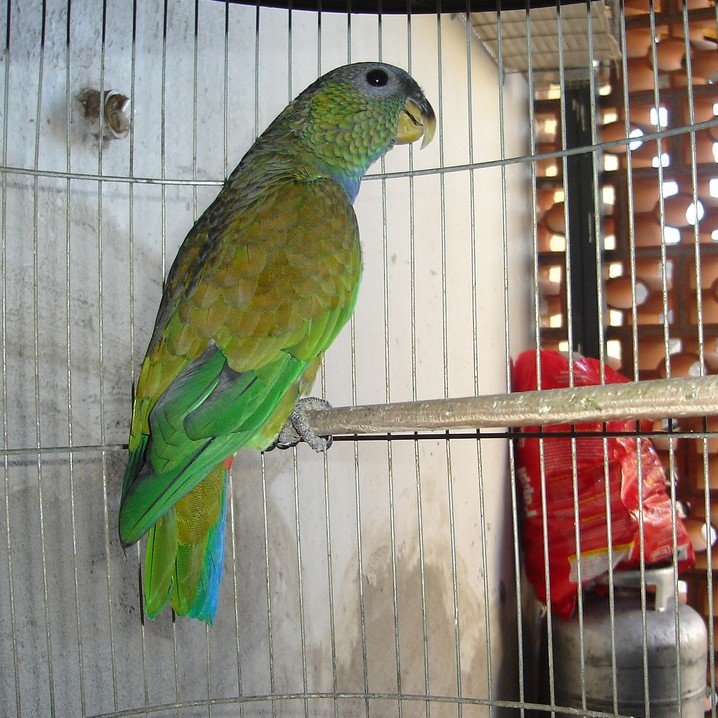
A sturdy South American Pionus with a scaly-looking head, green plumage, blue throat, and naturally social personality.
🌎 South America
📏 29 cm
🦜 Pionus maximiliani
The Maximilian Pionus, also known as the Scaly-headed Parrot, is a medium-sized South American parrot with a mainly green body and distinctive grey-scaled head feathers. It lives in several types of dry and humid woodland and often forms pairs or flocks. Its quiet nature and sturdy build have also made it a familiar Pionus in aviculture.
Maximilian Pionus Appearance
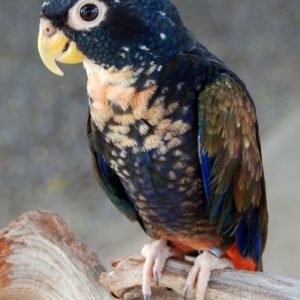
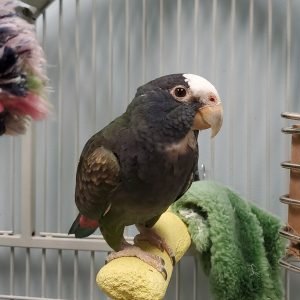
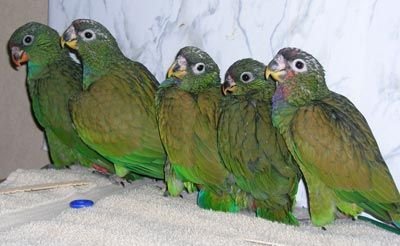
Adults have mostly dull green plumage, with paler bronze or brown tones across the underparts. The forehead and lores show darker green and black tones, while the chin and throat have a noticeable blue area. The red undertail coverts have blue and yellow-green tips, and the green tail shows red near its base.
South American Range
Its range extends across parts of Brazil, Bolivia, Paraguay, and Argentina. Different subspecies occupy different regions, so the exact appearance can vary slightly between populations.
Forests and Woodland
Maximilian Pionus parrots use dry forest, caatinga, Chaco woodland, gallery forest, Araucaria forest, and subtropical forest. They can occur from lowlands to elevations of about 2,000 metres.
Social and Generally Quiet
Maximilian Pionus parrots often live in pairs or small groups and may gather in larger flocks when food is plentiful. In captivity, they can show a calm and steady personality. They still need regular interaction, exercise, enrichment, and opportunities to explore.
Diet and Feeding
In the wild, this Pionus feeds on fruits, nuts, berries, seeds, and other plant foods. For companion care, offer a balanced formulated parrot diet together with suitable fresh fruits and vegetables. Apple, pear, banana, pomegranate, carrots, green beans, leafy greens, and other safe foods can add variety. Fresh drinking water should remain available every day.
Housing and Enrichment
Give a Maximilian Pionus plenty of room for movement and exercise. A large aviary or spacious enclosure works well, especially when the bird can climb and make short flights. Also provide different-sized safe perches, swings, ropes, ladders, and foraging toys. Shallow bathing dishes or a gentle mist can provide additional enrichment.
Spacious Housing
Safe Perches
Foraging Toys
Bathing
Breeding and Nesting
In the wild, Maximilian Pionus parrots nest in tree hollows. The World Parrot Trust reports a typical clutch of four to five eggs, while aviculture sources commonly report three to four eggs in captive breeding. Breeding timing varies by location, and careful planning is important when keeping a breeding pair.
Long-Term Companion
The World Parrot Trust lists a captive longevity of around 20 years. Therefore, owners should plan for long-term nutrition, housing, enrichment, and routine avian veterinary care.
About 29 cm
Adults reach about 29 cm, or 11.3 inches, and commonly weigh between 233 and 293 grams. This makes the Maximilian Pionus one of the larger members of the Pionus group.
Look for a healthy, active bird with clean eyes, smooth feathers, and normal breathing. Also ask about age, diet, veterinary history, and socialization. For more options, you can
explore our complete bird collection
.
Maximilian Pionus FAQs
Appearance and Personality
What is a Maximilian Pionus?
The Maximilian Pionus is a South American parrot scientifically known as Pionus maximiliani. It is also called the Scaly-headed Parrot because the feathers on its head create a scaled appearance. Adults have mainly green plumage with blue on the chin and throat and red near the base of the tail.
How big does a Maximilian Pionus get?
An adult Maximilian Pionus reaches about 29 cm, or 11.3 inches, in length. The World Parrot Trust lists an adult weight range of approximately 233–293 grams. Its stocky body and short tail give it a compact appearance compared with some other medium-sized parrots.
Are Maximilian Pionus parrots quiet?
Maximilian Pionus parrots are often described as relatively quiet in captivity, although individual birds can differ. They may become louder during excitement, flight, or social contact. Their natural calls can carry over distance, while feeding activity may remain much quieter.
Diet and Habitat
What do Maximilian Pionus parrots eat?
Wild Maximilian Pionus parrots eat fruits, nuts, berries, seeds, and other plant foods. For companion birds, use a balanced formulated parrot diet with suitable fresh produce. Fruits and vegetables can provide variety, while fresh water should remain available throughout the day.
Where do Maximilian Pionus parrots live?
The species occurs across parts of Brazil, Bolivia, Paraguay, and Argentina. It uses dry forest, caatinga, Chaco woodland, gallery woodland, Araucaria forest, and subtropical forest. Different subspecies occupy different parts of this broad South American range.
Are Maximilian Pionus parrots social birds?
Yes. They commonly occur in pairs, small groups, or larger flocks when food is plentiful. They also roost communally in tall trees. In captivity, regular interaction and enrichment can support their natural social behavior and keep them mentally active.
Care and Breeding
What cage does a Maximilian Pionus need?
A Maximilian Pionus needs a secure enclosure with enough room for climbing, wing movement, and exercise. A large aviary provides even more space. Add different-sized safe perches, swings, ropes, ladders, and foraging toys. Regular bathing opportunities can also provide useful enrichment.
How long does a Maximilian Pionus live?
The World Parrot Trust lists a captive longevity of around 20 years. Good nutrition, suitable housing, exercise, enrichment, clean water, and regular avian veterinary care can all contribute to long-term health. Individual lifespan can vary depending on genetics and overall care.
How many eggs does a Maximilian Pionus lay?
The World Parrot Trust reports a typical clutch of four to five eggs. Other aviculture information reports three to four eggs in captive breeding. In the wild, the species nests in tree hollows. Breeding pairs need suitable nesting space, nutrition, privacy, and careful monitoring.