

Description
Indian Ringneck Parakeet for Sale
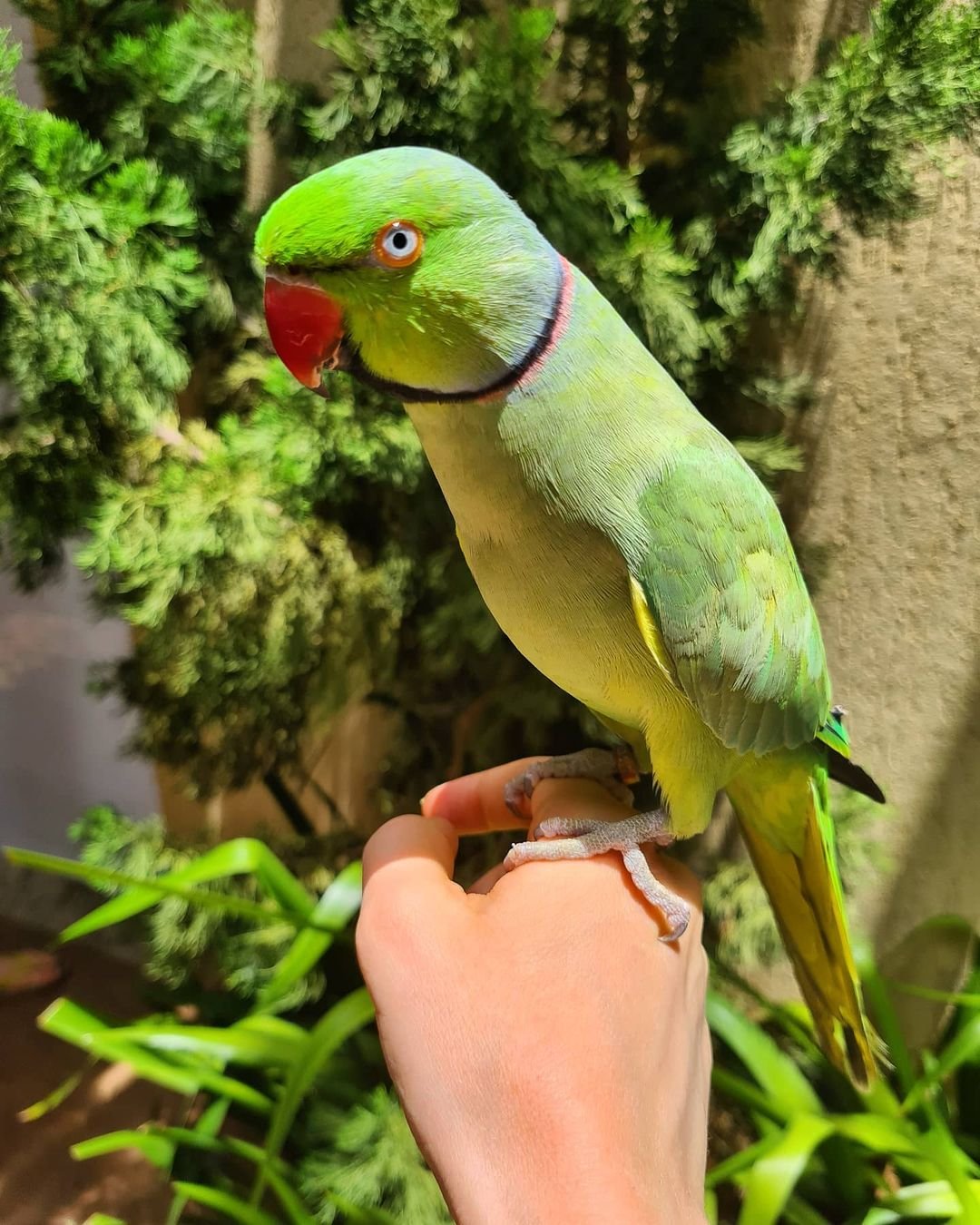
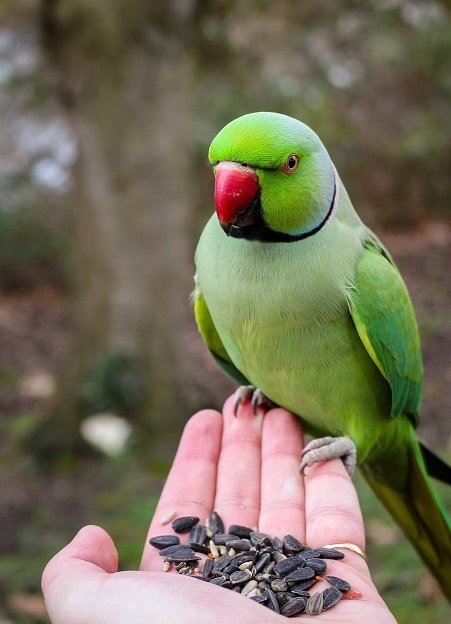
A vivid green, long-tailed parakeet recognized for its red bill and distinctive neck markings in adult males.
🌏 Indian Subcontinent
📏 40 cm
🦜 Psittacula krameri
The Indian Ringneck Parakeet, commonly known as the Rose-ringed Parakeet, is a medium-sized parrot with vivid green plumage, a long tapered tail, and a strong red bill. Adult males develop a black and rose-colored neck ring, while females and immature birds generally lack the prominent male collar.
Indian Ringneck Parakeet Appearance
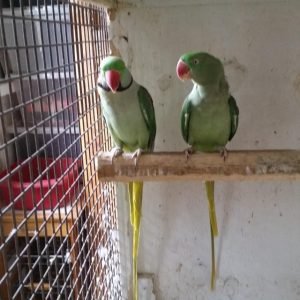
The species has an overall green appearance, a coral-red bill, and an exceptionally long tail with blue and yellow tones. Adult males develop a thin black line across the lower cheeks followed by a rose-pink collar around the hindneck. A soft blue wash can also appear on the nape. Females and young birds show much less obvious neck markings.
Black and Rose Collar
Adult males develop the characteristic black and rose-pink neck ring. They also show a blue wash on the nape and a red upper bill with a darker tip.
Softer Neck Markings
Females and immature birds usually lack the strong black and rose collar of adult males. Instead, the neck may show a pale or shadow-like ring that becomes clearer as the bird matures.
India and South Asia
The Indian populations occur across much of the subcontinent, including India, Sri Lanka, Pakistan, Nepal, Bangladesh, and nearby regions. The species also has native populations in parts of Africa.
Woodlands, Farms and Gardens
Indian Ringnecks use deciduous woodland, open forest, savanna, agricultural areas, parks, gardens, and urban landscapes. Their adaptability allows them to live in many environments where trees and food sources are available.
Active and Highly Social
Indian Ringnecks are social birds that often gather in large flocks outside the breeding season. They also form communal roosts with other birds. Their flight is fast and direct, while their loud calls become especially noticeable during flight and around roosting areas.
Diet and Feeding
In the wild, Indian Ringnecks eat seeds, fruits, berries, nuts, flowers, nectar, and cultivated grains. Their natural food includes figs, dates, mangoes, guavas, millet, sorghum, maize, and other plant foods. For companion care, provide a balanced parakeet diet with suitable fresh fruits and vegetables, along with clean drinking water.
Housing and Enrichment
Give an Indian Ringneck plenty of room for movement, climbing, and flight. A spacious aviary works especially well, while safe perches, chewable wood, ropes, ladders, swings, and foraging toys provide daily enrichment. Also provide bathing opportunities and regular supervised exercise.
Spacious Aviary
Safe Perches
Chewable Toys
Foraging
Breeding and Nesting
Indian Ringnecks usually nest in existing tree cavities, which they may enlarge themselves. They can also nest in rock faces or old walls. The World Parrot Trust reports clutches of four to six eggs, while Cornell lists three to four eggs. Breeding commonly occurs from January to April, although timing can vary by location.
About 40 cm
Adults reach around 40 cm, or 15.6 inches, in total length. Much of this length comes from the exceptionally long tail. Reported adult weight is approximately 116–140 grams.
Around 25–30 Years
The World Parrot Trust reports a captive longevity of around 25–30 years. A balanced diet, suitable housing, exercise, enrichment, clean water, and regular avian veterinary care support long-term wellbeing.
Before choosing an Indian Ringneck, ask about its age, diet, socialization, health history, and current housing. Also confirm the bird’s identity and available records before purchase. You can
explore our complete bird collection
for more species.
Indian Ringneck Parakeet FAQs
Appearance and Behaviour
What does an Indian Ringneck Parakeet look like?
Indian Ringnecks have bright green plumage, a red bill, and a very long tapered tail. Adult males develop a black chin stripe and rose-pink neck ring with a blue wash on the nape. Females and immature birds usually lack the prominent adult male collar.
Are Indian Ringneck Parakeets good companion birds?
Indian Ringnecks are active and social parrots that need regular interaction, exercise, and mental stimulation. Their individual temperament varies, so early socialization and consistent positive handling can influence how a bird responds to people. Spacious housing and enrichment also form an important part of daily care.
Can Indian Ringnecks talk?
Indian Ringnecks are capable of learning human speech and other sounds. Individual talking ability varies, so not every bird develops the same vocabulary. Regular interaction, repetition, and positive training can provide useful mental stimulation while helping a bird learn sounds and words.
Diet and Habitat
What do Indian Ringneck Parakeets eat?
Their natural diet includes seeds, fruits, berries, nuts, flowers, nectar, and grains. Wild birds also feed on crops such as millet, sorghum, maize, and sunflower. For companion care, provide a balanced parakeet diet with suitable fresh fruits and vegetables and keep clean drinking water available.
Where do Indian Ringneck Parakeets live?
Indian Ringnecks naturally occur across much of the Indian subcontinent, including India, Sri Lanka, Pakistan, Nepal, and Bangladesh. They use woodland, open forest, agricultural areas, parks, gardens, and urban landscapes. Their adaptable nature allows them to use both natural and human-modified environments.
How big does an Indian Ringneck Parakeet get?
An adult Indian Ringneck reaches about 40 cm, or 15.6 inches, in total length. Much of its overall length comes from the long tail. The World Parrot Trust reports an adult weight of approximately 116–140 grams.
Care and Breeding
What cage does an Indian Ringneck need?
Indian Ringnecks need spacious housing because they are active, long-tailed parrots. The World Parrot Trust recommends a walk-in aviary with a minimum length of about 4.5 metres. Provide safe perches, climbing areas, chewable wood, swings, ropes, foraging toys, and regular exercise.
How many eggs does an Indian Ringneck lay?
The World Parrot Trust reports a typical clutch of four to six eggs, while Cornell lists three to four eggs. The eggs are laid in existing cavities that the birds may enlarge. Breeding pairs need suitable nesting space, balanced nutrition, privacy, and careful monitoring.
How long do Indian Ringneck Parakeets live?
Captive Indian Ringnecks commonly have a reported longevity of around 25–30 years. Long-term care includes a balanced diet, spacious housing, daily enrichment, exercise, clean water, and appropriate veterinary attention. Individual lifespan can vary depending on genetics and overall care.