Description
Plum-Headed Parakeet for Sale Online
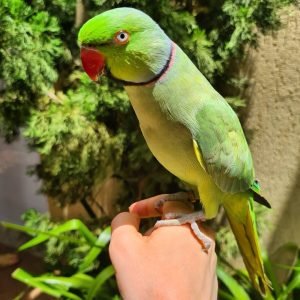
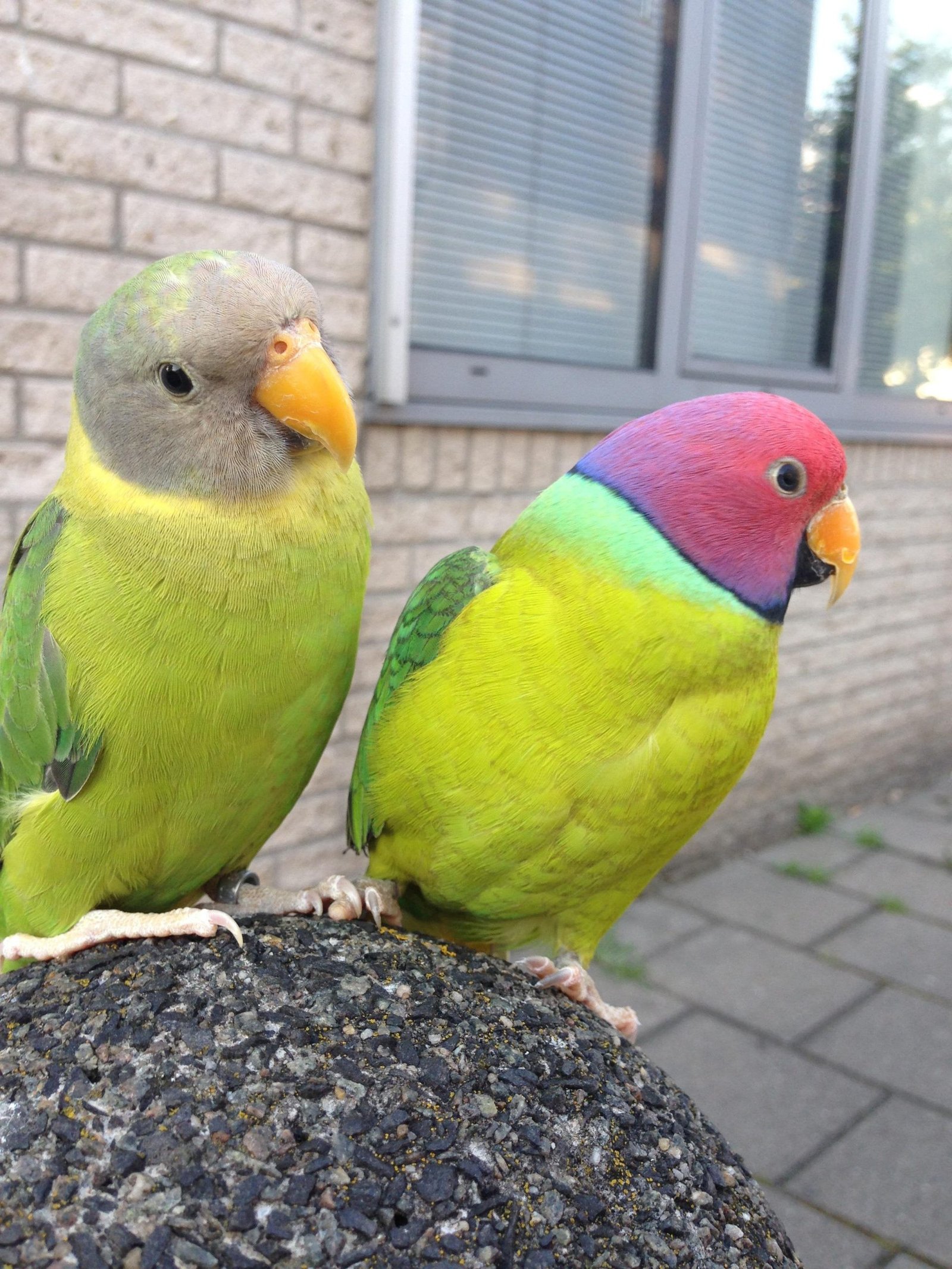
A colorful Asian parakeet with a green body, rich plum-colored male head, blue collar, and elegant long tail.
🌏 Indian Subcontinent
📏 33 cm
🦜 Psittacula cyanocephala
The Plum-Headed Parakeet, scientifically known as Psittacula cyanocephala, is a colorful parakeet native to the Indian subcontinent. Males have a striking plum-red head that fades into blue and violet around the crown and neck, while females have a more subdued bluish-grey head. Both sexes have a predominantly green body and long tail.
Plum-Headed Parakeet Appearance
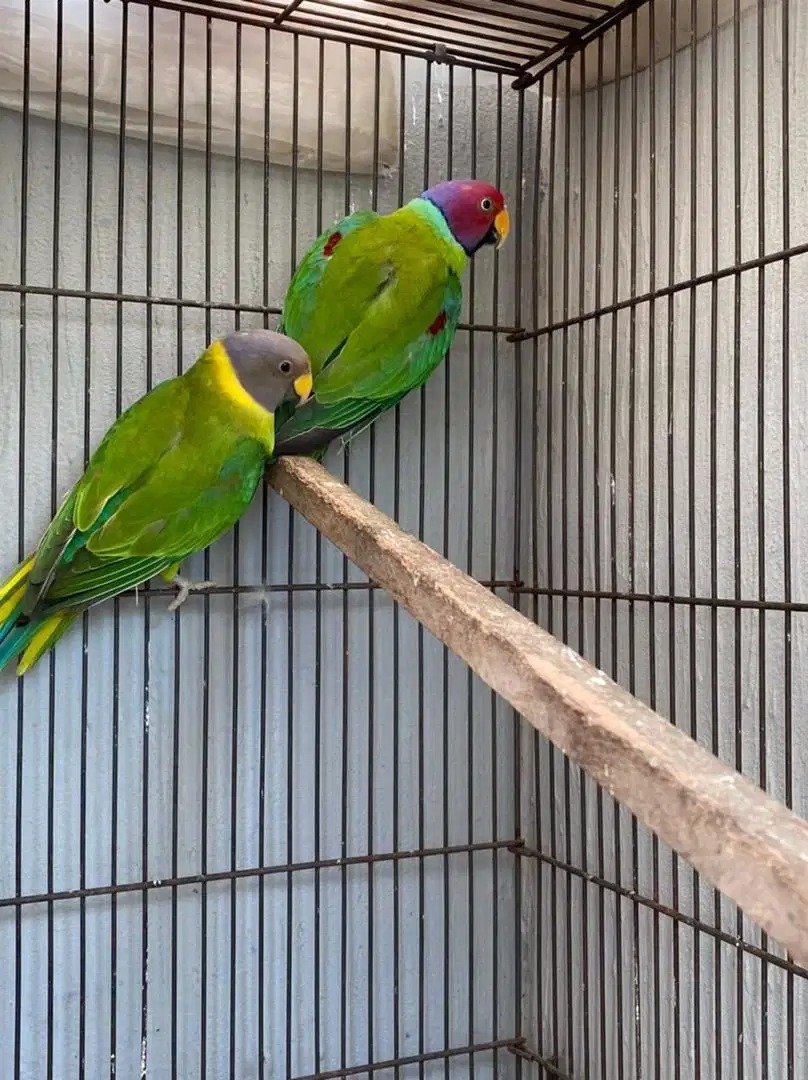
The male has a deep red or plum-colored head with blue-violet shading toward the back of the crown and neck. A black chin and cheek stripe sits above a blue-green collar. The wings carry a dark red patch, while the central tail feathers appear blue with white tips. Females show a duller blue-grey head and lack the male’s red wing patch.
Plum-Colored Head
Adult males have a rich red-plum head with blue and violet shading toward the crown and neck. They also show a black cheek stripe, blue-green collar, and dark red wing patch.
Softer Head Colour
Females have a more subdued bluish-grey head with yellowish edging around the neck. They also lack the male’s dark red wing patch, making the sexes relatively easy to distinguish as adults.
Indian Subcontinent
The species occurs from the lower Himalayan foothills through much of India and into Nepal, Bhutan, West Bengal, and Sri Lanka. It also occurs on Rameswaram Island and parts of Pakistan.
Woodlands and Cultivated Areas
Plum-Headed Parakeets use moist deciduous forests, wooded areas, forest edges, clearings, and cultivated landscapes. They can occur from lowlands into the hills, with the World Parrot Trust reporting records to around 1,300 metres.
Active and Social
These parakeets usually move in pairs or small flocks, although larger groups can gather where food is plentiful. They forage in trees and can join mixed flocks with other parakeet species. Their flight is fast and direct, while their social calls can become quite noticeable around roosting areas.
Diet and Feeding
Plum-Headed Parakeets eat a wide variety of plant foods. Their natural diet includes fruits, figs, seeds, nuts, flowers, nectar, buds, and grains. They are also known to feed on crops in some areas. For companion care, provide a balanced parakeet diet together with suitable fresh fruits, vegetables, leafy greens, and clean drinking water.
Housing and Enrichment
Give a Plum-Headed Parakeet enough space for climbing, movement, and short flights. A spacious aviary provides useful exercise, while safe perches, chewable branches, ladders, ropes, swings, and foraging toys add daily stimulation. Bathing opportunities can also support natural behaviour.
Spacious Aviary
Safe Perches
Chew Toys
Foraging
Breeding and Nesting
Plum-Headed Parakeets usually nest in hollow tree trunks or branches, often breeding in small colonies. In India, the main breeding period generally runs from December to April. A typical clutch contains four to five eggs according to the World Parrot Trust, while other sources report four to six eggs. Young birds fledge at around seven weeks.
About 33 cm
Adults reach around 33 cm, or 12.8 inches, in total length and generally weigh about 66–80 grams. Much of the length comes from the long tail feathers.
Around 15–25 Years
Captive longevity is reported at around 15–25 years. Good nutrition, suitable housing, exercise, enrichment, clean water, and appropriate veterinary care all support long-term wellbeing.
Before choosing a Plum-Headed Parakeet, ask about its age, diet, socialization, health history, and current housing. Also confirm the bird’s identity and available records before purchase. You can
explore our complete bird collection
for other species.
Plum-Headed Parakeet FAQs
Appearance and Behaviour
What does a Plum-Headed Parakeet look like?
A Plum-Headed Parakeet has a mainly green body and a long tail. Adult males have a striking plum-red head with blue and violet shading around the crown and neck, plus a black cheek stripe and blue-green collar. Females have a more subdued bluish-grey head and lack the male’s red wing patch.
Are Plum-Headed Parakeets good companion birds?
Plum-Headed Parakeets can be active and engaging companion birds when owners provide appropriate space, enrichment, nutrition, and interaction. They are social by nature and commonly live in pairs or groups. However, individual temperament varies, so regular positive interaction helps a bird become comfortable with its environment.
Can Plum-Headed Parakeets talk?
Some Plum-Headed Parakeets can learn to imitate sounds, whistles, and human speech. Individual ability varies, so owners should not expect every bird to develop the same vocabulary. Daily interaction and positive training can provide useful mental stimulation regardless of how much the bird talks.
Diet and Habitat
What do Plum-Headed Parakeets eat?
Their wild diet includes fruits, figs, seeds, nuts, flowers, nectar, buds, and grains. They may also feed on bamboo seeds and agricultural crops in some regions. For companion birds, provide a balanced parakeet diet with suitable fresh fruits, vegetables, leafy greens, and clean drinking water.
Where do Plum-Headed Parakeets live?
The species occurs across the Indian subcontinent, including India, Sri Lanka, Nepal, Bhutan, parts of Pakistan, and West Bengal. It uses moist deciduous forest, wooded habitats, forest edges, clearings, and cultivated areas. It can occur in both lowlands and hills.
How big does a Plum-Headed Parakeet get?
An adult Plum-Headed Parakeet reaches approximately 33 cm, or 12.8 inches, in total length. The species weighs around 66–80 grams. Its long central tail feathers contribute significantly to its overall length and give it an elegant appearance in flight.
Care and Breeding
What cage does a Plum-Headed Parakeet need?
This active parakeet benefits from spacious housing that allows climbing and flight. The World Parrot Trust recommends a walk-in aviary with a minimum length of about 3 metres. Provide safe perches, climbing ropes, chewable branches, toys, bathing opportunities, and regular enrichment.
How many eggs does a Plum-Headed Parakeet lay?
A typical clutch contains around four to five eggs according to the World Parrot Trust, while other species sources report four to six eggs. The female generally handles most incubation. Nests usually occur in hollow tree trunks or branches, and breeding may take place in small colonies.
How long do Plum-Headed Parakeets live?
Captive longevity is reported at approximately 15–25 years. A long-term care routine should include a balanced diet, spacious housing, daily enrichment, exercise, clean water, and appropriate veterinary attention. Individual lifespan can vary with genetics, environment, and overall care.