

Description
Trumpeter Swan for Sale
Weighing up to 30 pounds with a wingspan stretching over 10 feet, the Trumpeter Swan holds the title of North America’s largest native waterfowl species. That size alone would make it memorable, but its history makes it remarkable: this bird nearly vanished entirely, then came back from the brink through one of conservation’s genuine success stories.
A Comeback, Told in Numbers
1933 — Fewer Than 70 Birds
Decades of unregulated hunting for feathers and skins pushed the species to the edge, with only a handful of known survivors in the contiguous United States.
1968 — Around 3,700 Birds
Early protection efforts and the discovery of an unrecorded Alaskan population gave the species a foothold to slowly rebuild.
2010 — Over 46,000 Birds
Reintroduction programs and habitat protection across the Pacific Coast, Rocky Mountain, and Interior populations accelerated the recovery.
Today — 60,000+ Birds
The IUCN now lists the species as Least Concern, and populations continue growing across their North American range.
Telling It Apart From Other Swans
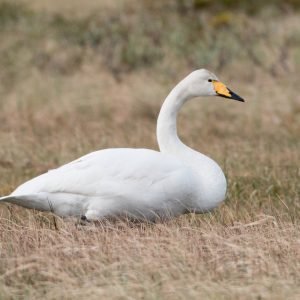
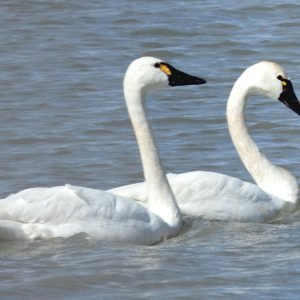
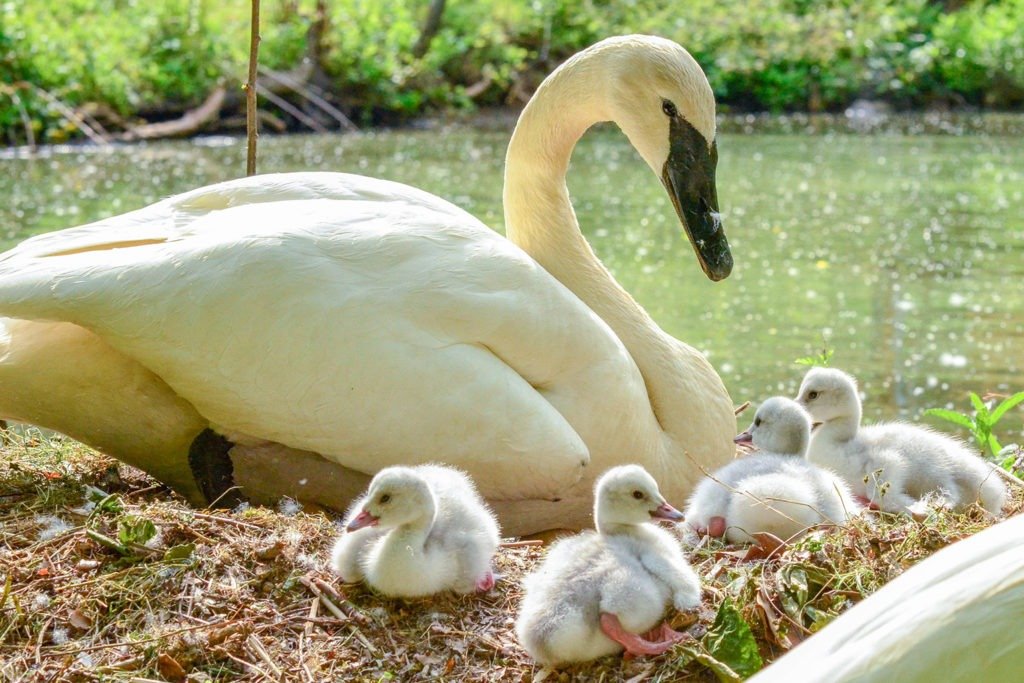
Look for an all-black, wedge-shaped bill with a thin salmon-pink streak along the lores. This sets it apart from the Tundra Swan’s small yellow eye-spot and the Whooper Swan’s mostly yellow bill. Combine that with sheer size — this is the heaviest flying bird native to North America — and identification usually isn’t difficult.
Range and Habitat
Trumpeter Swans breed in remote wetlands, ponds, and slow-moving rivers across Alaska, western Canada, and the northern United States. While northern populations migrate to ice-free marshes and estuaries for winter, several reintroduced southern flocks stay put year-round rather than making the journey.
Voice and Social Life
True to its name, this swan produces a deep, resonant trumpeting call, powered by an unusually long, coiled trachea. Pairs form strong, long-term bonds, and because the species is naturally long-lived, a well-matched pair can stay together for many years while raising successive broods.
Aviary Care
Given their size, Trumpeter Swans need a spacious pond or lake area with plenty of room to take flight and forage. A diet centered on aquatic plants, supplemented with grain and a quality waterfowl feed, closely mirrors what they’d eat in the wild.
Other Waterfowl You Might Like
Buyer Questions
How close did Trumpeter Swans come to extinction?
By 1933, fewer than 70 individuals were known to exist in the contiguous United States, making extinction a very real possibility at the time.
How do I tell them apart from Tundra or Whooper Swans?
Check the bill: Trumpeter Swans show an all-black bill with a thin pink streak, unlike the yellow markings seen on the other two species.
Do all Trumpeter Swans migrate?
No. While northern populations migrate seasonally, several reintroduced southern flocks remain in the same area year-round.