Description
Northern Shoveler Duck
A dabbling duck best known for one thing above all — a long, spoon-shaped bill built for straining a meal straight out of the water.
📊 Least Concern
🥄 Filter Feeder
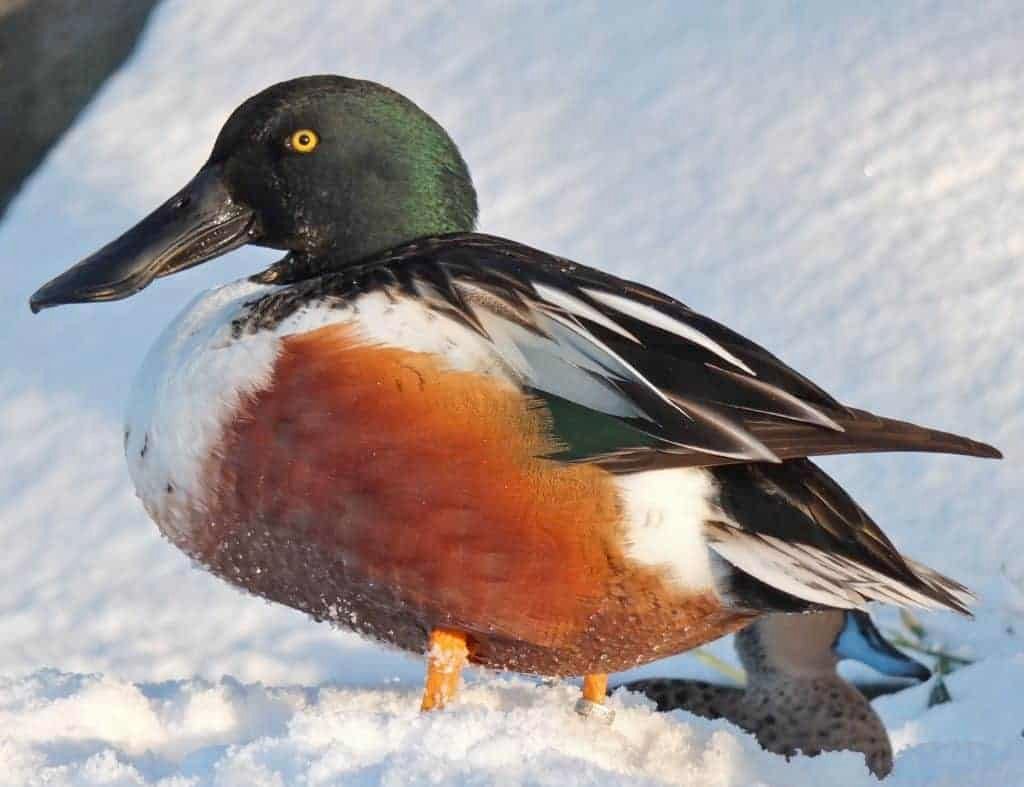
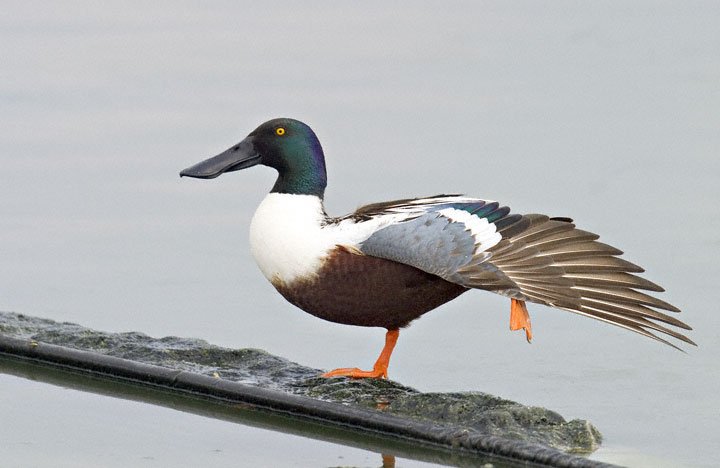
Alongside the Mallard, the Northern Shoveler is one of the most recognizable dabbling ducks in the world, breeding across the entire Northern Hemisphere. Its oversized, flattened bill is twice as wide at the tip as at the base — a built-in sieve that sets it apart from every other duck on the water.
Identification
Breeding males show off a glossy dark green head, white chest, and rusty-chestnut flanks, with a black bill and striking yellow eyes. Females are mottled brown all over, but keep the tell-tale shovel bill, now a duller greenish-brown with an orange edge. Both sexes flash a bright green wing patch in flight.
Habitat and Range
This species breeds in shallow marshes, prairie potholes, and freshwater ponds with plenty of muddy bottom to filter through. Outside breeding season, it winters on brackish coastal lagoons and flooded fields, and its range stretches across North America, Europe, Africa, and Asia.
Along the edge of its bill sit more than 100 comb-like projections called lamellae. As the duck sweeps its bill side to side through shallow water, it filters out seeds, insects, and tiny crustaceans while pushing the water back out — one of the most sophisticated feeding setups of any waterfowl.
Diet in the Wild and at Home
In summer, this omnivorous duck eats a mix of aquatic plants, seeds, insects, and small crustaceans, shifting toward mostly seeds and plant matter over winter. Since it rarely feeds on land, unlike many other dabbling ducks, a home pond or shallow water source with natural vegetation makes the biggest difference to its wellbeing, supplemented with a quality waterfowl feed.
Breeding and Temperament
Pairs are monogamous, nesting on the ground near water in a shallow scrape lined with grass and down. The female lays 8 to 12 eggs, incubating them alone, while the male — unusually among dabbling ducks — sticks around to defend a territory of several hectares after hatching. For compatible pond companions, browse our complete bird collection.
Buyer Questions
What makes this duck’s bill unique?
It’s lined with over 100 comb-like projections that filter tiny food particles straight out of the water — one of the most specialized bills of any duck.
Do they need a large pond?
A shallow water source with a muddy or vegetated bottom works best, since that’s where their filter-feeding style is most effective.
Are males and females easy to tell apart?
Yes — breeding males have a glossy green head and chestnut flanks, while females are mottled brown all over, though both share the same shovel-shaped bill.