Description
Lutino Quaker for Sale Online
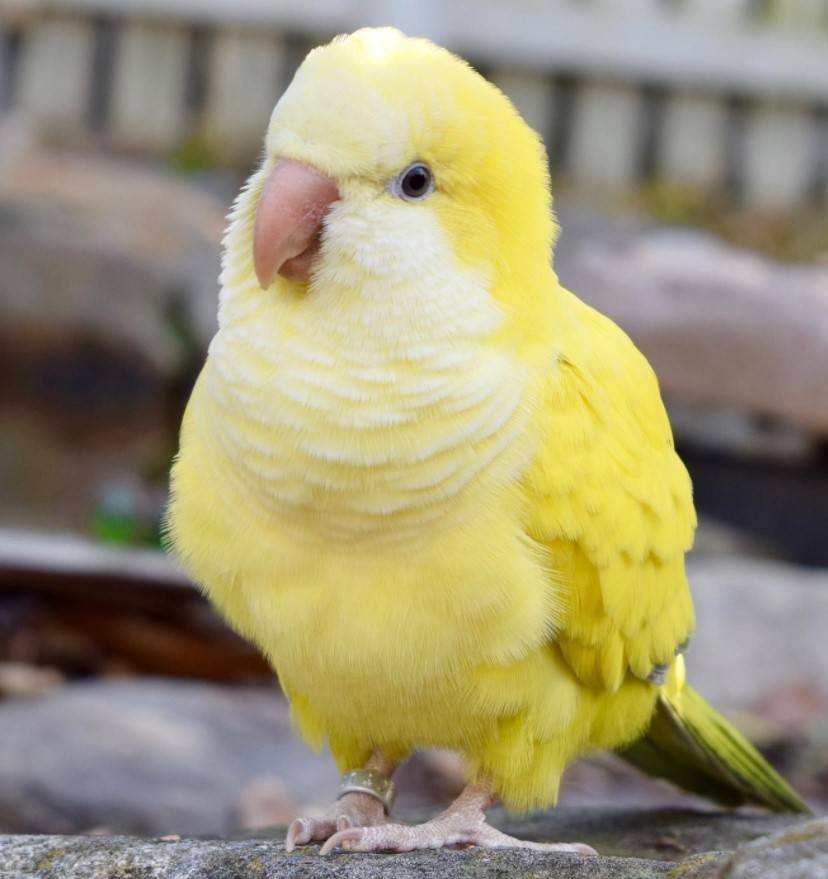
The Lutino Quaker is a bright yellow color mutation of the Monk Parakeet
(Myiopsitta monachus). Its vivid appearance, social nature, and active
personality make it a distinctive choice for experienced bird keepers.
Monk Parakeet
Myiopsitta monachus
Lutino Yellow
Color Mutation
About the Lutino Quaker
The Lutino Quaker is not a separate species. It is a color mutation of the
Monk Parakeet, a naturally social parrot native to South America. The standard
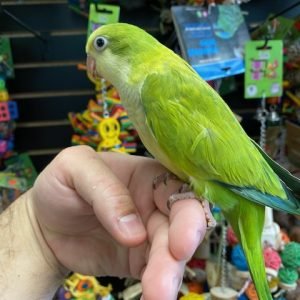
Monk Parakeet has green plumage with a gray face and breast, while the Lutino
mutation produces a much brighter yellow appearance.
Like other Quaker parrots, it can be active, vocal, playful, and highly social.
Consistent interaction and enrichment are therefore important parts of daily care.
What Makes Lutino Different?
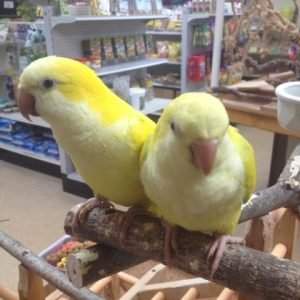
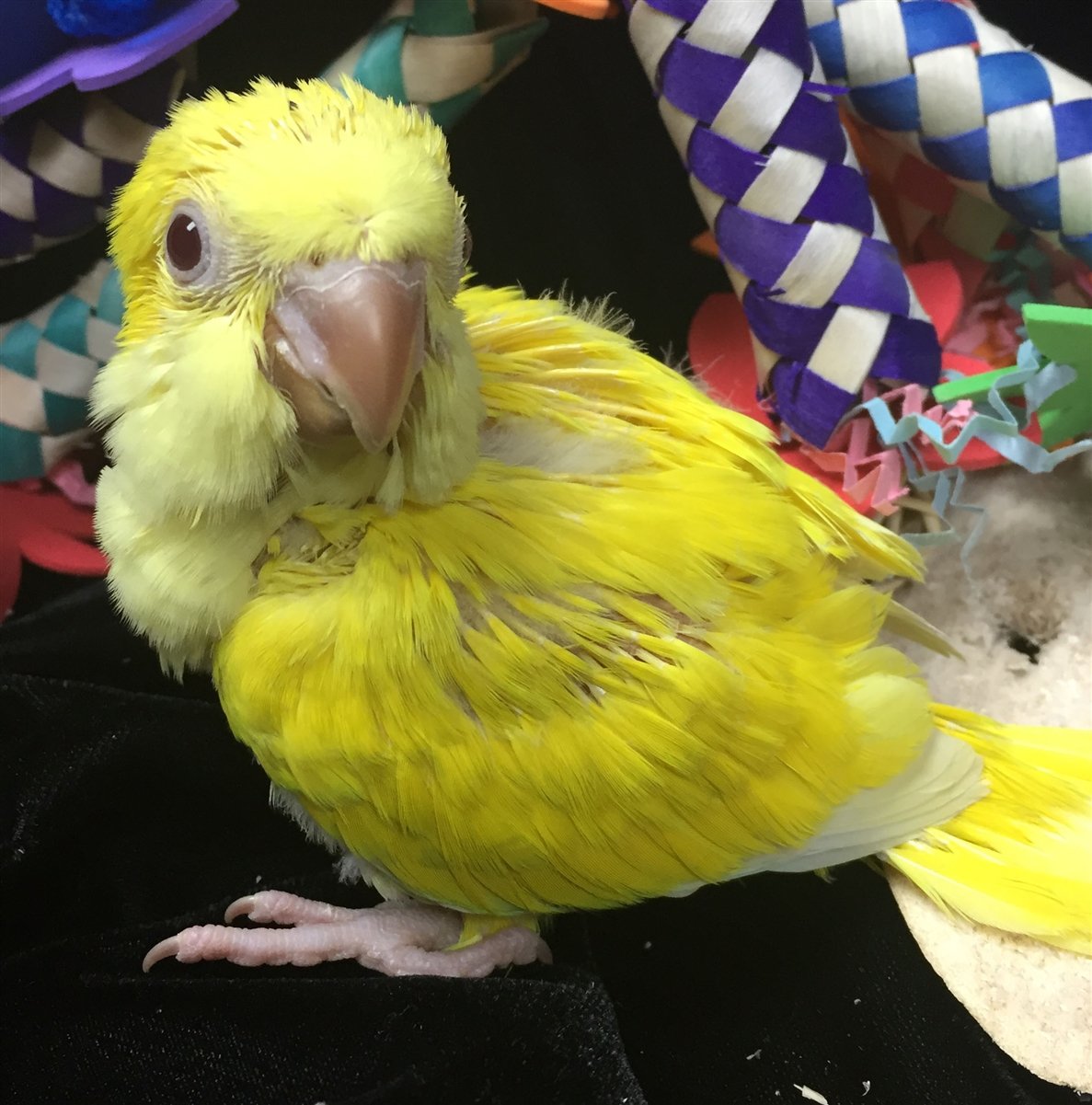
The most noticeable difference is its bright yellow coloration. Lutino Quakers
are also commonly recognized by their red eyes, which result from reduced dark
pigmentation associated with the mutation.
Lutino Quaker Appearance
Bright Plumage
The Lutino mutation changes the usual green appearance into predominantly
yellow plumage, giving the bird a very distinctive look.
Red Eyes
Red or ruby-colored eyes are a notable feature associated with the Lutino
color mutation.
Quaker Shape
It retains the compact body, large head, hooked bill, and long pointed tail
typical of the Monk Parakeet species.
Lutino Quaker Personality
Quaker parrots are social birds that spend much of their natural lives around
other birds. A pet Lutino Quaker can enjoy interaction, play, climbing, and
supervised time outside its enclosure. Because these parrots can be vocal,
owners should provide regular attention and suitable enrichment rather than
leaving the bird without stimulation for long periods.
Diet & Nutrition
In the wild, Monk Parakeets eat seeds, fruits, berries, nuts, buds, blossoms,
and other plant foods. A companion Lutino Quaker should receive a balanced
parrot diet rather than relying only on seeds.
Daily Food Basics
- Quality formulated parrot food
- Fresh vegetables and suitable fruits
- Limited healthy treats
- Clean drinking water every day
Lutino Quaker Care
Choose a secure, spacious enclosure that allows climbing, wing movement, and play.
Rotate safe toys, climbing items, chewable materials, and foraging activities.
Provide regular social interaction because Quaker parrots are naturally social.
Maintain clean housing, fresh water, good nutrition, and routine avian-vet care.
Breeding & Nesting
Monk Parakeets are unusual among parrots because they construct large communal
stick nests instead of relying only on tree cavities. Wild colonies may contain
multiple nesting chambers within one large structure. Cornell Lab records clutch
sizes of about 5–8 eggs. Captive breeding should be planned carefully with suitable
nesting space, compatible birds, nutrition, and avian-veterinary guidance.
Before Choosing a Lutino Quaker
A Lutino Quaker can be an active and interactive companion, but its needs go beyond
its attractive color. Before choosing one, prepare a secure enclosure, balanced food,
toys, perches, fresh water, and a daily routine for social interaction. If you are
comparing other available birds, visit our
bird collection
to explore more options.
Lutino Quaker FAQ
About the Bird
What is a Lutino Quaker?
A Lutino Quaker is a color mutation of the Monk Parakeet
(Myiopsitta monachus). Unlike the normal green form, it has predominantly
yellow plumage and is commonly associated with red eyes.
Is a Lutino Quaker the same species as a Quaker Parrot?
Yes. Lutino is a color mutation within the Monk Parakeet species. Quaker Parrot,
Quaker Parakeet, and Monk Parakeet are common names used for this species.
Care & Personality
Are Lutino Quakers good companion birds?
Quaker parrots are social and active birds that can form strong bonds with their
caretakers. They need regular interaction, enrichment, exercise, and a consistent
daily routine.
What do Lutino Quakers eat?
Their natural diet includes seeds, fruits, berries, nuts, buds, and blossoms.
Companion birds should receive a balanced parrot diet with suitable fresh foods
rather than a seed-only diet.
How much attention does a Lutino Quaker need?
Lutino Quakers benefit from regular social interaction and mental stimulation.
Daily play, training, supervised activity, and rotating enrichment can help keep
an active bird engaged.
Housing & Lifespan
What type of cage does a Lutino Quaker need?
Choose the largest secure enclosure that your space allows, with enough room for
climbing and wing movement. Add safe perches, toys, chewable materials, and
foraging opportunities, while keeping the cage clean and well maintained.
How long do Quaker parrots live?
Lifespan varies with genetics, diet, housing, veterinary care, and overall
management. Cornell Lab reports that Monk Parakeets can live 6 years or more
in the wild and often reach about 15 years in captivity.
Where can I find a Lutino Quaker for sale online?
When looking for a Lutino Quaker for sale online, check the bird’s current age,
health records, diet, socialization, and housing history. Ask for clear information
about the bird before making a purchase and prepare the enclosure before bringing
the bird home.