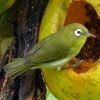
Description
Green-Backed White-Eye for Sale
Spend a few minutes in a New Caledonian rainforest clearing and you’ll likely hear this bird before you see it — a quiet, chattery run of notes from a small olive-green shape darting between the fruit. The Green-Backed White-Eye is one of the island’s most familiar songbirds, equally at home in deep forest and garden edges.
Range: Endemic to New Caledonia
Habitat: Rainforest, gardens, forest edge
Diet: Fruit, nectar, insects
Status: Least Concern (IUCN)
Lifespan: 4–6 years typical
Identification
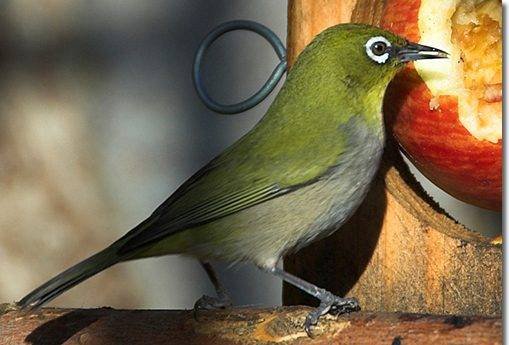
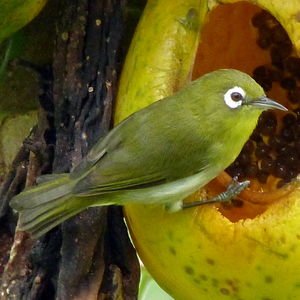
Look for a dark olive-green head and back, a yellow throat and breast, and dull white underparts lower down. The signature feature is the bold white ring circling each eye, broken at the front by a small black line. Wings show a mix of brown and olive tones, and the bill is slate-grey with a pale patch at the base.
Behavior in the Wild
These birds are highly social outside of breeding season, gathering into feeding flocks that grow larger as the months pass. They’ll readily mix with other small forest birds while foraging for ripening fruit, making them a lively, constantly-moving presence wherever they settle.
A Note on Similar Species
Because New Caledonia hosts several closely related white-eyes, this species is sometimes confused with the Lifou white-eyes found on nearby islands. The Green-Backed White-Eye is distinguished by its yellow throat and breast paired with duller white underparts — a combination unique to this species within its range.
Aviary Care
A planted aviary with flowering and fruiting plants suits this species well, echoing its natural forest-edge habitat. Offer a varied softbill diet of fruit, nectar, and live or dried insects, and expect an active, social bird that does best alongside compatible flock mates rather than alone.
Related Softbills
Buyer Questions
- Do they need to be kept in a group? They’re naturally social and tend to do best with compatible flock mates rather than as a single bird.
- What should the aviary include? Flowering and fruiting plants for cover and natural foraging opportunities work best.
- Are they easy to feed? Yes — a standard softbill diet of fruit, nectar, and insects covers their needs well.