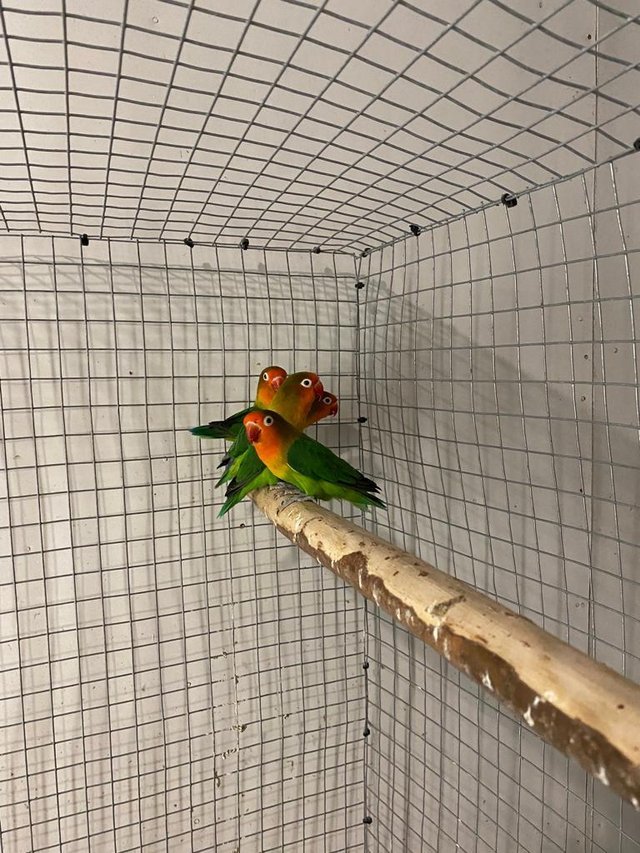


Description
Color & Appearance
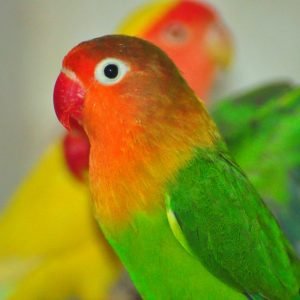
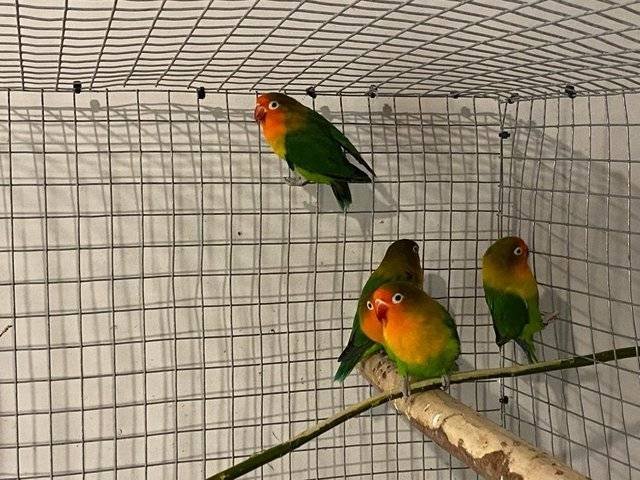
The face and cheeks show strong orange to red coloring.
Yellow coloring extends across the upper chest and neck.
The back, wings, and most of the body are bright green.
Blue or purple tones can appear among the upper tail feathers.
Habitat
Fischer’s Lovebirds naturally occur in northern Tanzania. They use
wooded grasslands, savanna, scrub, agricultural areas, and riverine
woodland, usually within their restricted natural range.
Social Behavior
They often travel in small groups and can gather in larger flocks
where food is plentiful. Their calls are high-pitched and lively,
making them an active addition to an aviary.
Diet & Feeding
Wild Fischer’s Lovebirds mainly eat grass seeds, millet, maize,
Acacia seeds, berries, and fruits. Captive birds need a balanced
small-parrot diet along with suitable fresh foods and daily access
to clean water.
Enrichment
Swings, ladders, ropes, climbing areas, safe toys, and foraging activities
can provide useful physical and mental stimulation.
Fischer’s Lovebird Care
Provide a spacious, secure cage or aviary with room for movement.
Clean drinking water should always be available.
Encourage climbing, flying, playing, and safe foraging.
Breeding & Nesting
Fischer’s Lovebirds usually nest in cavities in dead trees and sometimes
cliffs. A typical clutch contains 4–6 eggs, while incubation lasts around
23 days. Young birds generally fledge at about six weeks.
Looking for more colorful parrots?
Explore our complete bird collection
or discover our
Rainbow Lorikeet
.
Fischer’s Lovebirds FAQ
What is a Fischer’s Lovebird?
Fischer’s Lovebird is a small African parrot scientifically known as
Agapornis fischeri. It is recognized by its orange-red face,
yellow chest, green body, and red bill.
How big are Fischer’s Lovebirds?
They are about 15 cm long and usually weigh around 42–58 grams.
What do Fischer’s Lovebirds eat?
Their natural diet includes grass seeds, millet, maize, Acacia seeds,
berries, and fruits. Captive birds need a balanced diet rather than
relying on a single food.
Are Fischer’s Lovebirds social?
Yes. They commonly live and travel in groups and can gather in larger
flocks when food is abundant. They also communicate with high-pitched calls.
How long do Fischer’s Lovebirds live?
The World Parrot Trust lists a captive longevity of approximately
15–20 years, although individual lifespan can vary.
Where can I find Fischer’s Lovebirds for sale online?
When searching for Fischer’s Lovebirds for sale online, check the bird’s
health, age, diet, care history, and seller information before purchasing.