Description
Fischer’s Lovebirds for Sale Online
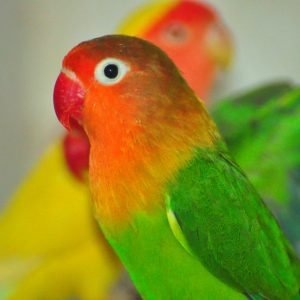
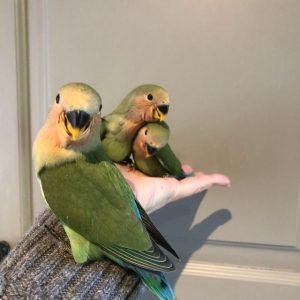
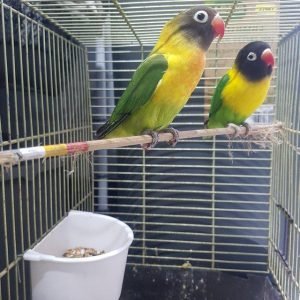
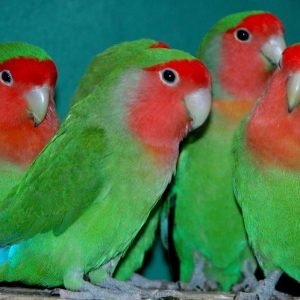
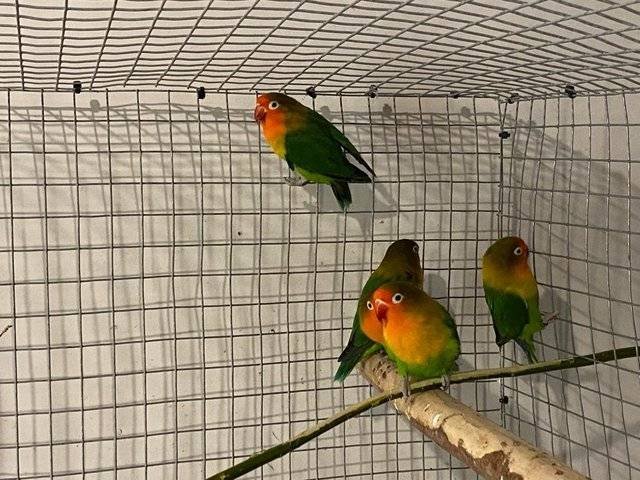
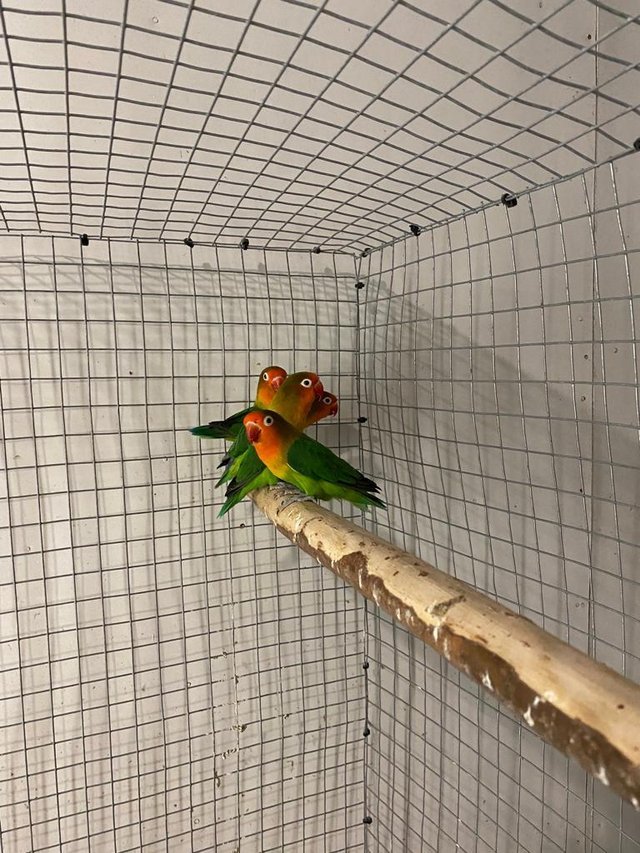
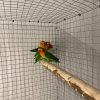
Fischer’s Lovebirds are small, colorful parrots native to Tanzania. Their orange-red face, yellow chest, green body, and red bill give them a distinctive appearance. They are also active, social, and highly vocal.
Color and Appearance
Orange-Red Face
The face and cheeks show strong orange to red coloring.
Golden Chest
Yellow coloring extends across the upper chest and neck.
Green Body
The back, wings, and most of the body are bright green.
Blue Tail Accents
Blue or purple tones can appear among the upper tail feathers.
Habitat
Fischer’s Lovebirds naturally occur in northern Tanzania. They use wooded grasslands, savanna, scrub, agricultural areas, and riverine woodland, usually within their restricted natural range.
Social Behavior
They often travel in small groups and can gather in larger flocks where food is plentiful. Their calls are high-pitched and lively, making them an active addition to an aviary.
Diet and Feeding
Wild Fischer’s Lovebirds mainly eat grass seeds, millet, maize, Acacia seeds, berries, and fruits. Captive birds need a balanced small-parrot diet along with suitable fresh foods and daily access to clean water.
Enrichment
Swings, ladders, ropes, climbing areas, safe toys, and foraging activities can provide useful physical and mental stimulation.
Fischer’s Lovebird Care
Secure Housing
Provide a spacious, secure cage or aviary with room for movement.
Fresh Water
Clean drinking water should always be available.
Daily Activity
Encourage climbing, flying, playing, and safe foraging.
Breeding and Nesting
Fischer’s Lovebirds usually nest in cavities in dead trees and sometimes cliffs. A typical clutch contains 4–6 eggs, while incubation lasts around 23 days. Young birds generally fledge at about six weeks.
Looking for more colorful parrots? Explore our complete bird collection or discover our Rainbow Lorikeet.
Fischer’s Lovebirds FAQ
Fischer’s Lovebird is a small African parrot scientifically known as Agapornis fischeri. It is recognized by its orange-red face, yellow chest, green body, and red bill.
They are about 15 cm long and usually weigh around 42–58 grams.
Their natural diet includes grass seeds, millet, maize, Acacia seeds, berries, and fruits. Captive birds need a balanced diet rather than relying on a single food.
Yes. They commonly live and travel in groups and can gather in larger flocks when food is abundant. They also communicate with high-pitched calls.
The World Parrot Trust lists a captive longevity of approximately 15–20 years, although individual lifespan can vary.
When searching for Fischer’s Lovebirds for sale online, check the bird’s health, age, diet, care history, and seller information before purchasing.