

Description
Crimson-Rumped Toucanet for Sale
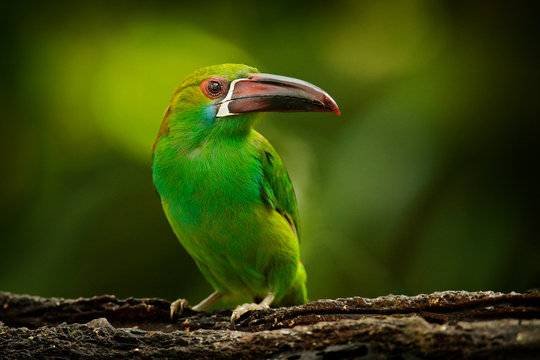
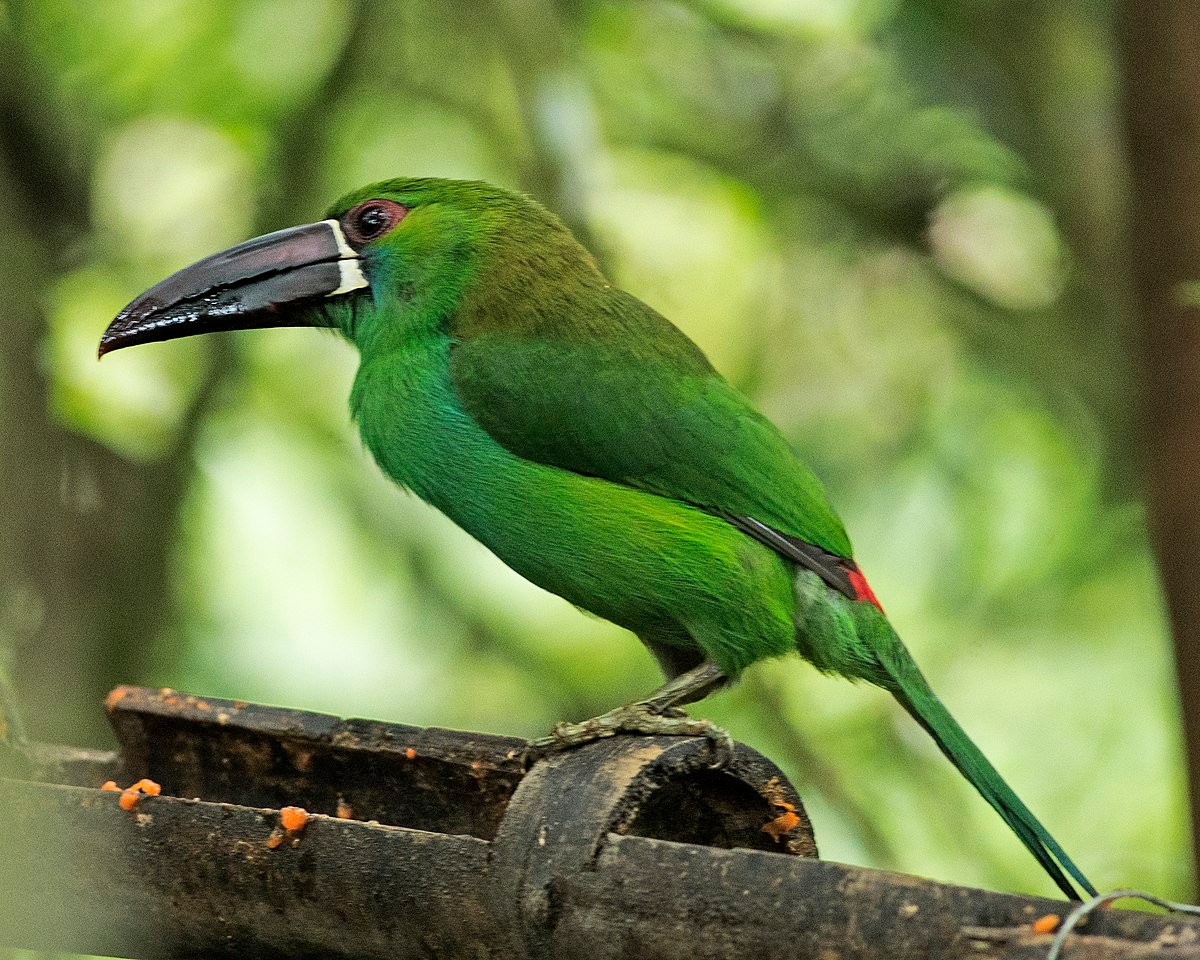
The Crimson-Rumped Toucanet gets its name from exactly what you’d expect — a brilliant red-orange rump set against deep emerald-green plumage, with a bronzed sheen across the back and a bold white stripe at the base of its curved bill. Native to the cloud forests of Colombia, Ecuador, and western Venezuela, it’s one of the smaller members of the toucan family, but no less eye-catching for it.
- Size
- About 14 in. long, 5–8 oz
- Origin
- Andean cloud forests of Colombia, Ecuador, and Venezuela
- Diet
- Mostly fruit, with insects added during breeding season
- Social Structure
- Pairs or small flocks of up to eight birds
Life in the Canopy
Because Crimson-Rumped Toucanets forage in pairs or small flocks through the mid and upper canopy, they’re rarely still for long — these are noisy, active birds that cover a lot of ground searching for ripe fruit. Since fruit makes up most of their diet, they play an outsized role in their ecosystem, swallowing seeds whole and dispersing them as they move, which helps new plants take root far from the parent tree.
Breeding season shifts their diet slightly: they add more insects, and occasionally small lizards or eggs, to meet the extra protein demands of raising chicks. In an aviary, this translates to a fruit-forward diet supplemented with mealworms or crickets, especially during breeding periods.
FAQs
🥭 What should I feed them?
A diet built mainly around fresh fruit, with insects added in for extra protein, especially during breeding season.
🏠 Do they need a large aviary?
Since they’re active foragers that move constantly through the canopy, a spacious, well-planted aviary suits them far better than a small cage.
🗣️ Are they noisy?
Yes — they’re vocal birds, using short, high-pitched grunting calls to keep track of each other and mark territory.