Description
Blue-Fronted Amazon Parrots for Sale Online
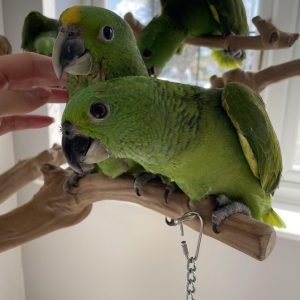
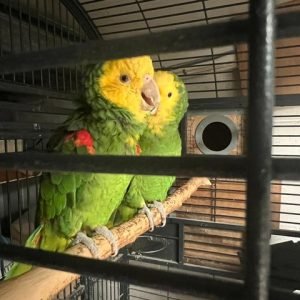
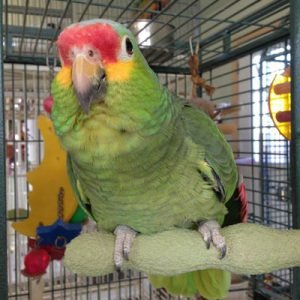
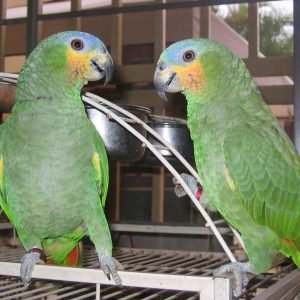
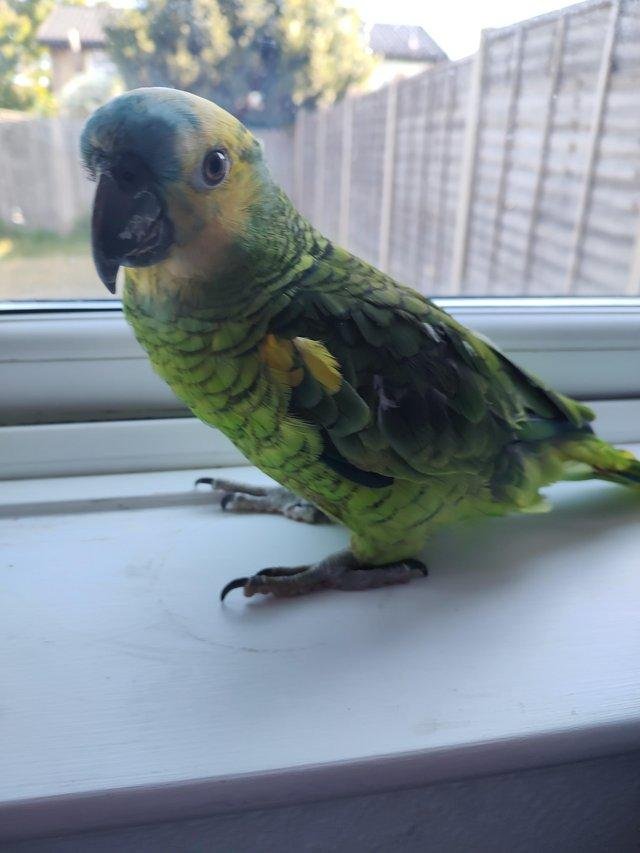
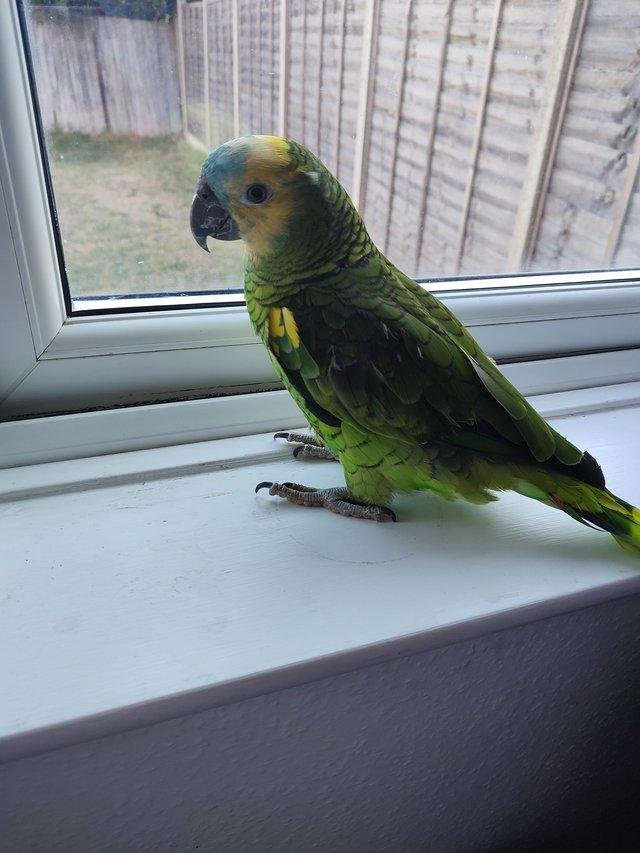
The Blue-Fronted Amazon, Amazona aestiva, is a colorful and intelligent Amazon parrot. Its green body contrasts with blue feathers on the forehead and yellow markings around the face. Moreover, its social nature makes it a popular companion bird.
Scientific name:
Amazona aestiva
Size:
35–37 cm
Weight:
375–450 g
Longevity:
50–60 years
Blue Crown
First, blue feathers appear across the forehead and front of the crown.
Yellow Highlights
Next, yellow feathers add a bright contrast around the face and throat.
Red Details
In addition, red markings can appear around the wing bend and flight feathers.
Playful, social and vocal
Blue-Fronted Amazons are active and social parrots. They often live in pairs or groups, and they can become very interactive with people.
Furthermore, they have a wide range of whistles and calls. Captive birds can also become skilled mimics of human speech and other sounds.
A Busy and Intelligent Companion
These Amazons enjoy exploring, chewing, climbing, and interacting. Therefore, simply providing a cage is not enough. They need regular social time and mental stimulation.
For example, food-finder toys, safe branches, puzzles, foot toys, and different perches can add useful variety. In addition, regular bathing can support normal feather care.
Brazil, Bolivia, Paraguay and Argentina
The species occurs across parts of South America. It uses woodland, savanna, palm groves, gallery forest, Chaco scrub, and other wooded habitats. Also, some populations occur at elevations up to about 1,600 metres.
Blue-Fronted Amazon Parrot Diet
Wild Blue-Fronted Amazons eat many plant foods, including fruits, seeds, nuts, flowers, and palm foods. For companion birds, a balanced diet can include suitable formulated food, fresh vegetables, fruit, cooked or sprouted foods, and controlled seed portions. Fresh water should always be available.
Offer suitable fresh fruit as part of a varied diet.
Fresh vegetables add useful variety and nutrients.
Use controlled portions within a balanced feeding plan.
A suitable formulated diet can provide a reliable nutritional base.
Give an Amazon plenty of space
Blue-Fronted Amazons are large, active parrots. Consequently, they need spacious housing with strong perches and safe climbing areas. The World Parrot Trust recommends an aviary or suspended enclosure with a minimum length of about 3 metres.
Daily Care Essentials
First, provide regular interaction and attention.
Next, provide safe perches with different sizes and textures.
Also, give safe destructible toys and branches.
Finally, offer regular opportunities for safe bathing.
Tree-cavity nesting
Blue-Fronted Amazons usually nest in tree cavities. A typical clutch contains 3–4 eggs. Young birds generally fledge at around 8–9 weeks.
Conservation & Responsible Sourcing
The Blue-Fronted Amazon is currently listed as Near Threatened and under CITES Appendix II. Wild populations face pressure from trapping and habitat loss. Therefore, documented captive-bred sourcing is important, and wild birds should never be taken for the pet trade.
Explore More Birds
First, browse our complete bird collection. Then, discover the colourful Rainbow Lorikeet.
Blue-Fronted Amazon Parrot FAQs
What is a Blue-Fronted Amazon?
It is a South American Amazon parrot also called the Turquoise-fronted Amazon.
What is its scientific name?
Its scientific name is Amazona aestiva.
How large is a Blue-Fronted Amazon?
Adults are about 35–37 cm long.
Can Blue-Fronted Amazons talk?
Yes. Captive birds can become excellent mimics of human speech and other sounds.
What does a Blue-Fronted Amazon eat?
Its diet can include formulated food, fruits, vegetables, seeds, nuts, flowers, and suitable cooked or sprouted foods.
How much space does it need?
WPT recommends an enclosure with a minimum length of about 3 metres.
What is its conservation status?
It is listed as Near Threatened and under CITES Appendix II.