Description
Double Yellow-Headed Amazon for Sale Online
Widely ranked among the very best talking parrots, second only to the African Grey.
📊 Endangered
🗣️ Top-Tier Talker
Decades of trapping for the pet trade have made this one of the more heavily impacted Amazon species in the wild, and the IUCN now lists it as Endangered. It’s protected under CITES Appendix I, the strictest international trade category. Every legitimate bird must come with full documentation tracing it to a captive-bred source, so confirm that paperwork before any purchase.
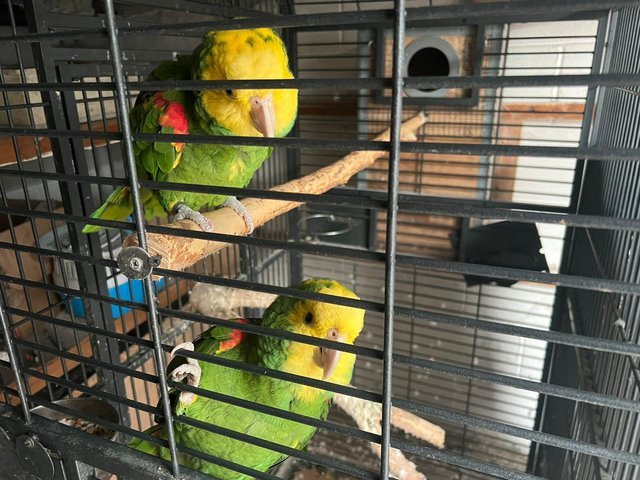
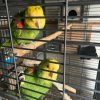
Among Amazon parrots kept as companions, this species sits near the very top of the list, and talking ability is a huge part of why. Stocky, green-bodied, and crowned in brilliant yellow once mature, it’s earned a reputation as one of the most charismatic and talented birds in all of aviculture.
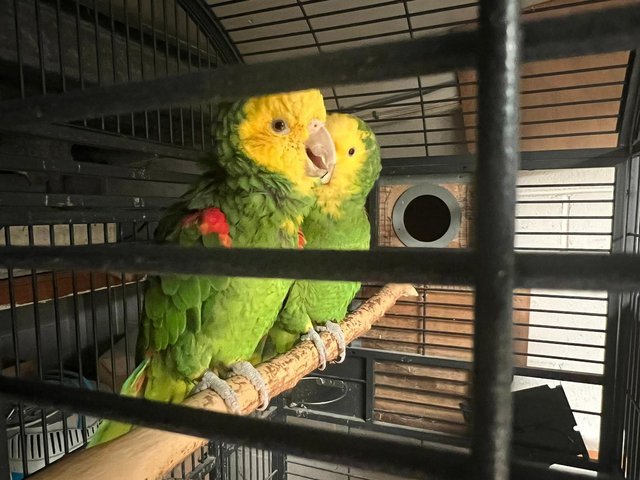
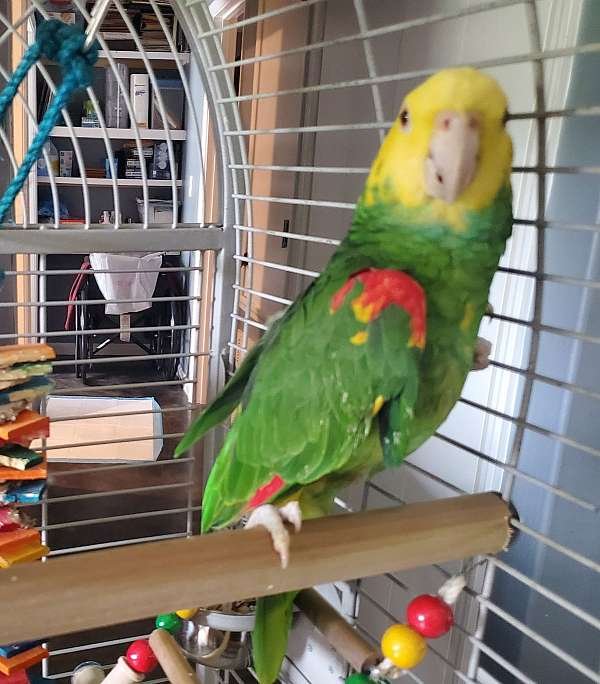
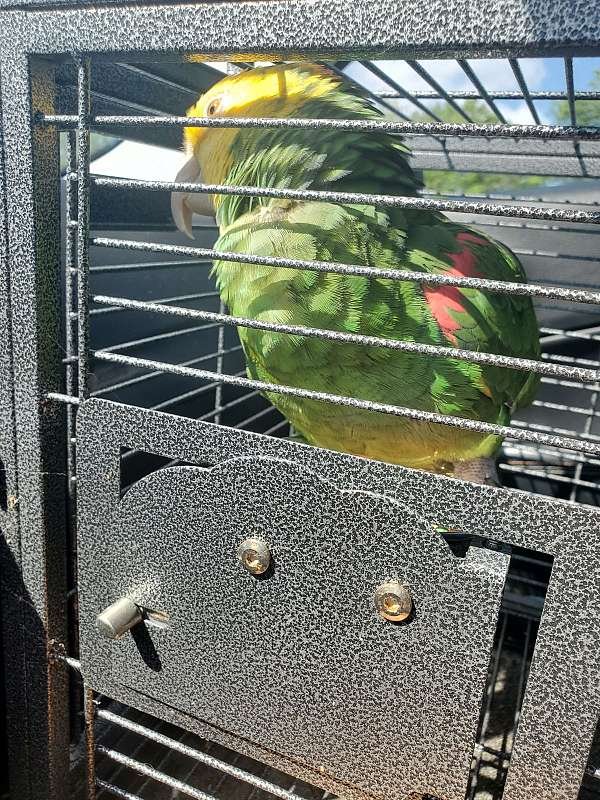
Two close relatives each carry one yellow marking: the yellow-naped Amazon shows yellow on the nape, while the yellow-crowned Amazon shows yellow on the crown. This species combines both traits in a single bird, carrying yellow across the nape and the crown together, which is exactly how it earned the name “double yellow-headed.”
A Color That Takes Years to Arrive
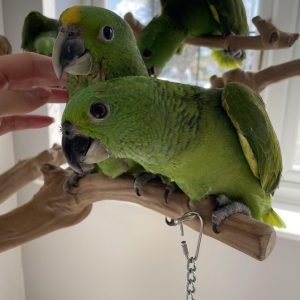
Young birds hatch with just a small patch of yellow on the forehead, and the rest of the head stays mostly green. That yellow spreads gradually with each molt, typically reaching full coverage across the head and neck by around five or six years of age. A juvenile you bring home today will look dramatically different by the time it reaches maturity.
A Serious Contender for Best Talker
Among all commonly kept parrots, only the African Grey consistently outranks this species for talking ability, and some keepers would argue even that comparison is close. On top of clear speech, these birds often sing too, picking up tunes and melodies with real enthusiasm. If conversation and mimicry top your wish list, this is one of the strongest choices available.
Big Personality, Louder Moments
Like other Amazons, this species leans boisterous and outgoing rather than shy and cautious, and males in particular show off with classic “macho” displays: flared tail feathers, pinned eyes, and a confident strut across the floor or tabletop. It’s a normal part of Amazon body language rather than a warning sign, though it’s worth learning to recognize so you know when your bird wants attention versus space.
Range and Habitat
This species occupies forested lowlands across Mexico, Belize, Guatemala, and Honduras, favoring areas near rivers and mangroves. Habitat loss throughout that range has compounded the damage already done by decades of illegal trapping, which together explain the species’ current Endangered status.
Diet and Daily Care
A quality pellet base, supplemented with fresh fruit, vegetables, and occasional nuts, covers this bird’s nutritional needs well. Given its intelligence, daily mental stimulation matters just as much as diet, so sturdy toys and regular training sessions help prevent boredom-related problems. With good care, this species can live 60 years or more.
Buyer Questions
Where does the name “double yellow-headed” come from?
It combines two traits found separately in close relatives: a yellow nape and a yellow crown, both present together on this species.
Is it legal to buy one?
Yes, with full documentation confirming captive-bred origin, since this species is CITES Appendix I and Endangered in the wild.
How long until the yellow head color fully develops?
It typically takes five to six years, spreading gradually from a small patch to full coverage across the head and neck.
Is this really one of the best talking parrots?
Yes, it’s widely considered one of the top talking parrots, trailing only the African Grey in most comparisons.
Where does this species live in the wild?
Its range covers forested lowlands across Mexico, Belize, Guatemala, and Honduras.
Why does my Amazon strut and flare its tail?
It’s a normal display behavior common in Amazon parrots, especially males, and isn’t necessarily a sign of aggression.
How long do Double Yellow-Headed Amazons live?
With good care, this species often lives 60 years or more, making it a genuine lifelong commitment.