
Mourning Dove for Sale Online
Gentle, quiet, and easy to love — the mourning dove is one of the calmest companion birds you can bring into your home. Here's what to know before you buy, plus what healthy stock actually looks like.
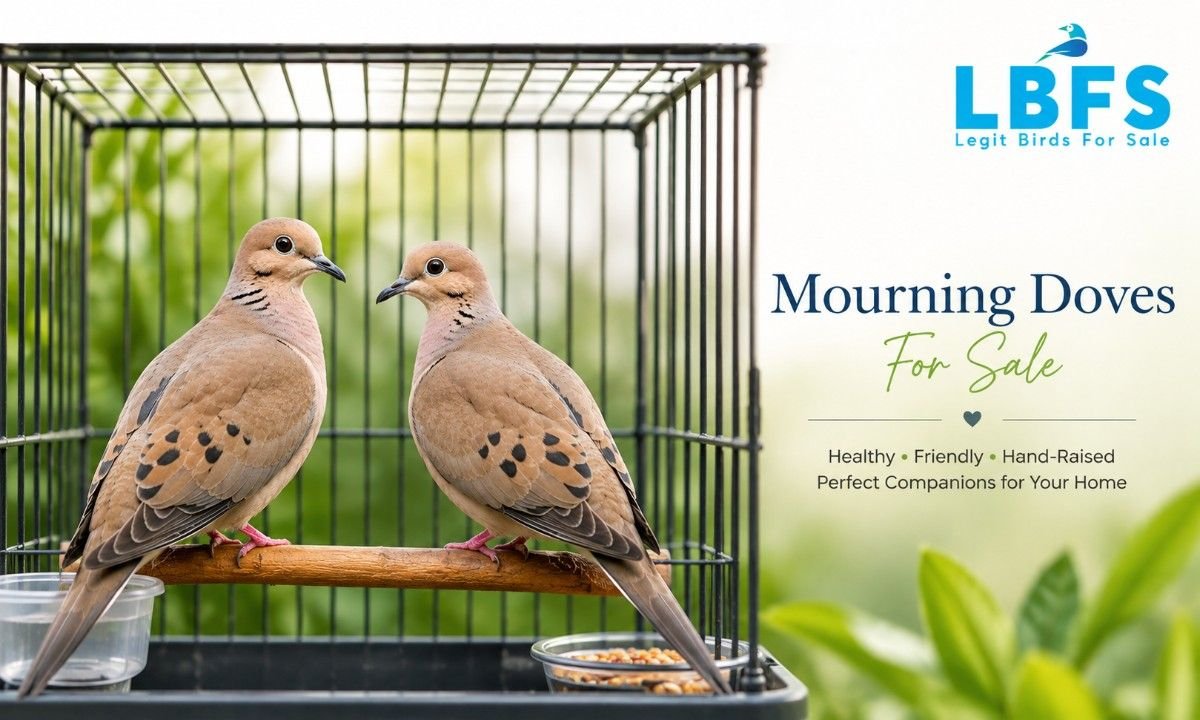
A Calm Bird for a Calm Home
Mourning doves are named for their soft, mournful cooing call — not for temperament. In person, they're one of the most even-tempered birds you can keep: gentle around people, easy around other doves, and content to spend most of the day perched quietly rather than climbing or shrieking.
Their coloring is understated by design — warm grey-brown bodies, a soft blush wash on the chest, and a slim black bill — which makes them blend easily into almost any home decor, unlike the brighter parrots and conures on the rest of the site.
"Doves don't demand your attention. They earn it, quietly, over weeks of sitting nearby."
They're not talkers and they're not cuddlers in the way a cockatiel might be — if you want a bird that mostly just keeps you company without much noise or mess, this is close to as easy as pet birds get.
How to Choose a Healthy Mourning Dove
Whether you're buying online or picking one up in person, run through these checks first:
Check the eyes and nares
Eyes should be clear and alert, with no discharge. The nares (nostrils) should be dry and unblocked.
Look at the feathers
Smooth, well-preened plumage is a good sign. Ruffled feathers held puffed out at rest can point to stress or illness.
Watch how it stands
A healthy dove perches evenly on both feet and shifts its weight naturally. Favoring one leg is worth asking about.
Ask about the breeder's setup
Ask how the birds are housed, fed, and how old they are at the time of sale — a seller who answers easily is a good sign.
Confirm shipping practices
For online orders, confirm live-arrival guarantees and how the bird will be packed and shipped before you commit.
Mourning Dove vs. Other Popular Doves
If you're weighing a few dove species side by side, here's how the mourning dove compares:
| Species | Size | Noise Level | Best For |
|---|---|---|---|
| Mourning Dove | Medium (11–13") | Low, soft cooing | Quiet households |
| Ringneck Dove | Medium (12") | Low | First-time dove owners |
| Diamond Dove | Small (7–8") | Very low | Small spaces, aviaries |
| European Turtle Dove | Medium (10–12") | Low | Outdoor aviaries |
| Spotted Dove | Medium (12") | Low-medium | Social pairs |
Frequently Asked Questions
Are mourning doves good pets?
Yes — they're quiet, low-drama, and easy to care for, though they bond more slowly than parrots and prefer calm handling over cuddling.
What do mourning doves eat?
A base of dove or pigeon seed mix, supplemented with leafy greens and grit for digestion, plus fresh water daily.
Do mourning doves need a companion?
They're social birds and generally do better in pairs, though a single dove can thrive with regular daily attention from its owner.
How is a mourning dove shipped when bought online?
Reputable sellers ship in temperature-controlled, well-ventilated containers with a live-arrival guarantee — always confirm this before ordering.