Description
Abdim’s Stork for Sale
| Scientific Name | Ciconia abdimii |
| Also Known As | White-Bellied Stork |
| Size | 73–81 cm, roughly 1–1.3 kg — the smallest stork species |
| Lifespan | Up to 20+ years in captivity |
| Origin | Sub-Saharan Africa |
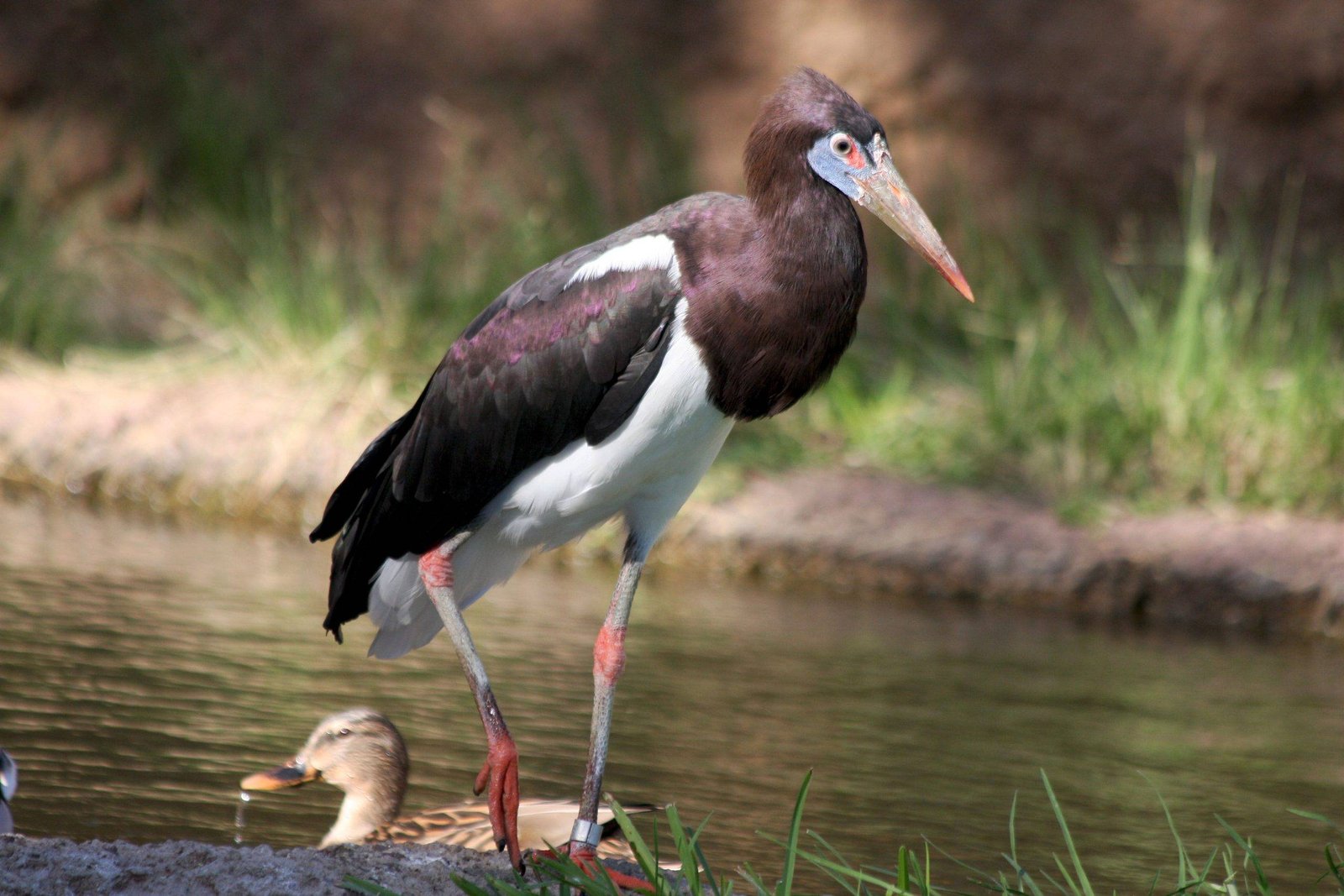
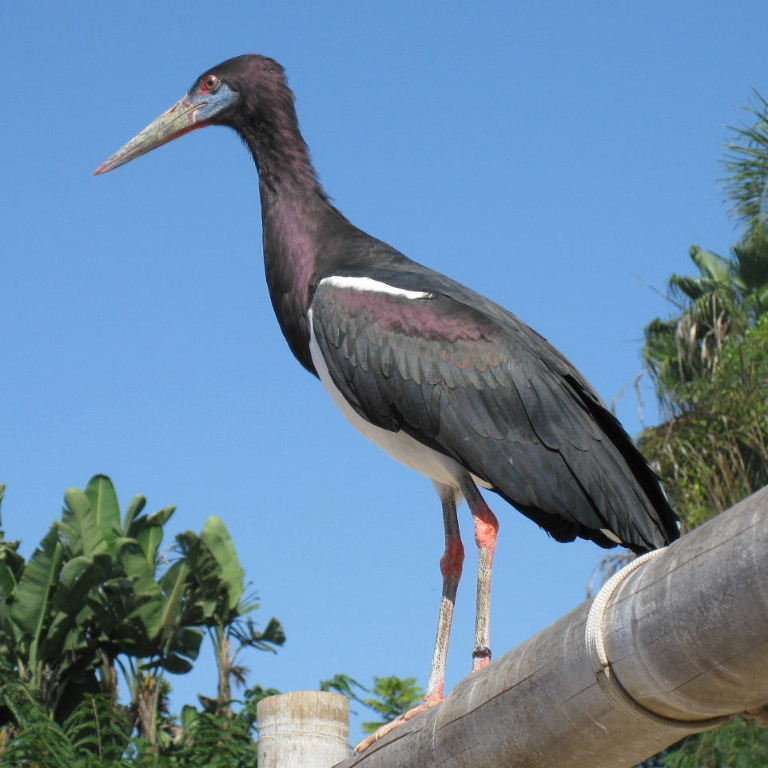
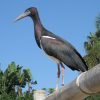
Abdim’s Stork is a glossy black-and-white bird easily identified by its grey legs with red knees and feet, and a grey bill set against bare facial skin that flushes red and blue in breeding season. Despite the “stork” name, it’s a compact bird by wading-bird standards — the smallest of all stork species — which makes it a manageable addition to a large aviary or waterfowl collection.
Natural Behavior
In the wild, this species is highly social and rarely seen alone — flocks can number from a few dozen to several thousand birds, especially when following insect swarms like locusts. They’re colonial nesters, building stick nests in trees, on cliffs, or even rooftops, and pairs will often reuse the same nest site year after year. That flocking instinct carries over into captivity: Abdim’s Storks generally do best housed in small groups rather than as a single bird.
Aviary & Housing Needs
These storks need generous outdoor aviary space with room to walk, forage, and fly short distances, along with access to shallow water for wading and bathing. Nesting platforms or sturdy tree cover give them a natural spot to build during breeding season. They tolerate a range of climates but appreciate shelter from extreme cold given their African origins.
Diet
Abdim’s Storks are primarily insectivorous, with a strong preference for locusts, grasshoppers, and crickets in the wild. In managed care, this translates to a diet built around insect protein — mealworms, crickets, and similar feeder insects — supplemented with small amounts of lean meat or specially formulated stork/wading bird diets. Occasional fruit rounds out the diet when insects are limited.
Is This Bird Right for Your Collection?
Abdim’s Storks suit experienced aviculturists, zoos, and large private collections rather than typical household pet owners — they need space, flock companionship, and a live-insect-heavy diet that’s more involved than standard pellet feeding. If you can offer that setup, they’re a hardy, long-lived, and visually striking addition.