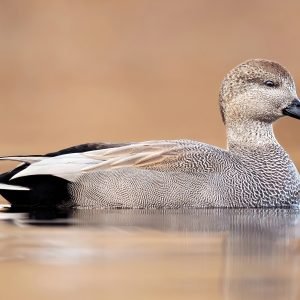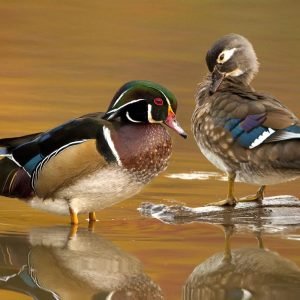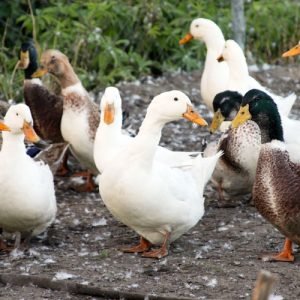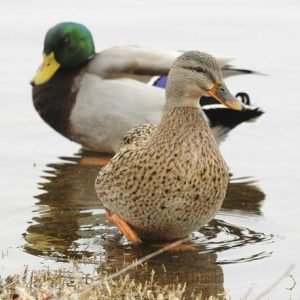
Description
Northern Shoveler Duck
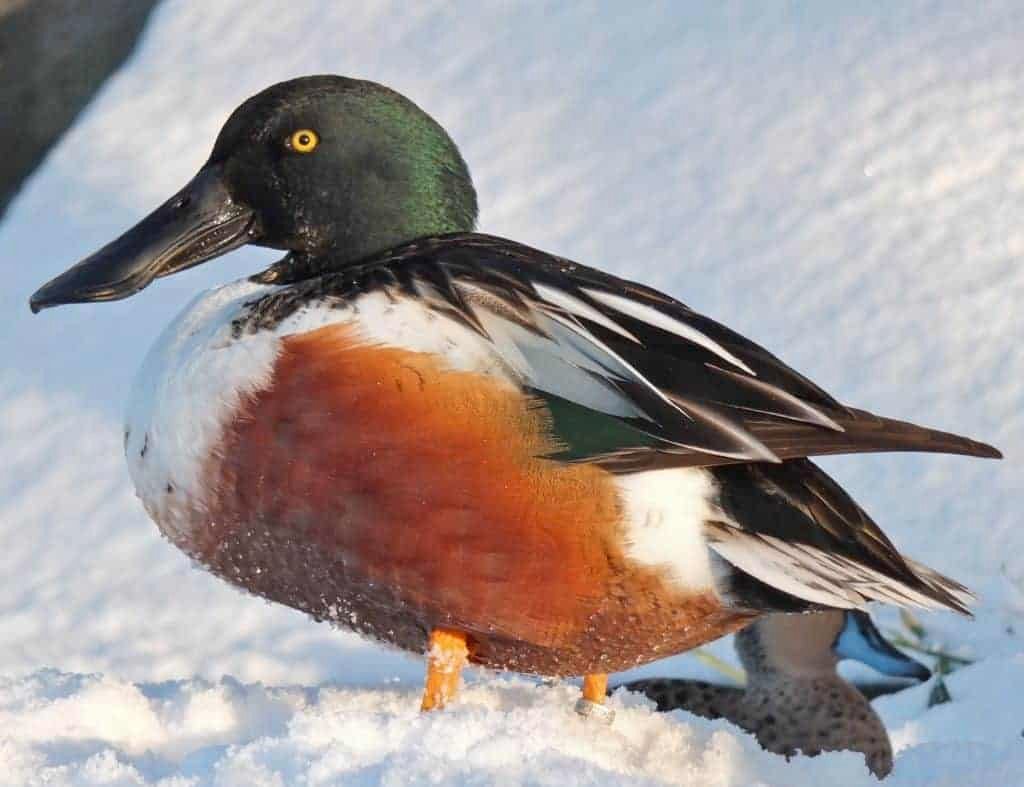
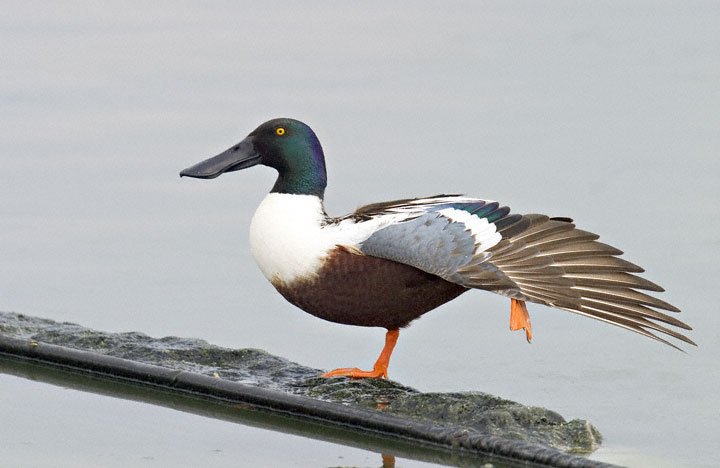
The Northern Shoveler is a distinctive dabbling duck known for its long, spoon-shaped bill. This specialized bill helps it filter food from shallow water, making it one of the most recognizable ducks in the Northern Hemisphere.
Northern Shoveler Identification
Breeding males have glossy dark green heads, white chests, rusty-chestnut flanks, black bills, and yellow eyes. Females display mottled brown plumage with a greenish-brown bill and orange edges. Both sexes show a bright green wing patch during flight.
Its oversized, flattened bill is especially distinctive, measuring about twice as wide at the tip as at the base.
Northern Shoveler Habitat and Range
Northern Shovelers breed in shallow marshes, prairie potholes, and freshwater ponds with muddy bottoms. Outside the breeding season, they move to brackish coastal lagoons, flooded fields, and other wetlands.
Their range extends across North America, Europe, Africa, and Asia.
A Specialized Filter-Feeding Bill
The Northern Shoveler’s bill contains more than 100 comb-like projections called lamellae. As it sweeps its bill through shallow water, these structures filter seeds, insects, and tiny crustaceans while allowing water to drain out.
This specialized feeding method makes the species particularly suited to shallow wetlands.
Northern Shoveler Diet
This omnivorous duck eats aquatic plants, seeds, insects, and small crustaceans. During winter, its diet shifts towards seeds and other plant matter.
Unlike many dabbling ducks, Northern Shovelers rarely feed on land. Therefore, a home pond or shallow water source with natural vegetation, supplemented by quality waterfowl feed, supports their feeding needs.
Breeding and Temperament
Northern Shovelers form monogamous pairs and nest on the ground near water. Their nests are shallow scrapes lined with grass and down. Females lay 8–12 eggs and handle incubation alone.
Unusually among dabbling ducks, males may remain after hatching to defend a territory of several hectares. For compatible pond companions, explore our complete bird collection.
Northern Shoveler Buyer Questions
Its bill contains more than 100 comb-like projections called lamellae. These filter tiny food particles from the water, making it highly specialized for feeding.
A shallow water source with a muddy or vegetated bottom is suitable for their natural filter-feeding behaviour.
Yes. Breeding males have glossy green heads and chestnut flanks, while females have mottled brown plumage. Both sexes share the distinctive spoon-shaped bill.