
Description
Alexandrine Parakeet for Sale
A parrot with a royal name and the personality to match. One of the largest, boldest parakeets you can own.
📊 Near Threatened
🗣️ Skilled Mimic
This bird’s name comes straight from history. Alexander the Great reportedly carried these parakeets from Punjab into Europe. There, royalty and nobility prized them as status symbols. That legacy still shows today. Few parakeets carry themselves with quite this much presence.
Males vs. Females
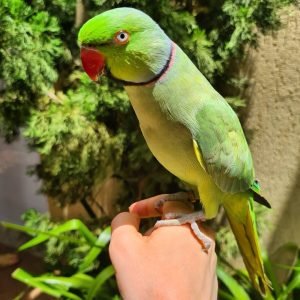
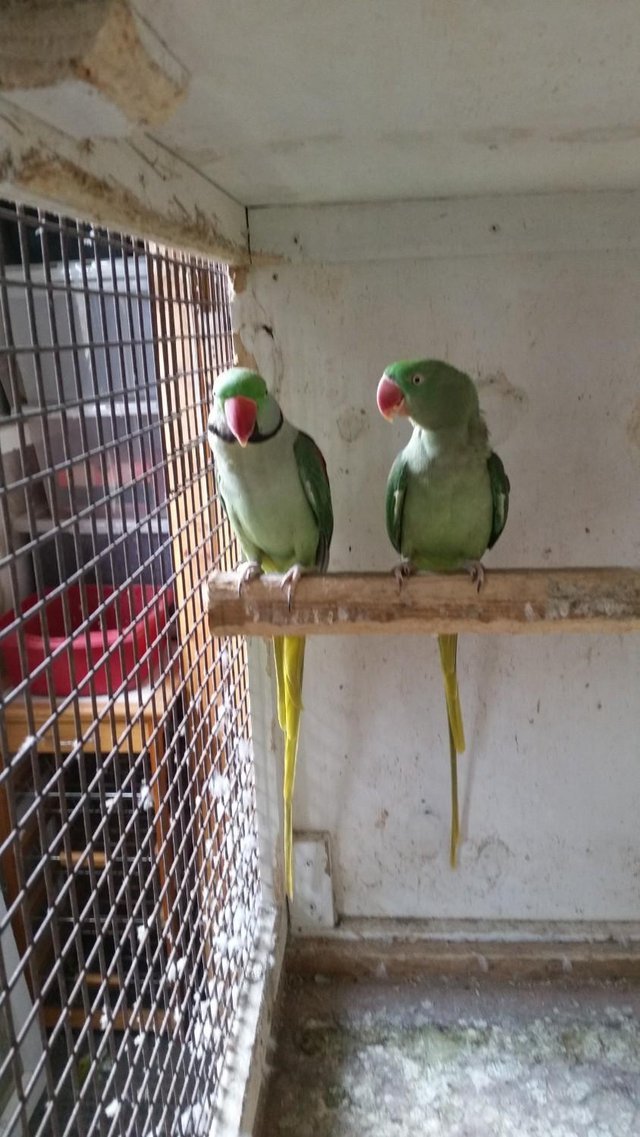
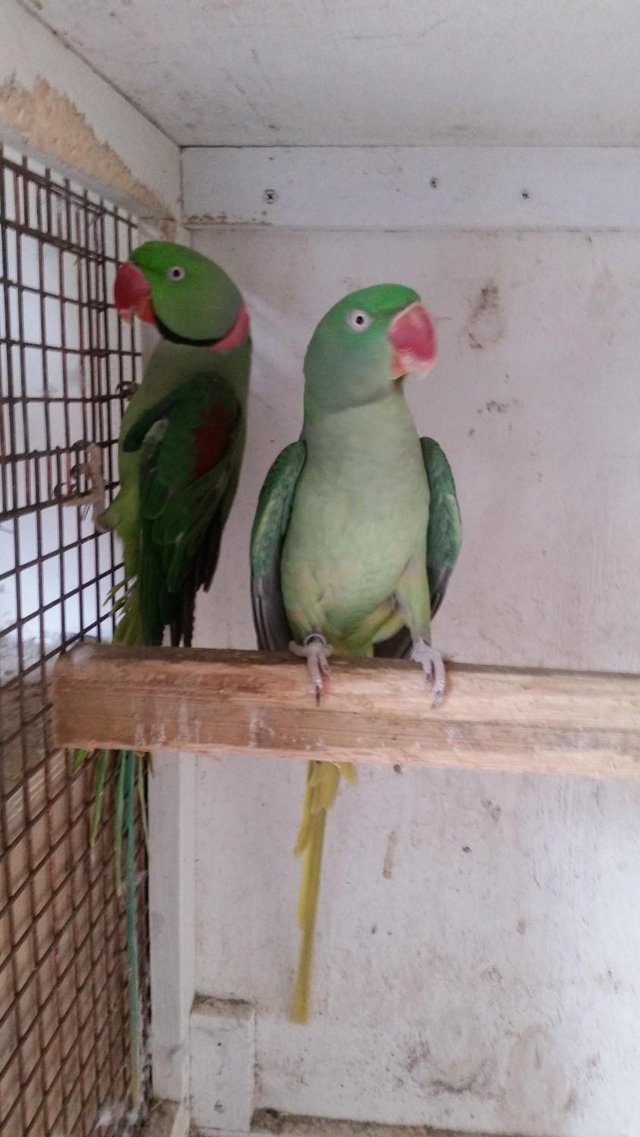
Both sexes share the same rich green body and red-and-yellow beak. However, males add two extra markings. A black stripe crosses the lower cheek, and a pink band wraps the nape. A bold maroon patch also marks the shoulder. Females and young birds skip all three features entirely.
Everyday Behavior
Like most parrots, this species communicates through a mix of habits. Mimicking sounds tops the list, and Alexandrines are especially skilled at it. Beak grinding often signals contentment. Puffing up or shaking out feathers is completely normal too. Chewing keeps the beak in shape, and occasional regurgitating is simply a sign of bonding, not illness.
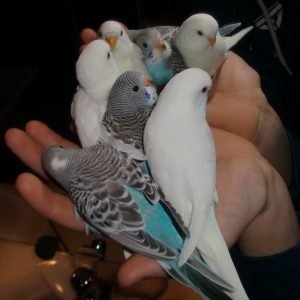
This isn’t a bird for a small cage. Reaching up to 24 inches long, it needs real flight room and sturdy, non-wooden housing. Compared to a smaller species like the Budgerigar, an Alexandrine demands a much bigger setup and stronger beak-proof materials.
Range and Conservation
Wild populations stretch across India, Sri Lanka, and much of Southeast Asia. Sadly, numbers are declining in several regions. Habitat loss plays a role, but illegal trapping for the pet trade is the bigger driver. The IUCN now lists the species as Near Threatened as a result. Always look for captive-bred stock when buying.
Diet and Daily Care
In the wild, this parakeet eats seeds, buds, fruit, and nuts. Captive diets should follow the same pattern. Offer a quality seed or pellet base first. Then add fresh fruit, vegetables, and the occasional nut for enrichment. With good care, this species can live up to 30 years.
Buyer Questions
Why is it called the Alexandrine Parakeet?
It’s named after Alexander the Great, who is credited with bringing the species from India into Europe centuries ago.
How do I tell males from females?
Look for a black cheek stripe, pink nape band, and maroon shoulder patch. Males show all three; females show none.
Are Alexandrine Parakeets good talkers?
Yes, they’re known as strong mimics and can pick up words and sounds well, especially when hand-raised.
Why does my bird regurgitate food sometimes?
In most cases, this is a normal bonding behavior rather than a health concern, especially toward a favorite person.
What kind of cage do they need?
A large, sturdy, non-wooden enclosure works best, along with plenty of daily flight and out-of-cage time.
How long do Alexandrine Parakeets live?
With proper care, they can live up to 30 years, so this is a long-term commitment.
Is this species endangered?
It’s currently listed as Near Threatened, largely due to illegal trapping, so confirming captive-bred origin matters when buying.