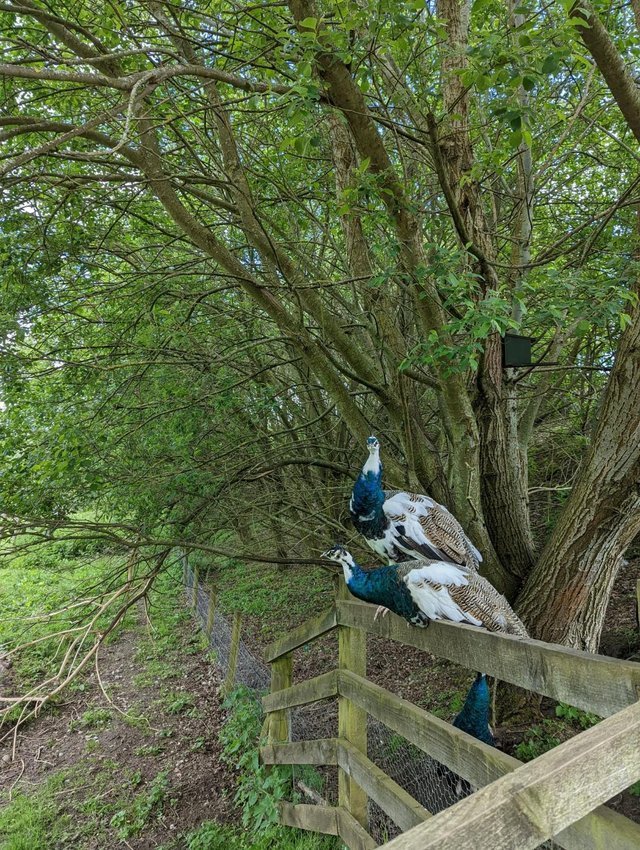

Description
Pied Peafowl for Sale Online
Buy today: a 150-year-old color mutation first written down by Charles Darwin himself.
📖 Documented Since 1868
🎨 No Two Look Alike
A Pied Peafowl looks like someone took a paintbrush loaded with white and dabbed it across a normal Indian Blue. That effect isn’t random, and it isn’t damage or illness either. It comes from a specific, well-documented genetic mutation that breeders have tracked and worked with for over a century.
Peafowl don’t produce true albinos, and pied patterning isn’t a defect either. Instead, it results from partial leucism, a condition where pigment simply fails to reach certain feathers while the rest of the bird colors normally. Because of that, no two pied birds carry quite the same pattern.
The Genetics Behind the Pattern
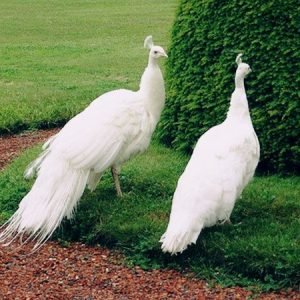
Two copies of the white gene produce a fully white bird.
One white gene and one pied gene create blue-and-white patchwork, sometimes called “loud pied.”
Two pied genes create a bird that looks nearly all blue, with just a little white on the wings.
Breed two Pied birds together, and you’ll typically get roughly 25% white offspring, 50% pied, and 25% dark pied, following straightforward Mendelian inheritance.
A Mutation Darwin Wrote About
Charles Darwin documented both white and pied peafowl in 1868, describing them as color mutants of the standard blue bird. That record puts this mutation’s history back at least 150 years, making it one of the longest-recorded color variations in any domesticated bird species.
Appearance
Male Pied peafowl show the classic Indian Blue shape and iridescent train, just interrupted by irregular white patches across the body and flight feathers. Some birds show only a little white, while others, sometimes called “silver pied,” combine the pied pattern with other genetic markers to appear almost entirely white with hints of color remaining. Compare that look with our fully-colored Indian Blue Peafowl to see the full range.
Care and Housing
Pied Peafowl need the same care as any Indian Blue peafowl: open space to roam, secure roosting off the ground, and protection from predators at night. A quality gamebird feed, supplemented with greens and occasional insects, keeps them in good condition. Give males extra room during breeding season, since their long trains need space to display properly.
Buyer Questions
Is a Pied Peafowl an albino?
No. True albino peafowl have never been documented. Pied birds result from partial leucism, a completely different genetic mechanism.
Will two Pied Peafowl breed true?
No. A Pied x Pied cross typically produces about 25% white, 50% pied, and 25% dark pied offspring.
What’s the difference between Pied and Silver Pied?
Silver Pied combines the pied gene with additional white and white-eye markers, producing a mostly white bird with just patches of color remaining.
How old is this color mutation?
Charles Darwin documented pied peafowl in 1868, putting the recorded history of this mutation back at least 150 years.
Do Pied Peafowl need different care than regular peafowl?
No. Their care needs match any Indian Blue peafowl, including diet, roosting, and space requirements.
Why does the amount of white vary so much between birds?
Leucism affects pigment placement unevenly, so even birds with the same genotype can show very different patterns.
Can a Pied Peafowl come from a Blue x White pairing?
No. That cross produces a blue bird carrying one white gene, not a pied bird, since the pied and white genes work independently.