Description
Blue and Gold Macaw for Sale Online
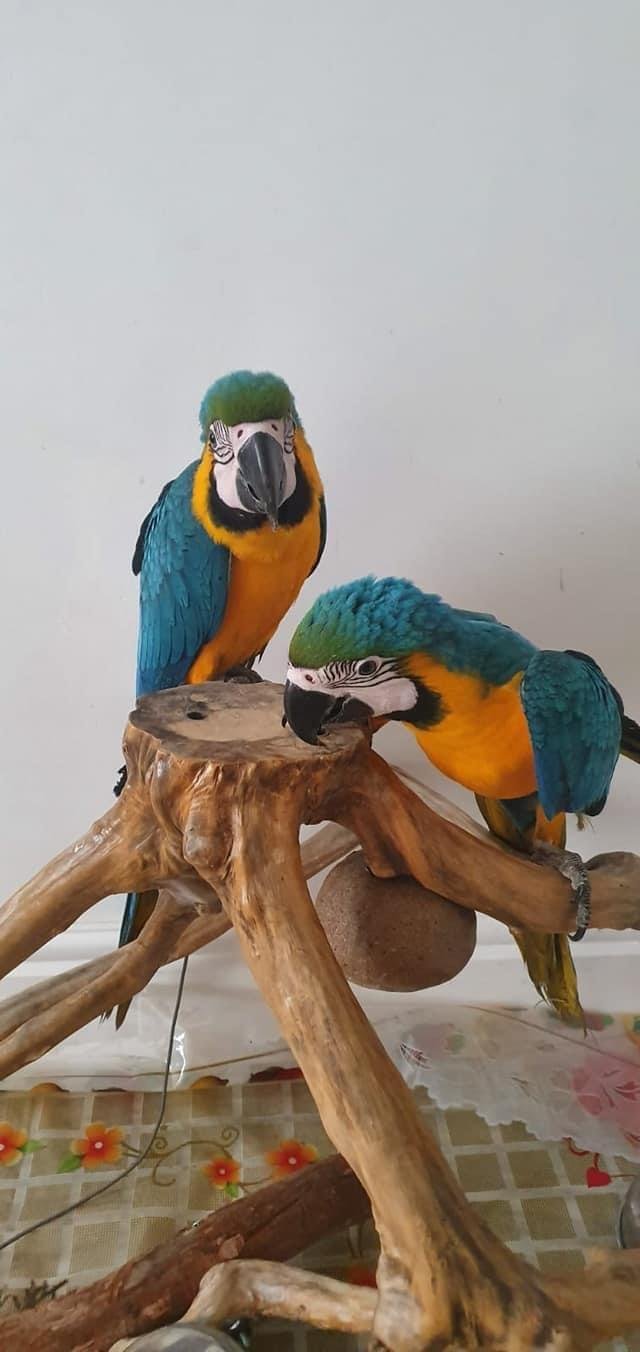
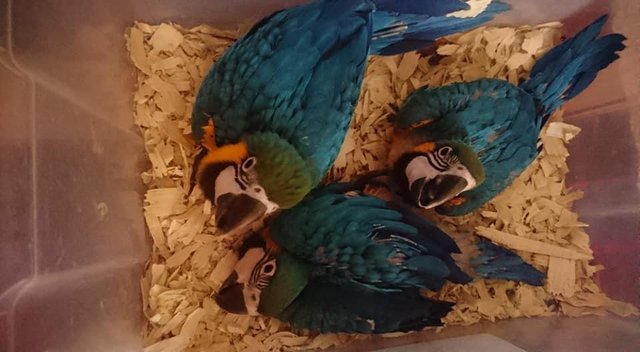
The Blue and Gold Macaw, scientifically known as Ara ararauna, is a large and colorful South American macaw. Its blue upperparts, golden-yellow underside, green forehead, and long tail create its distinctive appearance.
Scientific name: Ara ararauna
Size: 86 cm
Weight: 1040–1286 g
Status: Least Concern
A striking large macaw
With its vivid colors and impressive size, the Blue and Gold Macaw is easy to recognize. It also has a powerful beak and strong wings. In addition, paired birds may fly very close together, sometimes with their wings touching.
Color & size
Adults have bright blue upperparts and mostly golden-yellow underparts. The forehead and crown show green, while the throat is black. Moreover, the long blue-and-yellow tail adds to its large profile.
Forests, rivers and open woodland
Blue and Gold Macaws occur across parts of Central and South America. They use wooded areas near water, forest edges, gallery forests, palm savannas, and seasonally flooded forests. Therefore, access to suitable trees and water remains important in their natural environment.
Blue and Gold Macaw Diet
A natural part of their varied diet.
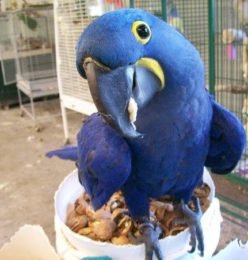
Nuts provide useful energy and variety.
Fresh fruit can add variety to a balanced diet.
For captive birds, a balanced macaw diet can include suitable formulated food along with appropriate fruits, vegetables, seeds, and nuts. Fresh water should always be available.
Social and active
Blue and Gold Macaws are often seen in pairs, although they can also form noisy groups. They forage high in the forest canopy and may gather with other parrots at riverbank clay-lick sites.
Because they are large and active, they need plenty of space, safe climbing areas, strong perches, and suitable chew toys.
Care Essentials
Provide a very large flight area for regular movement.
Use sturdy, bird-safe perches and branches.
Offer large chew toys, swings, ladders, and foraging activities.
Regular bathing opportunities support normal feather care.
Breeding & Nesting
Blue and Gold Macaws usually nest in dead tree cavities. A typical clutch contains 2–4 eggs, while young birds may fledge at around 90–100 days. Suitable nesting space should be planned carefully for captive breeding.
Conservation Note
The Blue and Gold Macaw is currently listed as Least Concern by the IUCN, although habitat loss and historical trapping have affected populations in parts of its range. Responsible, documented captive-bred sourcing helps avoid pressure on wild birds.
Explore More Birds
Browse our bird collection or explore the colorful Rainbow Lorikeet.
Blue and Gold Macaw FAQs
What is the scientific name?
Its scientific name is Ara ararauna.
How large is a Blue and Gold Macaw?
Adults can reach about 86 cm in length.
What does it eat?
Its natural diet includes seeds, nuts, fruits, flowers, and other plant foods.
Is the Blue and Gold Macaw social?
Yes. They commonly occur in pairs and can also form larger groups.
How long can it live?
World Parrot Trust lists longevity at around 60 years.
What housing does it need?
It needs very spacious housing with room for flight, climbing, and movement.
Is it a Blue-and-yellow Macaw?
Yes. Blue-and-yellow Macaw is another common name for Ara ararauna.