

Description
Scarlet Macaw for Sale Online
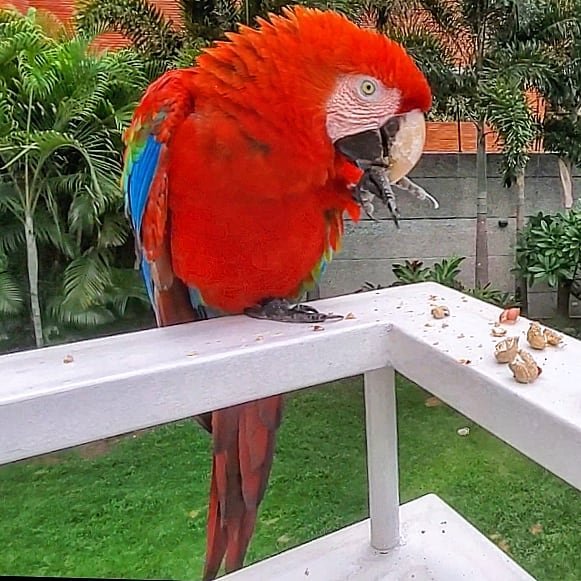
The Scarlet Macaw (Ara macao) is a striking tropical macaw known for its brilliant red plumage and colorful blue and yellow wing feathers.
Ara macao
Large Macaw
Central & South America
Least Concern
Scarlet Plumage
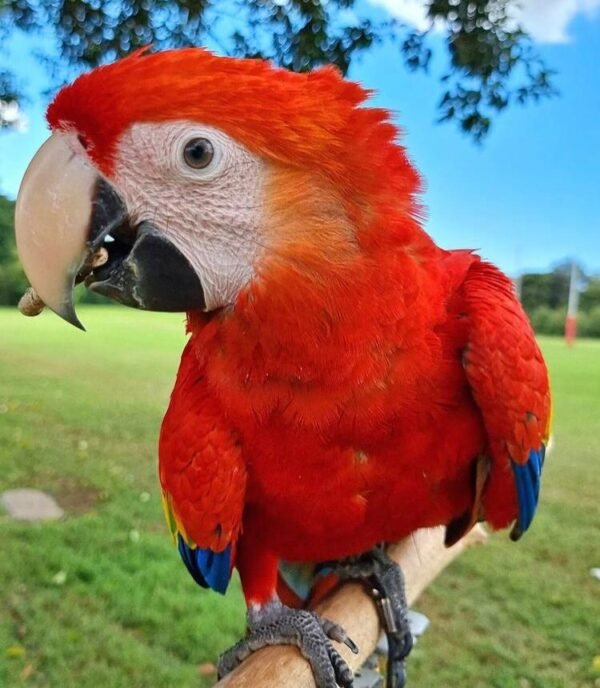
Scarlet Macaws have predominantly bright red plumage with yellow wing coverts and rich blue flight feathers.
Their large pale bill and bare facial area add to their distinctive appearance.
([parrots.org](https://parrots.org/encyclopedia/scarlet-macaw/?utm_source=chatgpt.com))
Tropical Forests & Savanna
Scarlet Macaws occur from Mexico through parts of Central America and northern South America.
They use lowland rainforest, humid forest, deciduous forest, gallery forest, and savanna habitats.
([parrots.org](https://parrots.org/projects/scarlet-macaw-recovery/?utm_source=chatgpt.com))
Scarlet Macaw Diet
Wild Scarlet Macaws feed on fruits, nuts, palm fruits, seeds, flowers, and nectar.
For captive care, provide a balanced macaw diet with suitable formulated food, fresh fruits,
vegetables, and appropriate nuts. ([parrots.org](https://parrots.org/projects/scarlet-macaw-recovery/?utm_source=chatgpt.com))
Social Behavior
Scarlet Macaws are highly social and may be seen as pairs, small parties, or larger flocks.
They forage together and use communal roosting areas. Their strong social nature makes regular interaction and enrichment important in captivity.
([parrots.org](https://parrots.org/projects/scarlet-macaw-recovery/?utm_source=chatgpt.com))
Scarlet Macaw Care
A Scarlet Macaw needs very spacious housing, sturdy perches, large chew toys, safe branches,
bathing opportunities, fresh water, and regular foraging activities.
The World Parrot Trust recommends a large flight enclosure for this species.
([parrots.org](https://parrots.org/encyclopedia/scarlet-macaw/?utm_source=chatgpt.com))
Because the bill is powerful, toys and enclosure materials should be durable and bird-safe.
Tree Cavity Nesting
Scarlet Macaws nest in tree cavities. Breeding pairs usually raise their young in suitable natural cavities,
with food supplied by the adults during development.
Conservation & Responsible Sourcing
The Scarlet Macaw is classified as Least Concern and listed under
CITES Appendix I. However, trapping for the wild-bird trade and habitat loss
have caused serious declines in parts of its range. ([parrots.org](https://parrots.org/projects/scarlet-macaw-recovery/?utm_source=chatgpt.com))
Explore More Birds
Browse our bird collection
or explore our Rainbow Lorikeet.
Scarlet Macaw FAQs
What is the scientific name of the Scarlet Macaw?
Its scientific name is Ara macao.
What does a Scarlet Macaw look like?
It has bright red plumage with yellow wing areas, blue flight feathers, and a large pale bill.
Where does the Scarlet Macaw live?
It occurs from Mexico through Central America and parts of northern South America.
What does a Scarlet Macaw eat?
Its natural diet includes fruits, nuts, palm fruits, seeds, flowers, and nectar.
Are Scarlet Macaws social?
Yes. They are commonly seen in pairs, small groups, and larger flocks.
Does a Scarlet Macaw need a large enclosure?
Yes. Its large body, strong flight, and active nature require spacious, secure housing.
Is the Scarlet Macaw protected?
Yes. It is listed under CITES Appendix I, and responsible, documented sourcing is important.