
Description
Green Cheek Conure for Sale Online
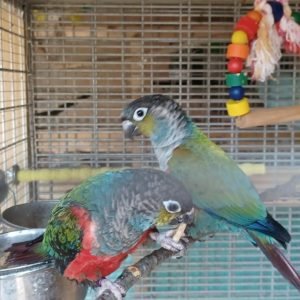
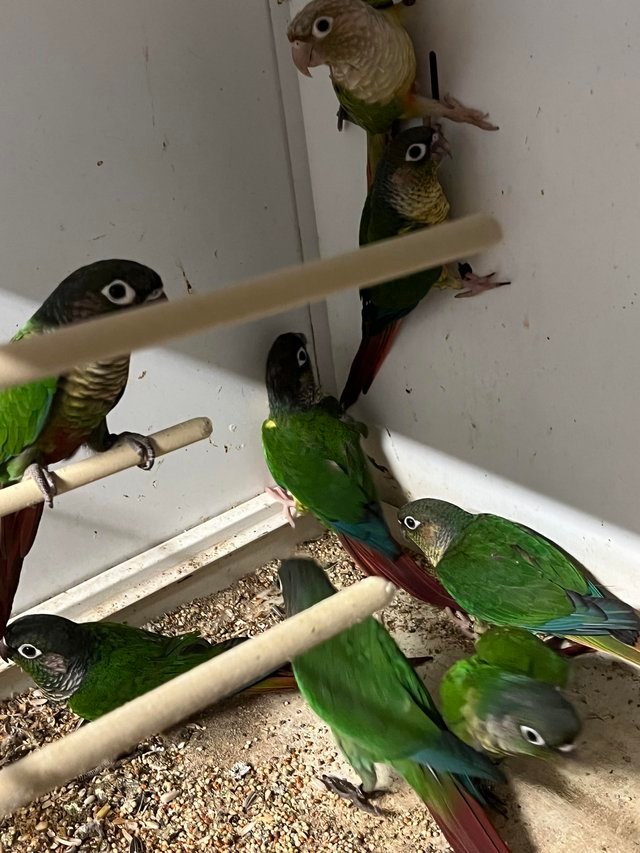
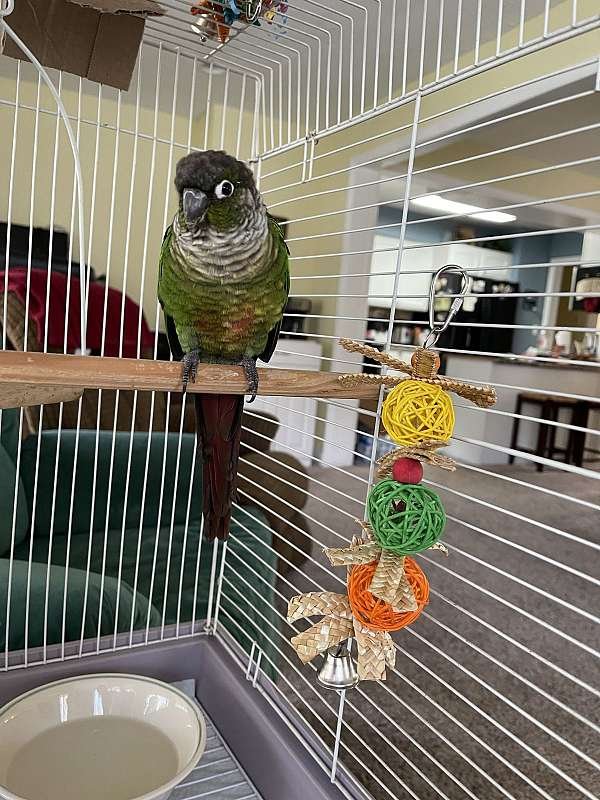
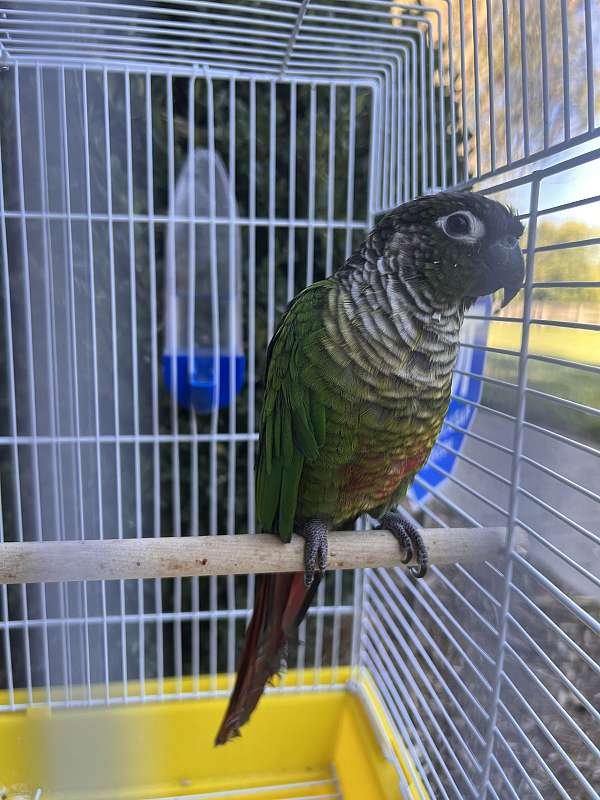
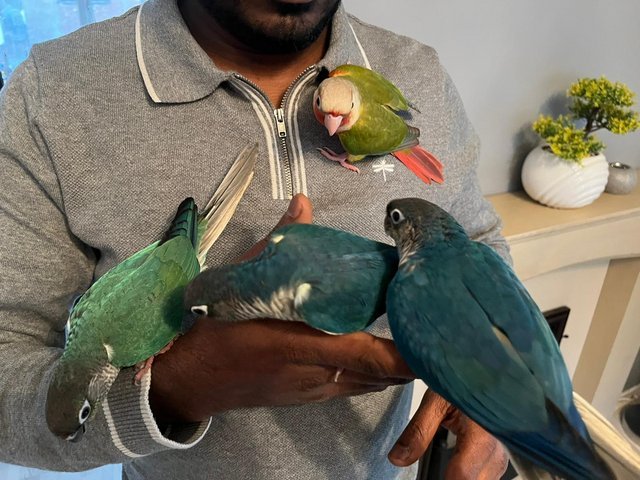
The Green Cheek Conure, or Green-cheeked Conure, is a lively little parrot with a big personality. Its green cheeks, colorful chest, dark head, and long tail give it a distinctive appearance. In addition, its playful nature makes it popular as a companion bird.
Species
Pyrrhura molinae
Length
About 26 cm
Weight
60–80 g
Status
Least Concern
What Makes the Green Cheek Conure Special?
Green Cheeks
First, bright green cheek feathers create the bird’s familiar name.
Warm Chest
Next, brown and reddish tones add contrast across the chest and belly.
Blue Details
In addition, blue feathers can appear around the wings, tail, and hindneck.
Long Tail
Finally, the long tail gives this compact parrot an elegant profile.
Playful, curious and busy
Green Cheek Conures are active and curious birds. They often explore their surroundings, climb, chew, and interact with people. Therefore, they need more than food and a cage.
Instead, provide toys, foraging activities, safe branches, and regular attention. Also, remember that individual birds can differ in noise level and temperament.
Forests and woodland
The Green Cheek Conure occurs across parts of Bolivia, Brazil, Paraguay, and Argentina. It uses forests, woodland, gallery areas, savanna, and other wooded habitats. Moreover, some populations live at high elevations in the eastern Andes.
Green Cheek Conure Diet
In the wild, Green Cheek Conures eat seeds, flowers, fruits, berries, and nuts. For companion birds, a varied diet can include quality formulated food, suitable vegetables, fresh fruit, and controlled seed portions. Additionally, fresh water should always be available.
Use suitable formulated food as part of a balanced diet.
Offer suitable fresh vegetables for variety.
Add appropriate fresh fruit in sensible portions.
Use suitable seeds as part of a varied feeding plan.
Keep an active bird occupied
Green Cheek Conures are very active, so enrichment should form part of their daily routine. For example, offer swings, ladders, foraging toys, and bird-safe wood. In addition, provide opportunities for bathing because this species enjoys water.
Foraging Toys
Swings
Ladders
Chew Toys
Bathing
Green Cheek Conure Housing
Choose spacious housing that allows the bird to move, climb, and stretch its wings. The World Parrot Trust recommends an aviary or suspended enclosure with a minimum length of about 2 metres. However, bigger housing is always better when practical and safe.
Hollow-tree nesting
Green Cheek Conures usually nest in hollow trees. A typical clutch contains 4–6 eggs. After hatching, young birds generally fledge at around 7 weeks.
Responsible Companion Care
The Green Cheek Conure is currently listed as Least Concern and under CITES Appendix II. Even so, some populations face habitat loss. Therefore, responsible captive-bred sourcing remains important.
Explore More Birds
First, browse our complete bird collection. Then, explore the colourful Rainbow Lorikeet.
Green Cheek Conure FAQs
What is a Green Cheek Conure?
It is a small South American parrot also called the Green-cheeked Conure.
What is its scientific name?
Its scientific name is Pyrrhura molinae.
How large is a Green Cheek Conure?
Adults are about 26 cm long and weigh around 60–80 g.
Are Green Cheek Conures playful?
Yes. They are active, curious birds that enjoy climbing, chewing, and exploring.
What does a Green Cheek Conure eat?
A varied diet can include formulated food, vegetables, fruit, seeds, and other suitable foods.
Do Green Cheek Conures need toys?
Yes. Toys, foraging activities, swings, ladders, and safe wood provide useful enrichment.
How much space does a Green Cheek Conure need?
WPT recommends an enclosure with a minimum length of about 2 metres.