Description
Black-Billed Magpie
F
armers and ranchers once tried hard to wipe this bird out entirely. Poison baits, set out for predators across the American West, killed thousands of magpies as an unintended casualty. Even so, the species held on. Today, it remains common and widespread across its range, a rare case of a persecuted bird simply refusing to disappear.
“A flashy bird of open country — unmistakable in flight, and just as unmistakable defending its nest.”
Identification
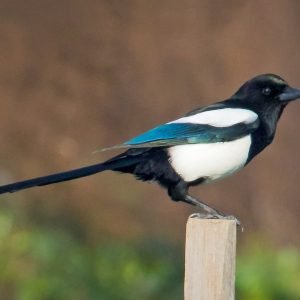
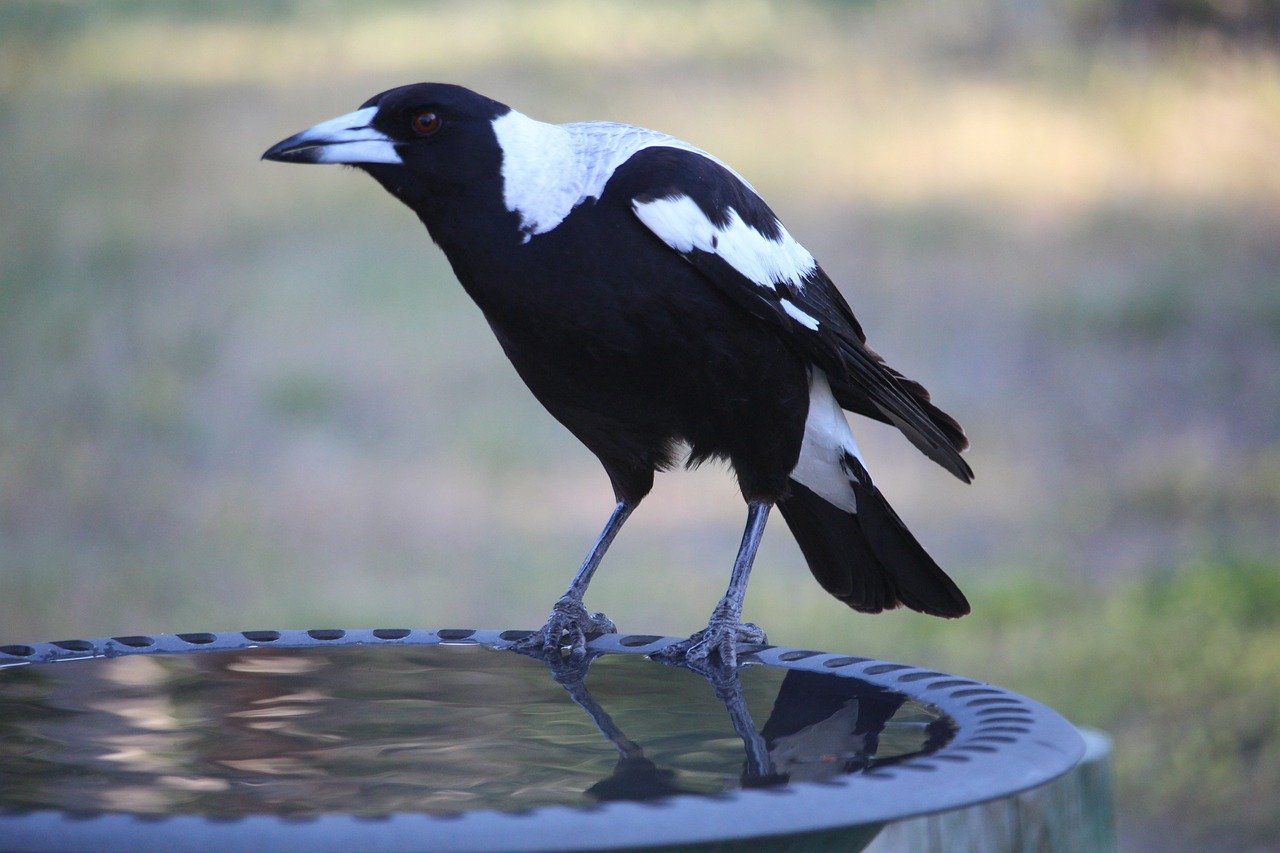
Black plumage covers most of the body, broken by a clean white belly and white scapulars along the back. Look closely at the wings and tail, and iridescent blue-green tones catch the light. The tail itself runs long and graduated, often accounting for more than half the bird’s total length. Males run slightly larger than females, though otherwise the sexes look alike.
Range and Habitat
This species occupies the western half of North America, from coastal southern Alaska through the Rocky Mountains and into the northern Midwest. It favors open country broken up by trees: rangeland, riparian corridors, farmland, and increasingly, suburban neighborhoods. Unbroken forest and treeless prairie both hold little appeal for this bird.
Nest and Family Life
Pairs bond for the long term and share nest-building and chick-rearing duties. The nests themselves are enormous, domed structures that can stretch more than three feet across. Once eggs hatch, both parents defend the site fiercely, sometimes dive-bombing anyone, including people, who ventures too close. Chicks stay in the nest for four to five weeks before fledging.
Compared to Other Magpies
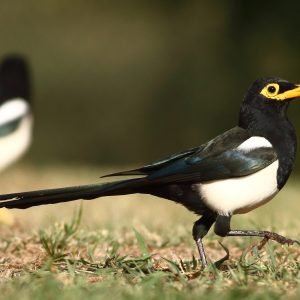
For decades, this bird was classified as a subspecies of the Eurasian Magpie, given how similar the two look. Genetic studies in 2000 finally settled the question, splitting them into separate species. Interestingly, those same studies found this bird’s closest living relative isn’t the Eurasian Magpie at all, but California’s Yellow-Billed Magpie instead.
Diet and Daily Care
This species is a genuine generalist. Insects, rodents, eggs, carrion, seeds, nuts, and berries all appear on the wild menu, depending on season and location. In captivity, a quality softbill or omnivore diet works well as a base, rounded out with fresh produce and occasional protein. For a full comparison of corvid species we carry, visit our complete bird collection.
Buyer Questions
Is it legal to own a Black-Billed Magpie?
Only with documented, captive-bred origin. As a native wild bird, it’s protected under the U.S. Migratory Bird Treaty Act.
Why were these birds once poisoned in large numbers?
Farmers and ranchers targeted predators with poison bait, and magpies were frequently caught as unintended victims.
Is this the same bird as the Eurasian Magpie?
No. Though nearly identical in appearance, genetic studies in 2000 confirmed it as a separate species.
How big are their nests?
Nests are massive, domed structures that can measure more than three feet across.
Are they aggressive toward people?
Only near an active nest. Parents defend eggs and chicks fiercely and may dive-bomb anyone who gets too close.
What should I feed a Black-Billed Magpie?
A quality softbill or omnivore diet, supplemented with fresh produce and occasional protein, works well in captivity.
Where does this species live in the wild?
Its range covers the western half of North America, from coastal Alaska through the Rockies into the northern Midwest.