Description
Eurasian Magpie for Sale Online
Black, white, and unexpectedly brilliant. One of the sharpest minds in the bird world.
📊 Least Concern
🧠 Passes Mirror Self-Test
This species is a protected native wild bird across the UK and much of the EU. Selling any wild bird there is illegal unless it carries a closed ring and documented proof of captive-bred origin. Confirm this documentation before any purchase or sale in these regions.
At first glance, this bird looks simple: black, white, and done. Look closer, though, and iridescent green and violet ripple across the wings and tail. That same contrast applies to its mind. Researchers consider this species one of the most intelligent birds on the planet, with cognitive abilities that rival some great apes.
In a landmark study, researchers placed a small colored mark on a magpie’s throat, somewhere it could only see in a mirror. The bird immediately tried to remove the mark. This self-recognition puts magpies among a very short list of non-mammal species known to pass this test at all.
Identification
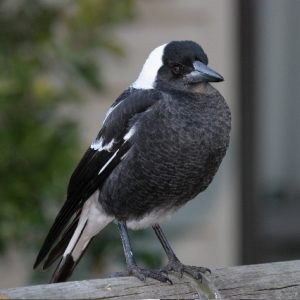
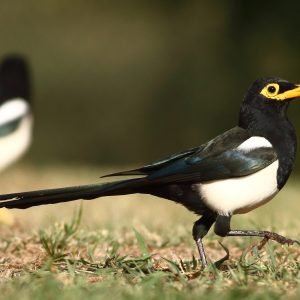
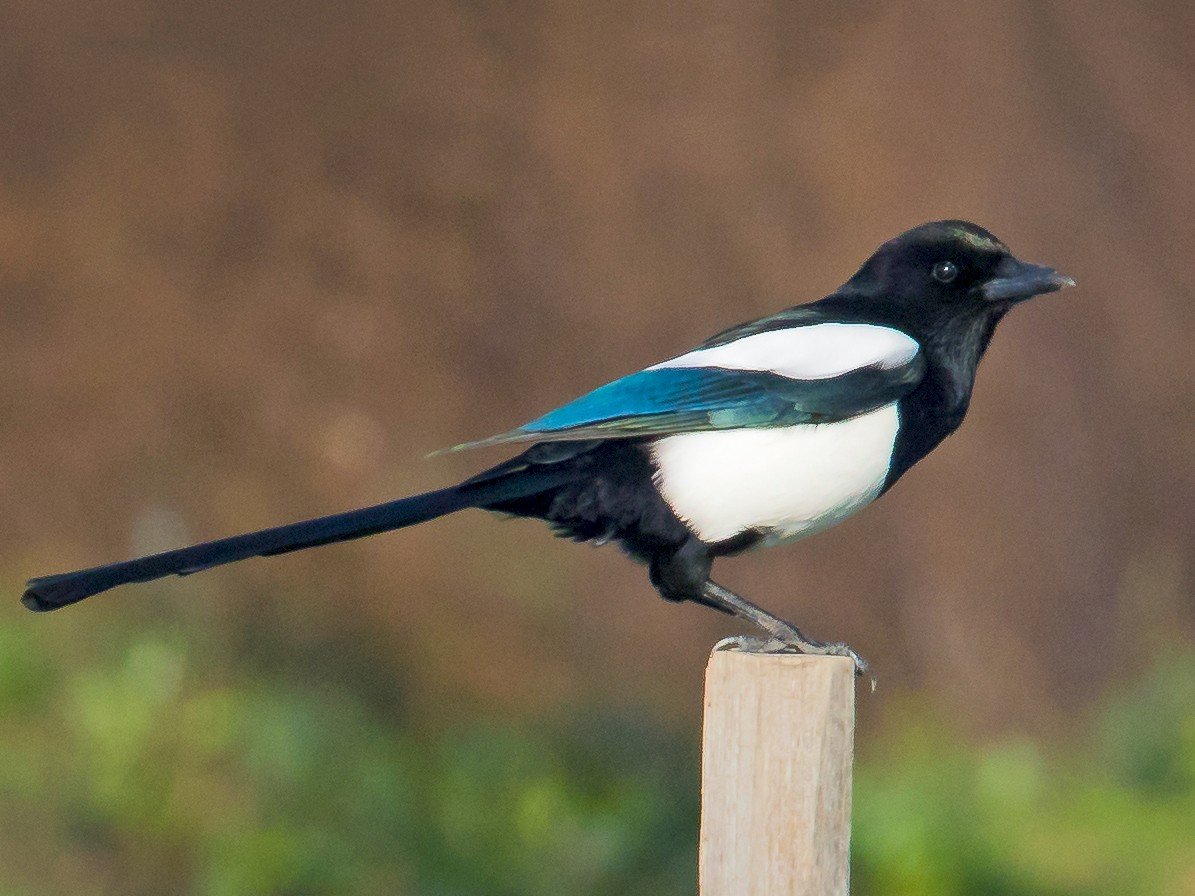
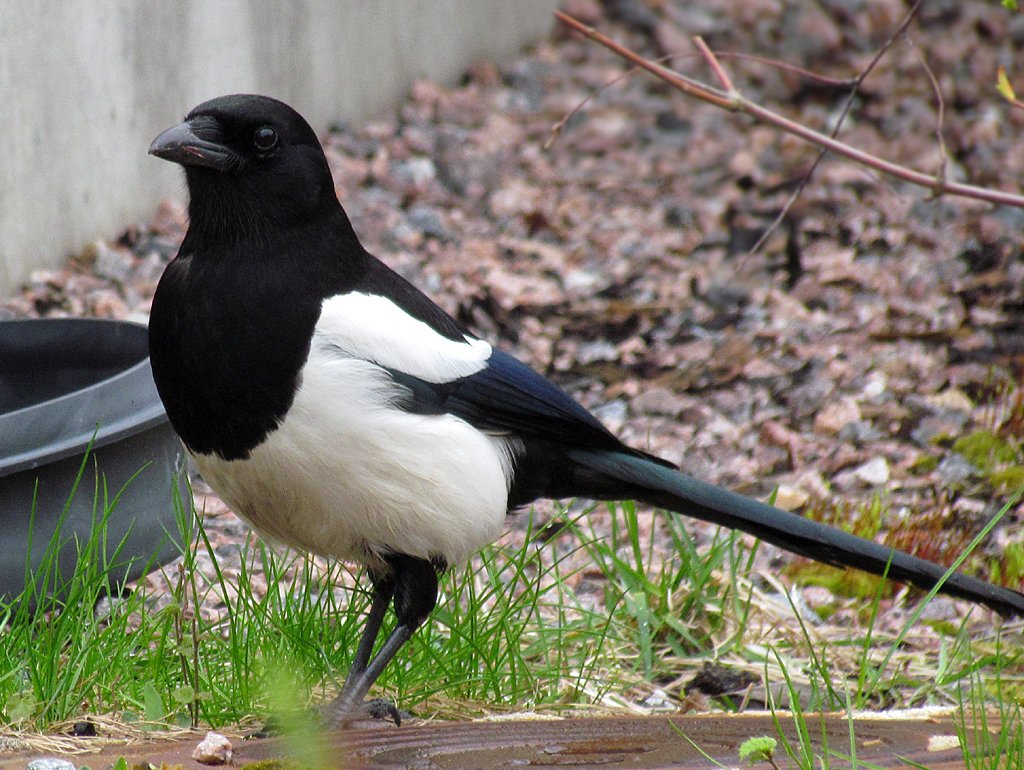
A long, graduated tail sets this bird apart from most other corvids right away. The head, chest, and back run glossy black, while the belly and shoulders stay clean white. Wings and tail catch the light with metallic green and purple tones. Males and females look nearly identical, though females run slightly smaller on average.
Range and Habitat
This species spans a huge range, stretching across Europe and much of temperate Asia to the far reaches of northeastern Russia. It adapts readily to human-altered landscapes too. Parks, gardens, farmland, and city edges all suit it well, and it often builds large, domed nests using wire, string, and other scavenged materials.
A Bird Steeped in Folklore
Few birds carry as much cultural weight as this one. A well-known British counting rhyme assigns meaning to how many magpies you spot at once, and superstitions around the bird stretch back centuries across Europe. Closely related species, like the Oriental Magpie, carry similarly rich folklore across Asia.
Diet and Daily Care
This species is a true omnivore, eating insects, small vertebrates, carrion, seeds, and fruit as opportunities allow. Captive diets should reflect that range. A quality softbill or omnivore pellet works well as a base, supplemented with fresh produce, occasional protein, and mental enrichment to match its sharp intelligence.
Buyer Questions
Is it legal to buy a Eurasian Magpie?
It depends on your location. In the UK and EU, legal ownership requires closed-ring proof of captive-bred origin due to native wild bird protections.
Are magpies really that intelligent?
Yes. They’re one of the few non-mammal species documented to recognize themselves in a mirror, a strong marker of advanced cognition.
How can I tell males from females?
Plumage looks nearly identical between sexes. Females tend to run slightly smaller, but reliable sexing usually needs other methods.
What should I feed a Eurasian Magpie?
A quality softbill or omnivore pellet works as a base, supplemented with fresh produce and occasional protein sources.
Where are Eurasian Magpies found in the wild?
Their range spans Europe and much of temperate Asia, reaching as far as northeastern Russia.
Do they need a lot of enrichment?
Yes. Given how intelligent this species is, regular mental stimulation and problem-solving opportunities matter for its wellbeing.
Is the Eurasian Magpie endangered?
No, it’s classified as Least Concern with a large, stable global population, though local sale laws still apply.