
Description
Fife Fancy Canary for Sale Online
Scotland’s answer to a breed that grew too big — small, round, and proud of it.
📏 Under 4.5″
🏆 Recognized 1957
Most canary breeds grew larger over time as breeders chased bigger, fuller show birds. The Fife Fancy went the opposite direction on purpose. After the Border Canary ballooned well past its original size through the 20th century, a group of Scottish fanciers pushed back, and this compact, round little bird is what they ended up with instead.
Born From a Disagreement
The Border Canary started out small, once nicknamed the “Wee Gem” for its tidy, compact charm. Over the decades, though, breeders crossed in larger Norwich stock, and the show-bench Border grew rounder and heavier with every generation. A group of fanciers from Fife, Scotland disagreed with that direction entirely. Rather than follow along, they bred deliberately smaller, capping their birds at 4.5 inches, and the Fife Fancy earned official recognition in 1957.
Judges award up to 25 of 100 possible points for size alone, making it the single most heavily weighted trait in competition. Go over the 4.5-inch limit, and a bird simply won’t place, no matter how strong everything else looks. That strict cap is exactly what keeps this breed distinct from its larger Border relative.
Appearance and Color
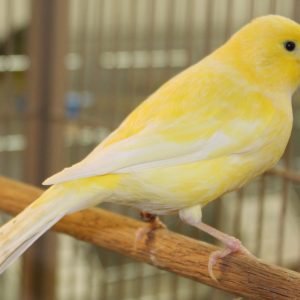
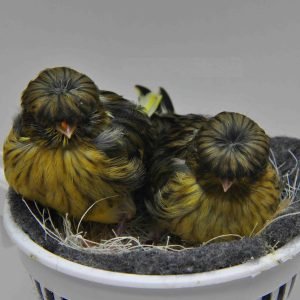
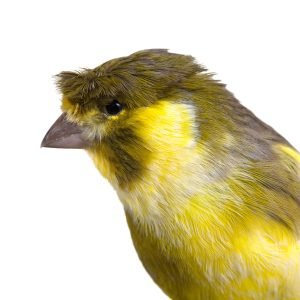
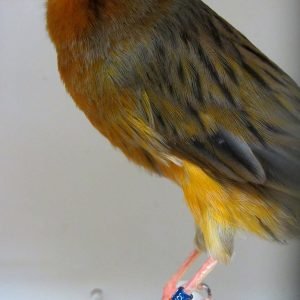
A round chest, a small round head, and compact wings carried close to the body give this breed its distinctive silhouette. Feathers should lie fine, firm, and tight, without any looseness breaking up that neat outline. Color varies widely across the breed, but judges always look for a rich, even tone throughout, whatever shade a particular bird carries.
Never pair two “buff” (dense-feathered) birds together. Doing so raises the risk of feather lumps and skin problems in the resulting chicks. Experienced breeders instead pair buff birds with a “yellow” (intensive-feathered) partner to keep offspring healthy.
Temperament and Everyday Care
Lively, curious, and genuinely social, this breed tends to get along well with other canaries and its own mates alike, which makes it a solid choice for a mixed aviary. Since it’s a type breed rather than a song breed, don’t expect the trained, judged voice you’d get from a dedicated singer. Day-to-day care stays simple: fresh seed or pellets, regular greens, and a shallow dish for the frequent baths canaries love.
Buyer Questions
Is the Fife Fancy just a small Border Canary?
Essentially, yes. Breeders created it specifically to preserve the Border’s original compact size after show-bench Borders grew much larger.
How big can a Fife Fancy get?
The standard caps it at 4.5 inches. Anything larger won’t qualify for show competition.
Is this breed a good singer?
Breeders focus on shape and size rather than song, so don’t expect the trained voice of a dedicated song breed.
Why shouldn’t I pair two buff birds together?
Pairing two buff, dense-feathered birds raises the risk of feather lumps and skin problems in the chicks, so experienced breeders avoid it.
When was the Fife Fancy officially recognized?
The breed gained official recognition in 1957, after development began in Fife, Scotland, following the Second World War.
Are Fife Fancy Canaries social birds?
Yes, they’re lively and social, generally getting along well with other canaries and their own kind in a shared aviary.
What matters most when judging a Fife Fancy?
Size carries the most weight, worth up to 25 of 100 possible points, followed by rounded shape and even, rich coloring.