Quaker Parrots
Social, intelligent parrots recognised for their green plumage, grey face and chest, lively personality, vocal ability, and unusual communal nesting behaviour.
Quaker Parrots, also known as Monk Parakeets, are South American parrots scientifically known as Myiopsitta monachus. They have predominantly green plumage with a distinctive grey face and breast, a long pointed tail, and a pale pinkish bill. Unlike most parrots, Quaker Parrots build large communal stick nests rather than relying exclusively on tree cavities. Their intelligence, social behaviour, and ability to mimic sounds have also made them popular companion birds. :chatgpt-content-reference{index=”0″}
Green & Grey
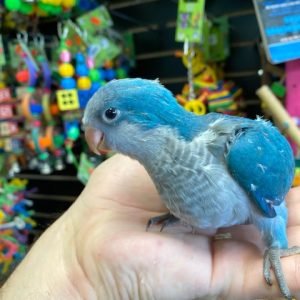
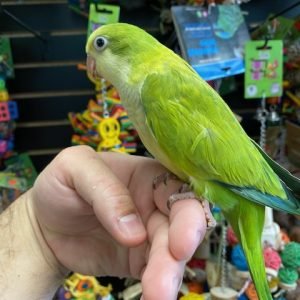
Quaker Parrots have bright green upperparts, a grey face and breast, a long pointed tail, and blue colouring visible on the flight feathers.
Social & Vocal
These active parrots naturally live in social groups and communicate with a wide range of calls. Captive birds can also learn to mimic human speech.
Communal Builders
Quaker Parrots construct large stick nests that can contain multiple nesting chambers, making their nesting behaviour particularly unusual among parrots.
Small in size but remarkable in behaviour, the Quaker Parrot combines intelligence, social bonds, and one of the parrot world’s most unusual nesting styles.
Basic Quaker Parrot Care
Quaker Parrots need a secure enclosure with enough room for climbing, movement, exercise, and play. Provide sturdy perches, safe chewing materials, foraging opportunities, and rotating enrichment. Their diet should include balanced parrot nutrition together with suitable vegetables, fruits, seeds, and other species-appropriate foods. Fresh water should always be available. Because Quaker Parrots are highly social and intelligent, regular interaction and mental stimulation are equally important. The World Parrot Trust recommends enrichment such as puzzle toys, bird-safe chewable materials, bathing opportunities, and socialisation for this species. :chatgpt-content-reference{index=”1″}
Quaker Parrot FAQs
What is a Quaker Parrot?
A Quaker Parrot is another common name for the Monk Parakeet, Myiopsitta monachus. It is a South American parrot recognised by its green body, grey face and breast, long pointed tail, and pale bill. The species naturally occurs in parts of South America and has also established non-native populations in several regions. Quaker Parrots are social, vocal, and highly adaptable birds. :chatgpt-content-reference{index=”2″}
Are Quaker Parrots good pets?
Quaker Parrots can make engaging companion birds for people who can provide consistent daily care. They are intelligent, social, active, and capable of learning sounds and human speech. However, they can also be noisy and require substantial mental stimulation. Therefore, prospective owners should consider their vocal behaviour, exercise requirements, social needs, diet, and long-term commitment before choosing one. :chatgpt-content-reference{index=”3″}
What do Quaker Parrots eat?
Wild Quaker Parrots eat a varied plant-based diet that includes seeds, buds, fruits, berries, nuts, blossoms, and grains. They may also consume crops such as corn, sunflower, wheat, sorghum, and rice. In captivity, a balanced parrot diet should form the nutritional foundation, with suitable fresh vegetables, fruits, and controlled seed portions providing variety. Fresh drinking water should always be available. :chatgpt-content-reference{index=”4″}
Can Quaker Parrots talk?
Yes. Quaker Parrots are capable of learning to imitate human speech and other sounds. Their natural communication is already quite varied, with calls ranging from chatter to louder squawks. Individual birds differ, so not every Quaker will develop the same vocabulary. Regular interaction, positive training, and a stimulating environment can encourage healthy communication and learning. :chatgpt-content-reference{index=”5″}
Why are Quaker Parrots known for their nests?
Quaker Parrots are unusual because they construct large stick nests rather than depending solely on tree cavities. Multiple pairs can build separate chambers within the same large structure. These communal nests can become substantial and may contain many nesting chambers. This behaviour is one of the most distinctive features of the species and reflects its highly social lifestyle. :chatgpt-content-reference{index=”6″}
How long do Quaker Parrots live?
Quaker Parrot lifespan depends on conditions and individual health. Cornell reports that the species can live six years or more in the wild and often reaches around 15 years in captivity, while the World Parrot Trust lists a captive longevity of about 25 years. Because published estimates vary, owners should plan for a long-term commitment rather than assuming a short lifespan. :chatgpt-content-reference{index=”7″}
What should I consider before buying a Quaker Parrot?
Before buying a Quaker Parrot, consider its noise level, social needs, diet, enclosure, enrichment requirements, and potential lifespan. You should also check local regulations because Quaker Parrots have established non-native populations in several countries and may be subject to restrictions in some locations. Choose a responsible source and ask for clear information about the bird’s health and origin. Most importantly, prepare suitable housing and daily enrichment before bringing the bird home. :chatgpt-content-reference{index=”8″}