Quaker Parrots: The Complete Guide to the World's Chattiest Little Parakeet
Also known as the Monk Parakeet, the Quaker parrot is one of the most talkative, trainable, and affordable pet parrots you can own. In this post we cover where Quakers come from, their colors, personality, talking ability, lifespan, and why they've become such a popular choice among first-time and experienced bird owners alike.
What Is a Quaker Parrot?
The Quaker parrot (Myiopsitta monachus), commonly called the Monk Parakeet, is a small, stocky parrot native to the temperate and subtropical regions of South America, including Argentina, Bolivia, Brazil, Paraguay, and Uruguay. The nickname "Quaker" comes from the bird's distinctive bobbing, quivering body language, especially when it's excited or greeting its owner — a quaking motion that looks a lot like a curtsy.
Unlike most parrot species, Quakers build large, elaborate communal stick nests rather than nesting in tree cavities. In the wild, these nests can house dozens of breeding pairs and are reused and expanded year after year, which is part of why Quakers are considered one of the most social and industrious parrots in the world.
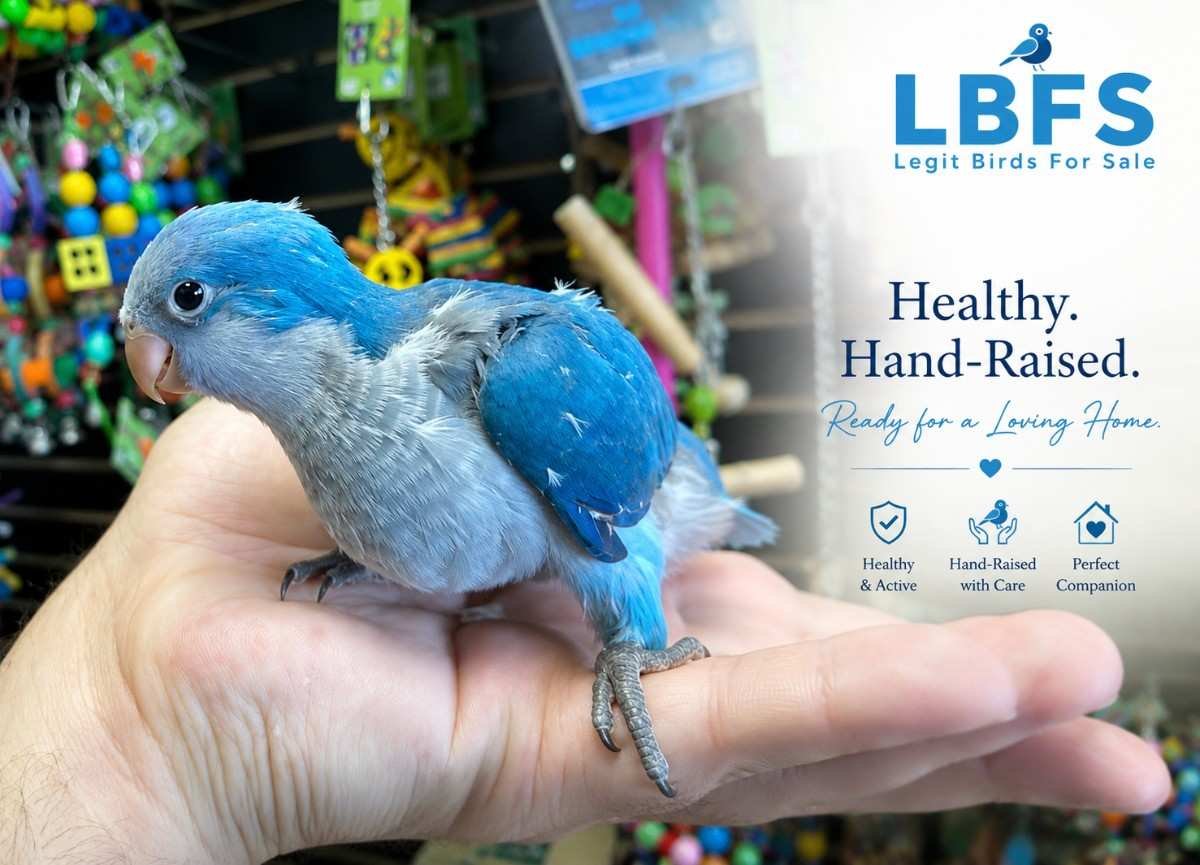
The blue Quaker is a color mutation, not a separate species — a favorite among collectors for its soft slate-blue plumage.
In the pet trade, Quaker parrots are prized for a combination that's hard to find in a small bird: a big, expressive vocabulary, a strong bond with their owner, and a manageable size of around 11 to 13 inches from beak to tail. They're intelligent, food-motivated, and quick to learn tricks, which makes them a favorite among owners who want an interactive, trainable companion without committing to a large macaw or cockatoo.
Quaker Parrot Colors: From Classic Green to Blue
The wild-type Quaker parrot is bright green with a pale grey face, chest, and throat, and blue-tipped flight feathers. Decades of selective breeding have since produced a wide range of color mutations, and each one is genuinely striking in its own way.
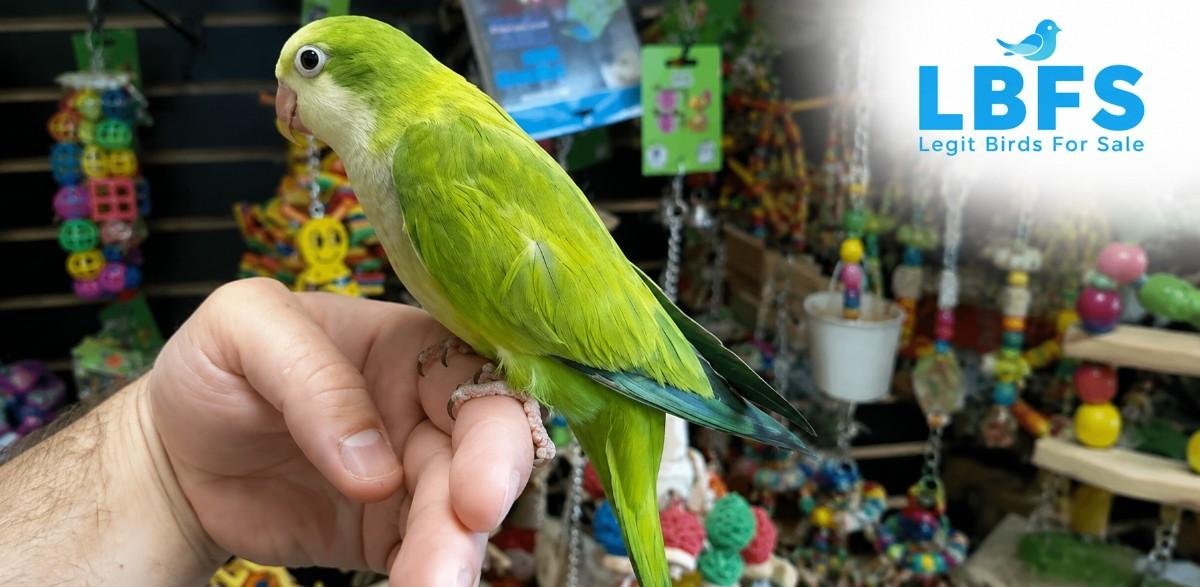
The classic green Quaker — the original wild-type coloring and still the most common in the pet trade.
The green Quaker is the standard, wild-type coloring and remains the most widely available and budget-friendly option. The blue Quaker, by contrast, is a recessive mutation that removes the yellow pigment from the feathers, leaving a cool blue-and-grey bird that tends to command a higher price due to its rarity. Rarer still are lutino and albino Quakers, which lack most or all melanin and stand out with pale yellow or white plumage and pink or red eyes.
Color mutation has no meaningful effect on personality — a blue Quaker and a green Quaker raised the same way will behave almost identically. The difference is purely cosmetic, so choosing a color usually comes down to personal preference (and budget).
Personality & Temperament
Quaker parrots are confident, curious, and often described as having a "big bird attitude in a small bird body." They bond closely with their primary caregiver, enjoy being part of household activity, and are known for a playful, almost comedic streak — many owners describe their Quaker as the class clown of the household.
"Ounce for ounce, few parrots pack in as much talking, training, and personality as the Quaker."
That said, Quakers are also territorial and can be quite vocal about defending their cage or favorite person, especially during hormonal periods. Early socialization, consistent handling, and positive reinforcement training go a long way toward keeping a Quaker's assertiveness in check.
Do Quaker Parrots Talk?
Yes — Quaker parrots are widely regarded as one of the best talkers among small parrot species. Many Quakers develop vocabularies of dozens to over a hundred words and phrases, and they tend to speak with unusually clear, distinct pronunciation for their size. Combined with their trainability, this makes them a favorite for owners specifically looking for an interactive, "chatty" pet bird.
A Quick Note on Legality
Because feral Quaker parrot populations have established themselves in parts of the United States (notably Florida, Texas, and parts of the Northeast) after escaping or being released from captivity, some states and municipalities restrict or ban Quaker parrot ownership over agricultural concerns. Always check your state and local regulations before bringing one home, since rules vary widely and change from time to time.
Frequently Asked Questions
Are Quaker parrots good pets for beginners?
Yes, in most cases. Quakers are intelligent, food-motivated, and easy to train, which makes them one of the more approachable parrot species for first-time owners — as long as daily interaction and enrichment are part of the plan.
How long do Quaker parrots live?
With a balanced diet, regular vet care, and a stimulating environment, Quaker parrots commonly live 20 to 30 years, and some individuals live even longer.
Is it legal to own a Quaker parrot?
It depends on where you live. Quaker parrots are restricted or banned in a handful of U.S. states due to concerns about feral populations, so it's important to check your state and local laws before purchasing one.
What colors do Quaker parrots come in?
The most common color is classic green, but breeders have developed mutations including blue, grey, cinnamon, lutino, albino, pied, and turquoise, among others.
Are Quaker parrots loud?
Quakers are moderately vocal and can be loud when excited, startled, or seeking attention, but they're generally quieter than larger parrots like macaws or cockatoos.
🦜 Available Quakers & Other Birds
Curious Whether a Quaker Parrot Is Right for You?
Read up on their care needs and talking ability before bringing one home.
Read the FAQ