
African Grey Parrot: The Complete Care & Buying Guide
Widely regarded as the most cognitively advanced parrot species on record, the African grey is a serious commitment and a serious reward. Here's what the science says about their intelligence, what daily care actually looks like, and how to choose a healthy bird.
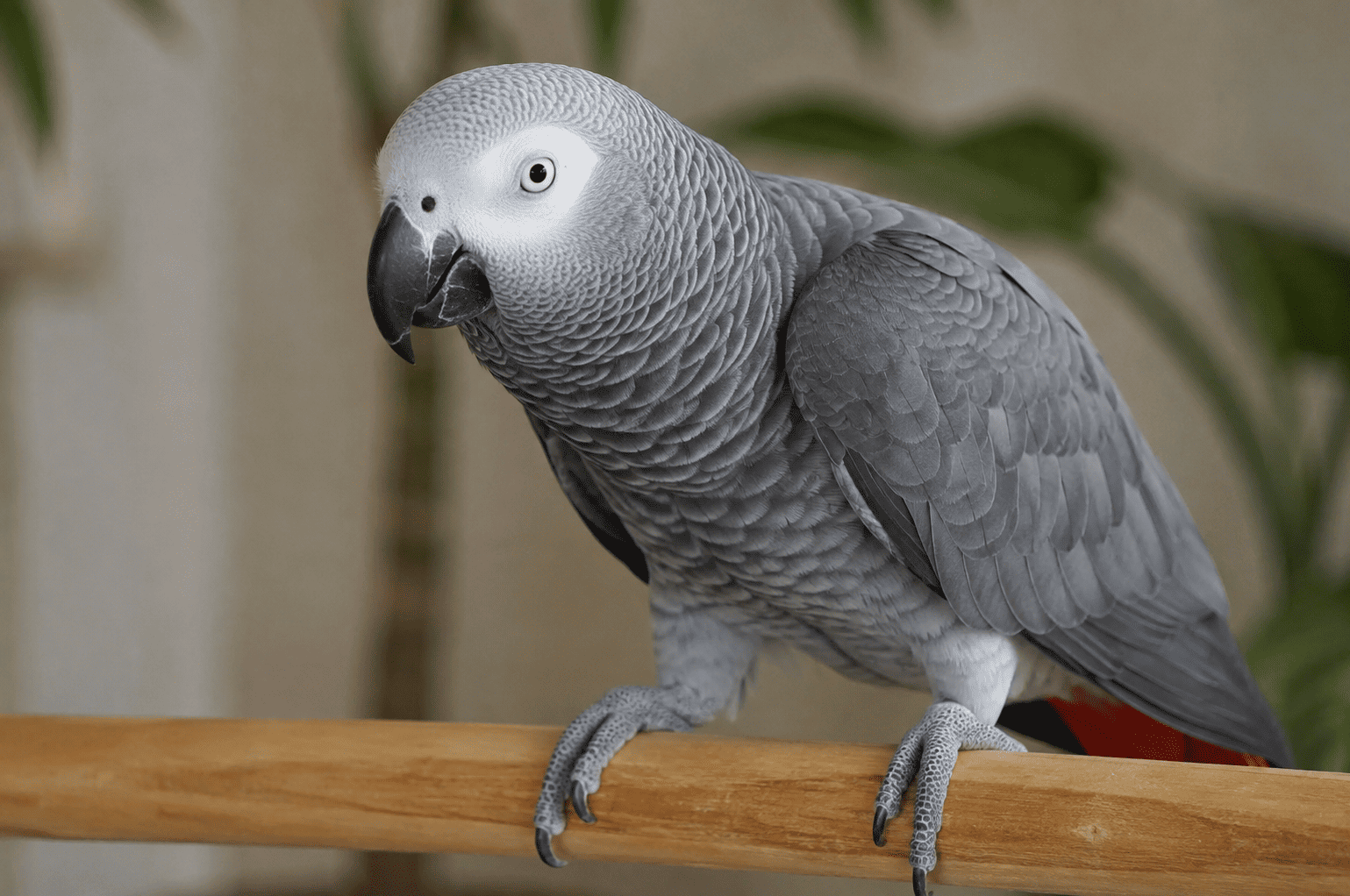
Congo African grey — silver-grey body, white facial mask, signature scarlet tail.
Why African Greys Are Considered the Smartest Parrot
Most of what people know about parrot intelligence traces back to one African grey named Alex, studied for over 30 years by animal cognition researcher Dr. Irene Pepperberg. Alex learned to identify more than 50 objects, seven colors, five shapes, and could count and label quantities up to six — abilities previously thought to be limited to primates.
That research reshaped how scientists think about avian cognition generally, but African greys in particular remain the reference point. Owners consistently report birds that solve puzzle feeders within minutes, request specific foods by name, and appear to understand cause and effect rather than simply repeating sounds.
Problem-Solving Comparison
Relative performance on object permanence and tool-use style cognitive tasks, based on published comparative cognition studies.
Scores are illustrative, drawn from general comparative-cognition literature trends, not a single standardized test — individual birds vary widely.
"Alex didn't just mimic. He requested, refused, and corrected — the hallmarks of intentional communication."
Summarizing findings from Dr. Irene Pepperberg's decades of researchThat intelligence is a double-edged sword for owners. A bird this capable needs constant mental engagement — puzzle toys, foraging challenges, training sessions — or it will find its own outlets, which often means feather plucking, screaming, or destructive chewing.
Physical & Vocal Traits
African greys are medium-sized parrots with dense silver-grey plumage, a pale featherless facial mask, and a scarlet-red tail that stands out sharply against the grey. Most reach 12 to 14 inches long and weigh between 400 and 550 grams at maturity.
They're also among the strongest talkers in the parrot world, often building vocabularies in the hundreds of words and using them contextually rather than at random — greeting people by name, mimicking phone ringtones, or asking for specific foods.
Daily Care Essentials
Cage & environment
African greys need a large cage — at minimum 24" x 24" x 36" — with horizontal bar spacing they can climb, since they're not strong flyers in captivity but are enthusiastic climbers. Place the cage in a calm area away from constant foot traffic; greys are sensitive to sudden changes and can become anxious in high-chaos households.
Diet
A formulated pellet diet should make up the bulk of daily food, supplemented with fresh vegetables, limited fruit, and a small portion of nuts. African greys are prone to calcium deficiency if kept on a seed-heavy diet long-term, which can lead to seizures — this is one of the most important diet distinctions for this species specifically.
Enrichment
Given their intelligence, boredom is the single biggest driver of behavioral problems in African greys. Foraging toys, rotating puzzle feeders, and short daily training sessions go a long way toward preventing feather plucking and excessive screaming.
Choosing a Healthy African Grey
Check the eyes and beak
Eyes should be bright and clear with no discharge; the beak should be smooth with no flaking or overgrowth.
Look at the feathers closely
Full, smooth plumage across the chest and under the wings. Bald patches can signal plucking, stress, or illness.
Ask about weaning and age
Confirm the bird is fully weaned onto solid food and is at least 12–14 weeks old before it leaves the breeder.
Ask about socialization
Hand-fed, well-handled babies adjust to a new home far faster than minimally handled birds — ask how often the chick has been out of the nest box.
Confirm shipping guarantees
For online orders, always confirm a live-arrival guarantee and how the bird will be packed and shipped.
Congo vs. Timneh African Grey
The two recognized subspecies are often compared side by side. Here's how they differ. Swipe sideways on smaller screens to see the full table:
| Trait | Congo African Grey (CAG) | Timneh African Grey (TAG) |
|---|---|---|
| Size | Larger, ~13–14" | Smaller, ~11–12" |
| Coloring | Lighter silver-grey, bright red tail | Darker charcoal-grey, maroon tail |
| Beak color | Solid black | Horn-colored upper beak |
| Temperament | Sensitive, needs steady routine | Often slightly calmer, matures faster |
Frequently Asked Questions
Are African grey parrots good pets for beginners?
Generally not recommended for first-time bird owners. Their intelligence and sensitivity mean they need experienced, consistent handling and are prone to stress-related feather plucking in the wrong environment.
How long do African grey parrots live?
Typically 40 to 60 years with proper care, making them a multi-decade, often lifelong commitment.
Do African greys really understand words, or just mimic?
Research on Alex the parrot showed evidence of contextual use, including requesting specific items and answering simple questions, beyond pure mimicry — though the extent of true comprehension is still debated among researchers.
What's the difference between a Congo and Timneh African grey?
Congo greys are larger with lighter grey plumage and a bright red tail, while Timneh greys are smaller, darker, with a maroon tail and horn-colored upper beak. Timnehs are also known to mature and begin talking slightly earlier.
Ready to Bring Home an African Grey?
Hand-fed, well-socialized Congo & Timneh babies — shipped safely nationwide.
Shop African Grey Parrots