

Description
African Grey Chicks for Sale Online
Helpless at hatch, slow to grow, and eventually one of the sharpest minds in the bird world.
📊 Endangered
👁️ Eyes Change Color With Age
African Greys are Endangered and protected under CITES Appendix I, the strictest international trade category, after decades of trapping decimated wild populations. Chicks specifically have always been the main target of illegal trade, since young birds hand-rear more easily than wild-caught adults. Insist on full documentation proving captive-bred origin before buying, with no exceptions.
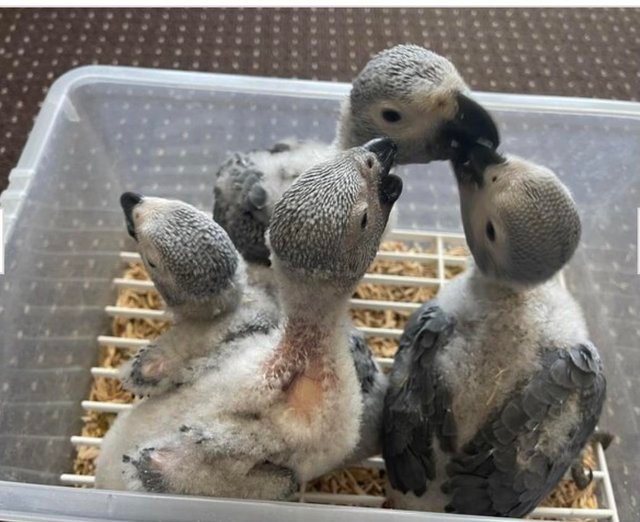
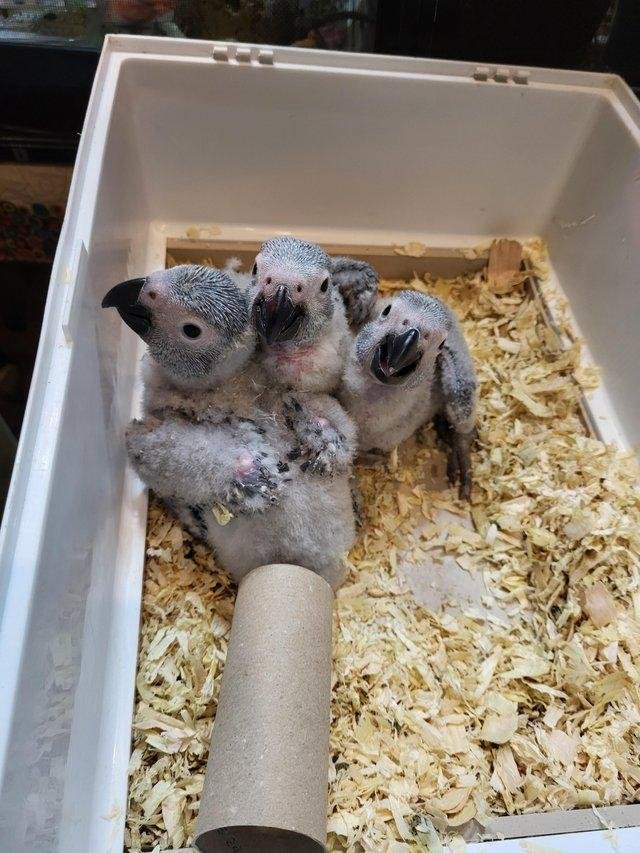
An African Grey chick hatches with nothing to show for the remarkable bird it will become. No feathers, closed eyes, and complete dependence on its parents mark the first weeks of life. That slow start eventually gives way to one of the sharpest minds in the entire bird world, but getting there takes real patience.
Reading Age Through Eye Color
Short of knowing an exact hatch date, eye color is the most reliable way to estimate a young African Grey’s age, at least until it reaches full adult coloring around four years old.
A Slow, Deliberate Timeline
Eggs hatch after 28 to 30 days of incubation, and both parents share feeding duties once chicks arrive. Fledging takes 10 to 12 weeks, noticeably longer than many other parrot species, and some chicks have been documented taking even longer to leave the nest. This unhurried pace reflects a bird built for a long life, not a quick start.
Very young African Grey chicks are especially prone to aspiration during hand-feeding, which can quickly become life-threatening. Anyone hand-rearing a chick needs proper technique and close attention, particularly during the earliest weeks. If you’re buying a chick rather than a weaned bird, confirm the breeder’s hand-feeding experience directly.
Chick Care Essentials
Buyer Questions
How can I tell an African Grey chick’s age?
Eye color offers a reliable estimate, shifting from near-black at hatch to grey around one year, straw-colored around two, and pale yellow by about four years.
Why does it take so long for chicks to fledge?
African Greys develop more slowly than many parrots, typically taking 10 to 12 weeks, reflecting their long overall lifespan.
Is it legal to buy an African Grey chick?
Yes, with full documentation confirming captive-bred origin, since the species is CITES Appendix I and Endangered in the wild.
Why are chicks specifically targeted by poachers?
Young birds hand-rear and tame more easily than wild-caught adults, which has historically made chicks the primary target of illegal trapping.
What’s the biggest risk when hand-feeding a chick?
Aspiration during feeding is a real and serious risk for very young chicks, so proper technique and experience matter enormously.
Are African Grey chicks helpless at hatch?
Yes, they hatch blind, featherless, and completely dependent on their parents for warmth and food.
When do African Greys reach sexual maturity?
Most reach maturity between three and five years old, well after their eye color has already settled into the adult pale yellow.