

Description
Congo African Grey for Sale Online
The subspecies that redefined how science understands bird intelligence.
📊 Endangered
🧠 Exceptional Cognition
Decades of trapping and habitat loss have made this species Endangered across much of its range, and it’s protected under CITES Appendix I, the strictest international trade category. Always confirm captive-bred documentation before buying.
A Congo African Grey named Alex spent three decades working with researcher Irene Pepperberg, demonstrating an ability to identify colors, shapes, quantities, and even express basic concepts like “same” and “different.” That body of research reshaped how scientists think about avian cognition, and it’s a big part of why this subspecies carries such a strong reputation for intelligence today.
Congo vs. Timneh at a Glance
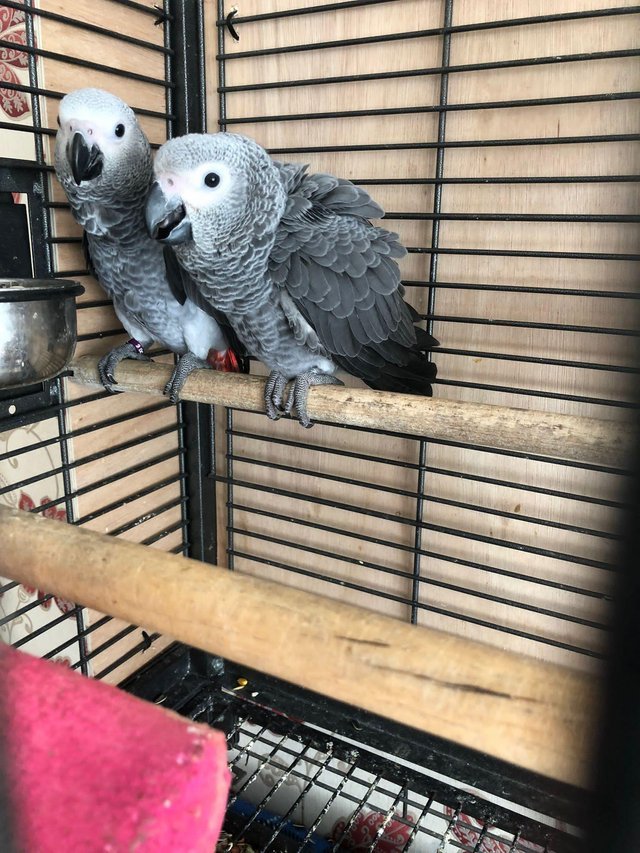
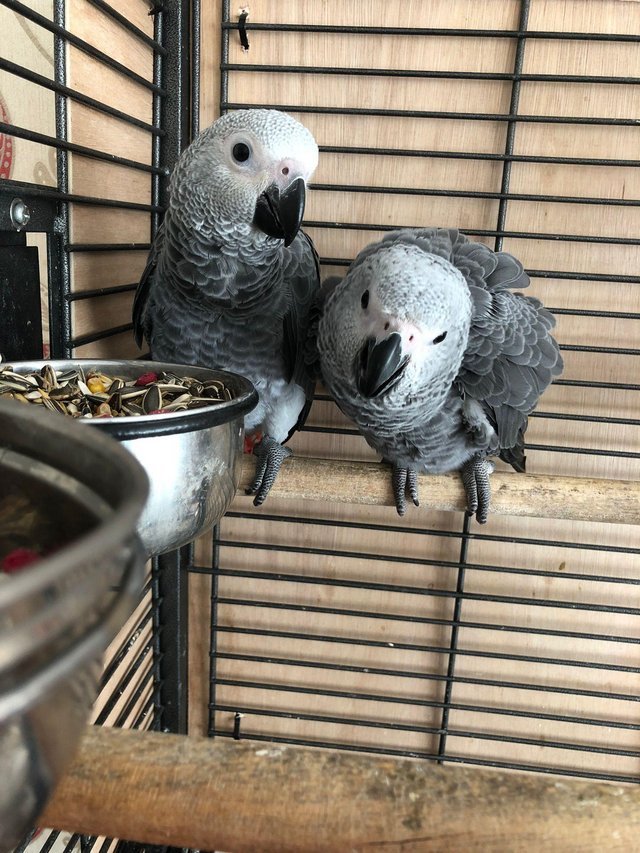
Larger, lighter silver-grey body, bright red tail, black beak.
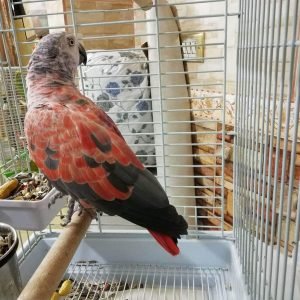
Smaller, darker charcoal-grey body, maroon tail, horn-colored upper beak. See our dedicated page.
Flocks That Once Numbered in the Thousands
Historical records describe roosting colonies of this species reaching up to 10,000 individuals, breaking into smaller groups of around 30 to forage each day before pairs split off entirely to raise chicks. Today’s wild populations rarely approach those historic numbers, a stark reminder of how much pressure trapping and habitat loss have placed on this species.
Range and Habitat
This subspecies ranges across central and parts of West Africa, from Angola and the Democratic Republic of Congo east toward Kenya and west into the Ivory Coast. It favors lowland rainforest, mangroves, and savanna woodland, often nesting in tree hollows well above the ground, particularly near rivers.
Diet and Daily Care
Wild birds feed on seeds, nuts, fruit, and occasionally insects, and they often forage partly on the ground, unusual among parrots. A quality pellet base, supplemented with fresh produce and occasional nuts, works well in captivity. Given this species’ remarkable intelligence, daily training and problem-solving enrichment matter just as much as diet for long-term wellbeing.
Buyer Questions
Who was Alex the parrot?
Alex was a Congo African Grey studied by researcher Irene Pepperberg for 30 years, demonstrating advanced cognitive abilities that reshaped scientific understanding of bird intelligence.
How is this different from the Timneh African Grey?
The Congo is larger with lighter grey plumage and a bright red tail, while the Timneh is smaller, darker, and has a maroon tail.
Is it legal to buy a Congo African Grey?
Yes, with full documentation confirming captive-bred origin, since the species is CITES Appendix I and Endangered in the wild.
Where does this species live in the wild?
Its range spans central and West Africa, from Angola and the DRC east toward Kenya and west into the Ivory Coast.
Did African Greys really once live in flocks of thousands?
Yes, historical roosting colonies reached up to 10,000 birds, though wild populations today rarely approach those numbers.
What should I feed a Congo African Grey?
A quality pellet base with fresh produce and occasional nuts covers its nutritional needs well.
How long do Congo African Greys live?
With good care, many live 40 to 60 years, so this is a genuine lifelong commitment.