

Description
White-throated Toucan
A spectacular Amazonian toucan with a huge colorful bill, bold black plumage, and a bright white throat.
🍈 Fruit Eater
The White-throated Toucan (Ramphastos tucanus) is a large tropical toucan found across much of the Amazon region. Its black body contrasts with a white throat and chest, yellow rump, red undertail, and a large multicolored bill. It mainly feeds on fruit in the forest canopy. If you enjoy unusual birds, explore our complete bird collection.
White-throated Toucan Identification
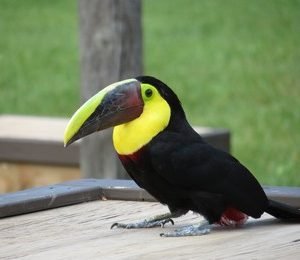
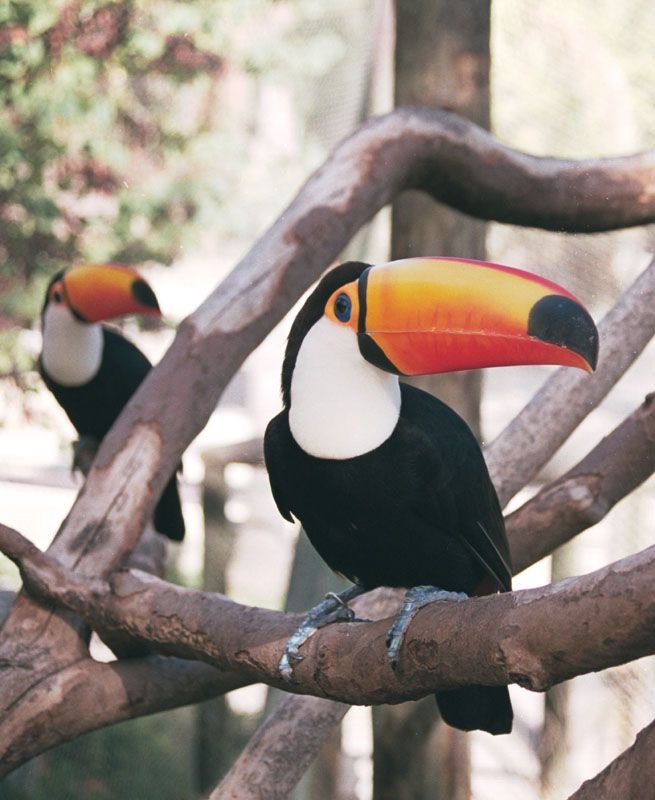
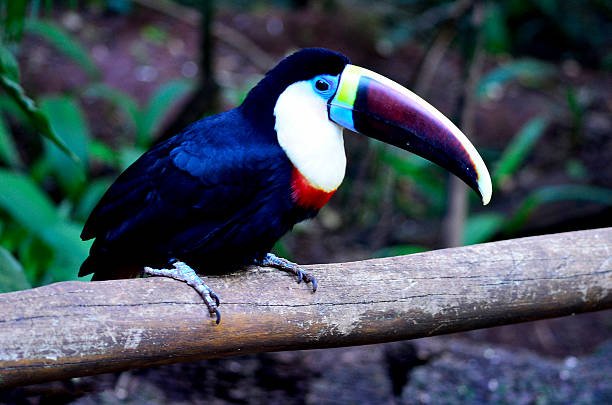
The White-throated Toucan has mostly black plumage with a white throat and chest bordered by a narrow red band. Its rump is bright yellow, while the undertail is red. The skin around the eye is blue, and the large bill has yellow, blue, red, and dark markings.
Habitat and Range
White-throated Toucans mainly live in tropical lowland forests across the Amazon Basin and the Guianas. They also occur around forest edges, rivers, clearings, and some woodland habitats. Because they depend heavily on trees for food and nesting, forest habitat is especially important to this species.
White-throated Toucans spend much of their time in trees searching for fruit. Their long bill helps them reach food on branches and handle fruit efficiently.
Diet and Feeding
The White-throated Toucan is primarily a fruit eater. It feeds on a variety of tropical fruits and seeds, but it also takes insects, lizards, bird eggs, and other small prey. Therefore, its natural feeding behavior is closely linked to the fruit-producing trees found throughout its forest habitat.
Behavior and Personality
White-throated Toucans are active forest birds that are commonly seen in pairs or small groups. They move through the canopy while searching for food and can make short, heavy, undulating flights between trees. In addition, their loud calls can carry a considerable distance through the forest.
Breeding and Nesting
White-throated Toucans nest in natural tree cavities, often using holes that already exist in soft or decaying wood. The nest is not heavily lined. Both parents take part in incubation and feeding the young. After hatching, the chicks remain in the cavity until they are developed enough to leave the nest.
White-throated Toucan Care
Proper care requires a spacious and secure environment with suitable perches, clean water, enrichment, and an appropriate diet. Since this species naturally eats a large amount of fruit, nutrition should be planned carefully. Also, its tropical background means temperature and humidity require attention.
Explore More Birds
Interested in other unique birds? Browse our complete bird collection to explore more species and available birds.
Frequently Asked Questions About White-throated Toucans
Diet and Appearance
What do White-throated Toucans eat?
White-throated Toucans mainly eat fruit and seeds from tropical trees. They also take insects and other small animals when available. For example, their diet can include lizards, bird eggs, and other small prey. Their large bill helps them reach and handle food in the forest canopy. Therefore, fruit is an important part of their natural diet.
What does a White-throated Toucan look like?
The White-throated Toucan has mostly black plumage with a bright white throat and chest. A narrow red band separates the white chest from the darker body. Its rump is yellow, while the undertail is red. In addition, the skin around the eye is blue and the large bill has several contrasting colors.
Why does the White-throated Toucan have such a large bill?
The large bill is useful when the toucan feeds on fruit high in trees. It allows the bird to reach food on branches that may be difficult to access. The bill also plays a role in heat exchange because of its large surface area. Although it looks heavy, its structure keeps it relatively lightweight. As a result, the bill is useful for both feeding and temperature control.
Habitat and Behavior
Where do White-throated Toucans live?
White-throated Toucans are found across much of the Amazon Basin and the Guianas. They mainly live in tropical lowland forests, although they can also occur near forest edges, rivers, clearings, and woodland. They spend much of their time in trees searching for fruit. Because of this, forest habitat with mature fruiting trees is important to them.
Are White-throated Toucans social birds?
White-throated Toucans are often seen in pairs or small groups. They move through the forest canopy while looking for fruit and other food. Their flight is usually short and somewhat heavy compared with many smaller birds. Also, their loud calls can be heard over considerable distances in their forest habitat.
Breeding and Care
Where do White-throated Toucans build their nests?
White-throated Toucans nest in natural cavities high in trees. They commonly use existing holes in soft or decaying wood rather than building a traditional nest. Some cavities may also have been created by other birds. The eggs rest on wood material inside the cavity, which provides protection during incubation.
How many eggs does a White-throated Toucan lay?
A White-throated Toucan clutch generally contains a small number of white eggs. Sources report around two to four eggs in a typical clutch. Both parents take part in incubation and later help feed the young. The chicks hatch without developed feathers and remain in the nest while they grow.
What do White-throated Toucans need for proper care?
White-throated Toucans need a spacious, secure environment with strong perches, clean water, enrichment, and a carefully planned diet. Fruit should be an important part of their nutrition, but the overall diet must remain balanced. Their tropical origin also means temperature and humidity should be managed carefully. Regular professional avian care can help support long-term health.
Reference:
eBird – White-throated Toucan