
Description
Common Ostrich for Sale
The largest bird alive today, and the fastest thing on two legs anywhere on Earth.
📊 Least Concern
🏃 Fastest Bird on Land
Two toes per foot, long muscular legs, and a stride covering more than 10 feet make this bird nearly impossible to catch on foot. Cruising speed sits around 34 miles per hour, but short bursts push past 45. That same leg power delivers a kick strong enough to seriously injure a predator, so respect and distance matter around adult birds.
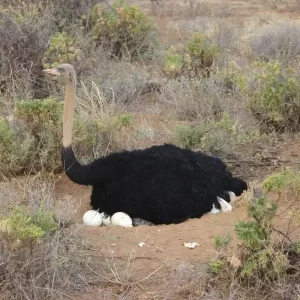
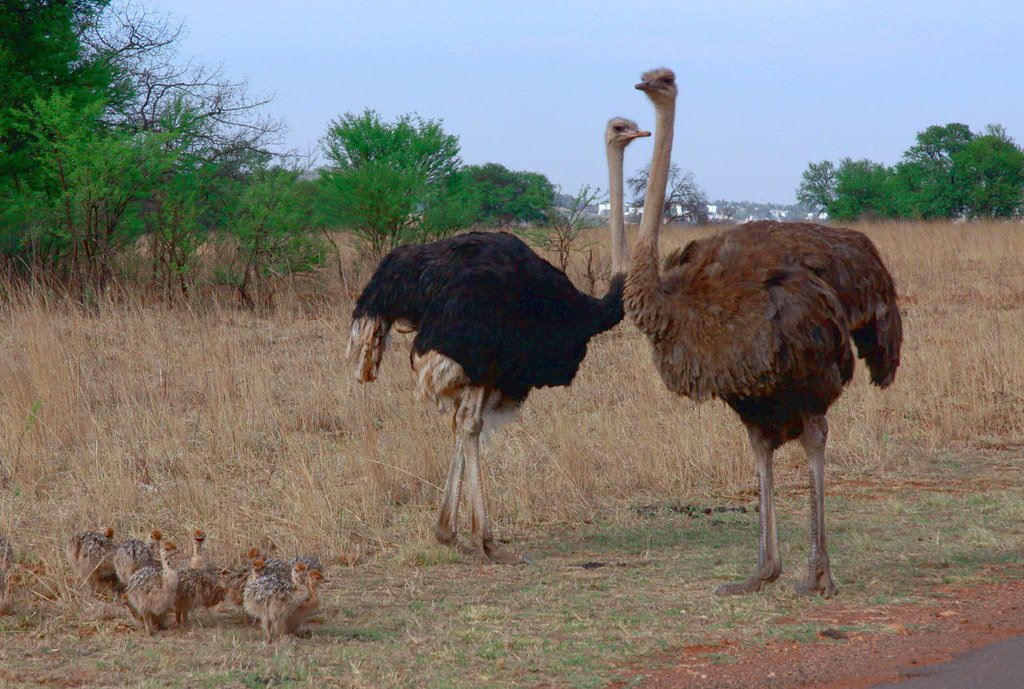
Standing up to nine feet tall and weighing over 300 pounds, this bird holds the title of largest living species on Earth. Males show bold black-and-white plumage, while females wear a more subdued grey-brown. Both sexes share the same long neck, powerful legs, and unmistakable silhouette across open African landscapes.
A Long History of Farming
People have kept and bred this species for centuries, valuing its feathers, leather, meat, and enormous eggs. Large-scale farming took off in South Africa during the 1800s and continues today across multiple continents. As a result, this bird is considered semi-domesticated, kept and managed extensively while still retaining its wild instincts and behavior.
Range and Social Behavior
This species roams open savanna and semi-desert across sub-Saharan Africa. Flocks typically number between 5 and 50 birds, often traveling alongside grazing animals like zebra and antelope. Close relatives include the Somali Ostrich, which occupies a smaller, more restricted range in the Horn of Africa.
Diet and Daily Care
Wild birds eat a mix of seeds, plants, and small insects, making them opportunistic omnivores. Captive diets should reflect that variety. A quality ratite feed works well as a base, supplemented with fresh greens and occasional protein. Given their size and strength, secure, spacious fencing matters just as much as nutrition.
Buyer Questions
How fast can an ostrich really run?
Cruising speed sits around 34 miles per hour, with short bursts reaching up to 45, making it the fastest bird on land.
Are ostriches dangerous to handle?
They can be, especially territorial males during breeding season. Their powerful kick makes distance and careful handling essential.
How is this different from the Somali Ostrich?
The Common Ostrich has pink rather than blue neck and leg coloring, a wider range, and a more secure Least Concern status.
Why do ostriches lay such large eggs?
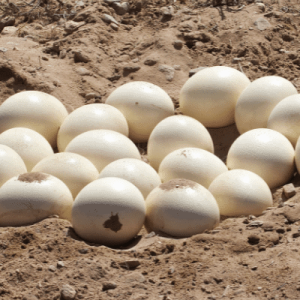
As the largest living bird, this species also lays the largest egg of any living bird species, scaled to its overall size.
What should I feed a Common Ostrich?
A quality ratite feed works as a base, supplemented with fresh greens and occasional protein to round out the diet.
Is the Common Ostrich endangered?
No, it’s classified as Least Concern, though some regional populations face pressure from hunting and habitat loss.
How long do Common Ostriches live?
With proper care, they commonly live 30 to 40 years, making this a genuine long-term commitment.